Join us

ContentUpdates and recent posts about Flask..
Link
@faun shared a link, 10 months, 2 weeks ago
FAUN.dev()

Azure Kubernetes Cluster with Terraform

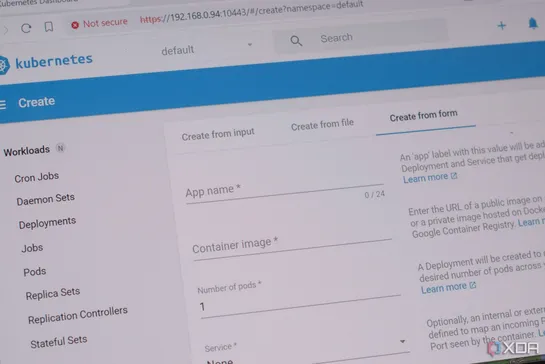
Spin up a production-gradeAKScluster withTerraform, but skip the hand-wavy theory. This new hands-on project gets into the weeds—RBAC, autoscaling, network policies, IP lockdowns, and yes,Azure Monitorwired up for observability out of the gate. Costs? Controlled. Infra? All code. It’s IaC for teams.. read more  
Link
@faun shared a link, 10 months, 2 weeks ago
FAUN.dev()

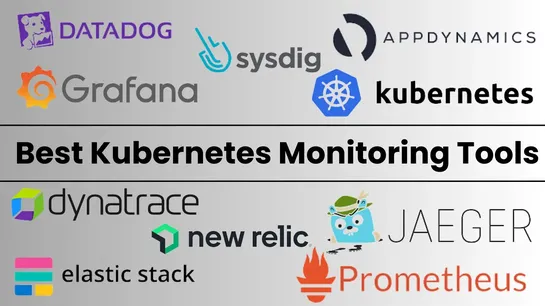
20 Best Kubernetes Monitoring Tools in 2025

Kubernetes monitoring isn't just about scraping metrics anymore. It's grown up into full-stack observability—metrics, logs, traces, plus flashy toys like AI-powered anomaly detection, real-time dashboards, and distributed tracing that actually works. The big players—Prometheus,Grafana,Datadog,Dynat.. read more  

20 Best Kubernetes Monitoring Tools in 2025
Link
@faun shared a link, 10 months, 2 weeks ago
FAUN.dev()

I've been using Talos Linux for Kubernetes, and I'll never look back

Talos Linux—an OS stripped down to the essentials and locked tighter than a production firewall—now boots cleanly as a VM onProxmox, playing nice with fullKVM/QEMUsupport. No shell, read-only filesystem, all wired forKubernetesviatalosctl. System shift:Devs are tossing old-school VM stacks for bare.. read more  

I've been using Talos Linux for Kubernetes, and I'll never look back
Link
@faun shared a link, 10 months, 2 weeks ago
FAUN.dev()

Retiring Docker Content Trust

Docker’s sunsettingDocker Content Trust (DCT)in 2025, starting withDocker Official Images. Not many used it, andNotary v1is toast. So they’re moving to modern signing tools likeSigstoreandNotation. Migration guides are on the way. What’s really happening:The container world’s ditching old trustboxe.. read more  

Link
@faun shared a link, 10 months, 2 weeks ago
FAUN.dev()

Understanding Kubernetes Commands and Arguments

Kubernetes lets you override a container’sCMDandENTRYPOINTwith thecommandandargsfields in your Pod spec. But don’t expect to change them after the Pod’s spun up—this isn’t Docker. No runtime flags here... read more  

Link
@faun shared a link, 10 months, 2 weeks ago
FAUN.dev()

Kubernetes v1.34 Sneak Peek

Kubernetes v1.34 lands in August 2025. It bringsDynamic Resource Allocation (DRA)to stable—structured resource requests, CEL filtering, and support for GPUs and custom gear. Built on new API types. Finally. Kubelet and API Server tracinglevel up with OpenTelemetry. Stable's the goal. Per-HPA autos.. read more  

Link
@faun shared a link, 10 months, 2 weeks ago
FAUN.dev()

How Freshworks optimized server provisioning using Karpenter

Freshworks optimized AWS EKS with Karpenter to handle diverse instance types, reduce costs, and achieve seamless node provisioning, disruptions, and terminations with minimal impact to service availability and resource utilization... read more  

Story ManageEngine Team
@shallin02 shared a post, 10 months, 3 weeks ago
Content Writer, ManageEngine Applications Manager

Container monitoring demystified: Real challenges and what actually works

Applications Manager

Discover the real challenges of container monitoring from ephemeral workloads to hybrid cloud complexity and learn practical solutions using tools like Prometheus, OpenTelemetry, and Applications Manager.

Story
@laura_garcia shared a post, 10 months, 3 weeks ago
Software Developer, RELIANOID

🌐 DDoS in 2025: Bigger, Smarter, and More Dangerous

DDoS attacks in 2025 are more frequent, complex, and accessible than ever—some reaching beyond 3 Tbps. From AI-driven traffic patterns to IoT botnets and multi-vector campaigns, the threat is real. Critical infrastructure, cloud APIs, and even elections are under fire. 🔐 At RELIANOID, we fight back ..

Blog DDoS Trends RELIANOID
Story ManageEngine Team
@shallin02 shared a post, 10 months, 3 weeks ago
Content Writer, ManageEngine Applications Manager

Is your docker setup actually performing well?

Applications Manager

Learn why Docker container monitoring is essential for performance, stability, and cost control. Discover must-watch metrics and explore tools like Applications Manager for real-time insights and smart alerts.

Flask is an open-source web framework written in Python and created by Armin Ronacher in 2010. It is known as a microframework, not because it is weak or incomplete, but because it provides only the essential building blocks for developing web applications. Its core focuses on handling HTTP requests, defining routes, and rendering templates, while leaving decisions about databases, authentication, form handling, and other components to the developer. This minimalistic design makes Flask lightweight, flexible, and easy to learn, but also powerful enough to support complex systems when extended with the right tools.

At the heart of Flask are two libraries: Werkzeug, which is a WSGI utility library that handles the low-level details of communication between web servers and applications, and Jinja2, a templating engine that allows developers to write dynamic HTML pages with embedded Python logic. By combining these two, Flask provides a clean and pythonic way to create web applications without imposing strict architectural patterns.

One of the defining characteristics of Flask is its explicitness. Unlike larger frameworks such as Django, Flask does not try to hide complexity behind layers of abstraction or dictate how a project should be structured. Instead, it gives developers complete control over how they organize their code and which tools they integrate. This explicit nature makes applications easier to reason about and gives teams the freedom to design solutions that match their exact needs. At the same time, Flask benefits from a vast ecosystem of extensions contributed by the community. These extensions cover areas such as database integration through SQLAlchemy, user session and authentication management, form validation with CSRF protection, and database migration handling. This modular approach means a developer can start with a very simple application and gradually add only the pieces they require, avoiding the overhead of unused components.

Flask is also widely appreciated for its simplicity and approachability. Many developers write their first web application in Flask because the learning curve is gentle, the documentation is clear, and the framework itself avoids unnecessary complexity. It is particularly well suited for building prototypes, REST APIs, microservices, or small to medium-sized web applications. At the same time, production-grade deployments are supported by running Flask applications on WSGI servers such as Gunicorn or uWSGI, since the development server included with Flask is intended only for testing and debugging.

The strengths of Flask lie in its minimalism, flexibility, and extensibility. It gives developers the freedom to assemble their application architecture, choose their own libraries, and maintain tight control over how things work under the hood. This is attractive to experienced engineers who dislike being boxed in by heavy frameworks. However, the same freedom can become a limitation. Flask does not include features like an ORM, admin interface, or built-in authentication system, which means teams working on very large applications must take on more responsibility for enforcing patterns and maintaining consistency. In situations where a project requires an opinionated, all-in-one solution, Django or another full-stack framework may be a better fit.

In practice, Flask has grown far beyond its initial positioning as a lightweight tool. It has been used by startups for rapid prototypes and by large companies for production systems. Its design philosophy—keep the core simple, make extensions easy, and let developers decide—continues to attract both beginners and professionals. This balance between simplicity and power has made Flask one of the most enduring and widely used Python web frameworks.