Join us

ContentUpdates and recent posts about Flask..
Link
@faun shared a link, 10 months, 1 week ago
FAUN.dev()

How We Saved $1.22 Million Annually on GCP Costs in a Few Simple Steps

Arpeely chopped$140K/monthoff their cloud bill using a surgical mix of GCP tricks. Committed Use Discounts (CUDs) for high-availability services? Check. Smarter Kubernetes HPA configs? Definitely. Archiving old BigQuery data into GCS Archive? That one alone slashed storage costs 16x. The real kicker.. read more  

How We Saved $1.22 Million Annually on GCP Costs in a Few Simple Steps
Link
@faun shared a link, 10 months, 1 week ago
FAUN.dev()

Kubernetes Will Solve YAML Headaches with KYAML

Kubernetes is eyeing a YAML remix. Version 1.34 may bring inKYAML—a stricter, YAML-compatible subset built to cut down on sloppy configs and sneaky formatting bugs. KYAML keeps the good parts: comments, trailing commas, unquoted keys. But it dumps YAML’s whitespace drama. Existing manifests and Hel.. read more  

Kubernetes Will Solve YAML Headaches with KYAML
Link
@faun shared a link, 10 months, 1 week ago
FAUN.dev()

Accessing the Kubernetes API from SQL Server 2025

SQL Server 2025 rolls outspinvokeexternalrestendpoint, a new way to hit REST APIs straight from T-SQL. That includes calling the Kubernetes API—thanks to a reverse proxy in front. The setup’s not exactly plug-and-play. You’ll need custom TLS certs, an nginx reverse proxy, and Kubernetes RBAC to kee.. read more  

Accessing the Kubernetes API from SQL Server 2025
Link
@faun shared a link, 10 months, 1 week ago
FAUN.dev()

Cloudera Acquires Taikun for Managing Kubernetes and Cloud

Cloudera acquired Taikun for seamless deployment of data and AI workloads in any environment. This move reinforces Cloudera's commitment to flexibility and innovation in managing complex IT infrastructures... read more  

Link
@faun shared a link, 10 months, 1 week ago
FAUN.dev()

Introducing Kubernetes for Snowflake

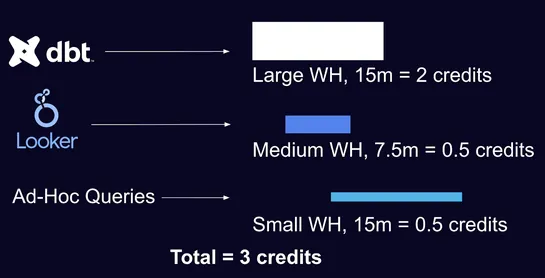
Snowflake just leveled up its workload scheduler—now driven by LLMs and reinforcement learning. Instead of locking jobs to static warehouses, it predicts where to send them in real-time. Smarter routing, tighter hardware use, over40%shaved off compute bills. Bigger picture:Another nod toward ML-bas.. read more  

Introducing Kubernetes for Snowflake
Story
@laura_garcia shared a post, 10 months, 2 weeks ago
Software Developer, RELIANOID

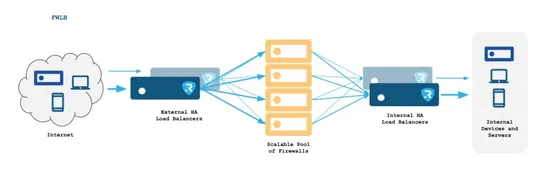
🔒 How can you improve the high availability and performance of your firewalls?

We're sharing a diagram on Firewall Load Balancing, along with a link to our technical article that explains how it works, its benefits, and best practices. 👉https://www.relianoid.com/resources/knowledge-base/misc/what-is-firewall-load-balancing-fwlb/ #FirewallLoadBalancing#HighAvailability#NetworkS..

diagrama firewall load balancing RELIANOID
Story
@idjuric660 shared a post, 10 months, 2 weeks ago
Technical Content Writer, Mailtrap

How to Send Emails in VS Code with Mailtrap MCP Server

Besides having an AI editor to help you develop projects, VS Code can now also generate and send emails in your stead. To do this, you simply need to integrate VS Code withMailtrap MCPand you’ll be able to send emails with a single prompt. And yes, this works for both Windows and macOS. First, we’ll..

Story
@laura_garcia shared a post, 10 months, 2 weeks ago
Software Developer, RELIANOID

🔹 What is a Layer 4 Load Balancer and Why Does It Matter?

📶 Whether you're managing web servers, real-time gaming, or VoIP applications—Layer 4 Load Balancing is key to performance and reliability. At the transport layer (OSI Layer 4), this type of load balancer distributes traffic based on IP addresses and port numbers, ensuring efficient and fast packet ..

Story
@idjuric660 shared a post, 10 months, 2 weeks ago
Technical Content Writer, Mailtrap

How to Send Emails in Claude Desktop with Mailtrap MCP

Ever since Mailtrap launched itsvery own MCP server, Claude can not only generate emails for you, but it can also send them to your recipients. The integration is super seamless, takes ~5 minutes, and works for both Windows and macOS. In this guide, I’ll show you how to integrate theMailtrap MCP, an..

Story
@laura_garcia shared a post, 10 months, 2 weeks ago
Software Developer, RELIANOID

🚀 ESA strengthens its cybersecurity defenses.

The European Space Agency has just inaugurated a new Cybersecurity Operations Center (C-SOC) to protect its satellites, mission control systems, and digital assets from growing cyber threats. 🌍 In today’s space-driven world, initiatives like this — along with global cybersecurity alliances — are mor..

Flask is an open-source web framework written in Python and created by Armin Ronacher in 2010. It is known as a microframework, not because it is weak or incomplete, but because it provides only the essential building blocks for developing web applications. Its core focuses on handling HTTP requests, defining routes, and rendering templates, while leaving decisions about databases, authentication, form handling, and other components to the developer. This minimalistic design makes Flask lightweight, flexible, and easy to learn, but also powerful enough to support complex systems when extended with the right tools.

At the heart of Flask are two libraries: Werkzeug, which is a WSGI utility library that handles the low-level details of communication between web servers and applications, and Jinja2, a templating engine that allows developers to write dynamic HTML pages with embedded Python logic. By combining these two, Flask provides a clean and pythonic way to create web applications without imposing strict architectural patterns.

One of the defining characteristics of Flask is its explicitness. Unlike larger frameworks such as Django, Flask does not try to hide complexity behind layers of abstraction or dictate how a project should be structured. Instead, it gives developers complete control over how they organize their code and which tools they integrate. This explicit nature makes applications easier to reason about and gives teams the freedom to design solutions that match their exact needs. At the same time, Flask benefits from a vast ecosystem of extensions contributed by the community. These extensions cover areas such as database integration through SQLAlchemy, user session and authentication management, form validation with CSRF protection, and database migration handling. This modular approach means a developer can start with a very simple application and gradually add only the pieces they require, avoiding the overhead of unused components.

Flask is also widely appreciated for its simplicity and approachability. Many developers write their first web application in Flask because the learning curve is gentle, the documentation is clear, and the framework itself avoids unnecessary complexity. It is particularly well suited for building prototypes, REST APIs, microservices, or small to medium-sized web applications. At the same time, production-grade deployments are supported by running Flask applications on WSGI servers such as Gunicorn or uWSGI, since the development server included with Flask is intended only for testing and debugging.

The strengths of Flask lie in its minimalism, flexibility, and extensibility. It gives developers the freedom to assemble their application architecture, choose their own libraries, and maintain tight control over how things work under the hood. This is attractive to experienced engineers who dislike being boxed in by heavy frameworks. However, the same freedom can become a limitation. Flask does not include features like an ORM, admin interface, or built-in authentication system, which means teams working on very large applications must take on more responsibility for enforcing patterns and maintaining consistency. In situations where a project requires an opinionated, all-in-one solution, Django or another full-stack framework may be a better fit.

In practice, Flask has grown far beyond its initial positioning as a lightweight tool. It has been used by startups for rapid prototypes and by large companies for production systems. Its design philosophy—keep the core simple, make extensions easy, and let developers decide—continues to attract both beginners and professionals. This balance between simplicity and power has made Flask one of the most enduring and widely used Python web frameworks.