Join us

ContentUpdates and recent posts about Flask..
Story
@idjuric660 shared a post, 9 months, 3 weeks ago
Technical Content Writer, Mailtrap

I Tested 6 Postmark Alternatives: Here’s What I Found

Let’s not kid ourselves, Postmark is a great email service inalmostevery regard. However, if you’re reading this, the chances are that it doesn’t fit your needs anymore, and you’d like to switch it up a little bit. Luckily, you’ve come to the right place! I’ve interviewed our very own deliverability..

Link
@faun shared a link, 9 months, 3 weeks ago
FAUN.dev()

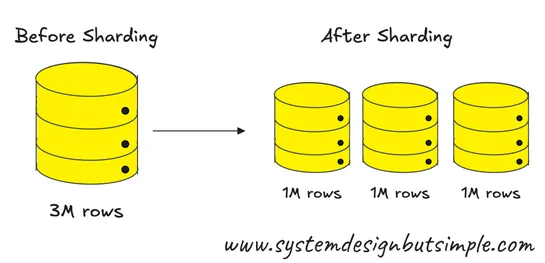
Database Sharding in 1 diagram and 204 words

Sharding breaks a heavyweight database into bite-sized chunks spread across servers. That means better scalability, less strain on any one node. The key? Picking the right shard key. Get that wrong, and you’re in cross-shard query hell. Modulo, range, and consistent hashing each slice the pie diff.. read more  

Database Sharding in 1 diagram and 204 words
Link
@faun shared a link, 9 months, 3 weeks ago
FAUN.dev()

AI Agents and Test Suites: Lessons from the Trenches

AI agents can help wrangletest suite maintenance—if you treat them likejunior devs. That means tight prompts, clear boundaries, and someone keeping an eye on them. Teams get better results when they feed agents sharp context and task them with small, scoped jobs instead of vague laundry lists... read more  

AI Agents and Test Suites: Lessons from the Trenches
Link
@faun shared a link, 9 months, 3 weeks ago
FAUN.dev()

Deeper theories of program design

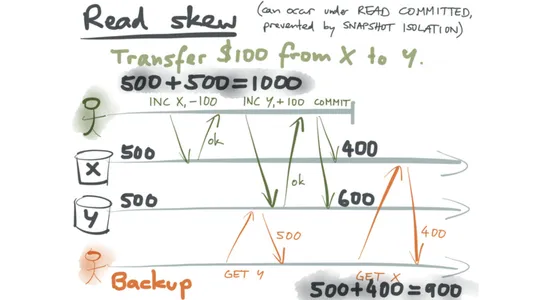
A sharp teardown ofWindows vs. Unix file deletion semanticslands on this: Windows leans on read-write locks; Unix rolls with a looser, non-blocking vibe—more likeweakly-isolated DB transactions. It trades consistency for concurrency, dodging locks even if it means the rules get fuzzy. The post zoom.. read more  

Deeper theories of program design
Link
@faun shared a link, 9 months, 3 weeks ago
FAUN.dev()

Why I chose OCaml as my primary language

OCaml’s grown up. Multicore support is in. So are user-defined effects. Under the hood, affine types, staged metaprogramming, and effect typing are steering it toward resource-safe programming—with actual thrust. Its type system still slaps: powerful modules, GADTs, algebraic types, and now first-c.. read more  

Link
@faun shared a link, 9 months, 3 weeks ago
FAUN.dev()

How I Use Claude Code to Ship Like a Team of Five

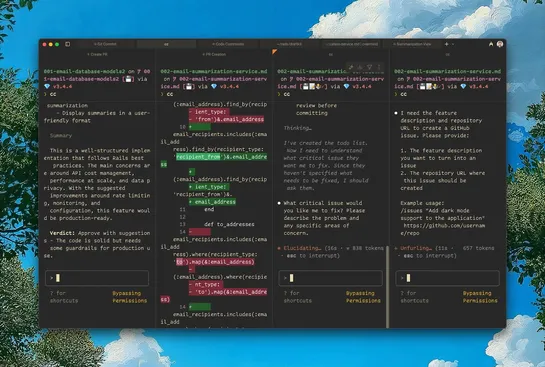
Claude Code zips out Ruby functions, tests, and pull requests viaCLIprompts across multiplegit worktrees. It slays manual typing and ejects IDE plugins. It spins up ephemeraltest environmentsto replay bugs, pries open externalgemcode, and syncs branches, commits, and PRs in one go... read more  

How I Use Claude Code to Ship Like a Team of Five
Link
@faun shared a link, 9 months, 3 weeks ago
FAUN.dev()

Ship tools as standalone static binaries

OpenAI’s rewritingCodexinRust, ditching the oldTypeScriptversion. Why? To ship it as a single static binary—no messy installs, no glue code juggling. Just run. Rust cuts down runtime failures, trims the attack surface, and kills off toolchain sprawl. Less fragility. More control. System shift:Team.. read more  

Link
@faun shared a link, 9 months, 3 weeks ago
FAUN.dev()

Git Branching Strategies: A Comprehensive Guide

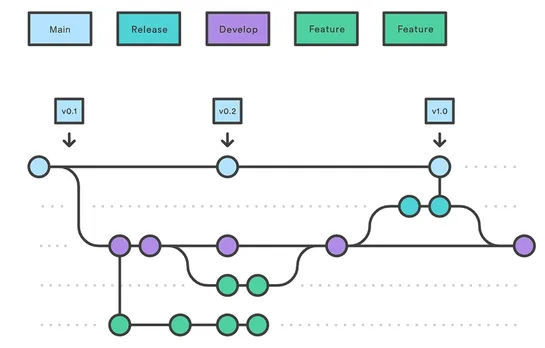
This guide breaks down the major Git branching strategies—GitFlow,GitHub Flow,GitLab Flow,Trunk-Based Development, and a few others that still show up in wild repos. Each one gets sized up by structure, use case, and trade-offs. Think: how big the team is, how fast releases go out, and how people l.. read more  

Git Branching Strategies: A Comprehensive Guide
Link
@faun shared a link, 9 months, 3 weeks ago
FAUN.dev()

The great SQLite rewrite

Turso just dropped the alpha of itsRust-based SQLite rethink—rewritten from scratch to handle today’s mess:async APIs,built-in vector search, and actualconcurrent writes. Forget the old SQLite playbook. Turso’s version leans into modularity, bakes in deterministic tests, and still aims for SQLite-l.. read more  

The great SQLite rewrite
Link
@faun shared a link, 9 months, 3 weeks ago
FAUN.dev()

Lessons from scaling PostgreSQL queues to 100K events

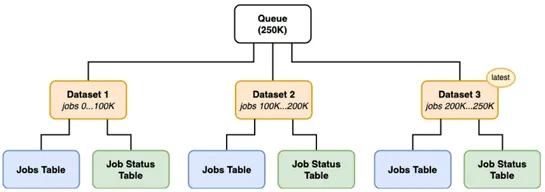
RudderStack crankedPostgreSQLup to100K events/secas a queuing engine. The secret sauce: tight tuning of job partitioning, smarter indexing, tuned VACUUM timing, and compaction that didn't choke. Recursive CTEs stood in for loose index scans. Caching cut I/O repeats. They ditched byte slices to side.. read more  

Lessons from scaling PostgreSQL queues to 100K events
Flask is an open-source web framework written in Python and created by Armin Ronacher in 2010. It is known as a microframework, not because it is weak or incomplete, but because it provides only the essential building blocks for developing web applications. Its core focuses on handling HTTP requests, defining routes, and rendering templates, while leaving decisions about databases, authentication, form handling, and other components to the developer. This minimalistic design makes Flask lightweight, flexible, and easy to learn, but also powerful enough to support complex systems when extended with the right tools.

At the heart of Flask are two libraries: Werkzeug, which is a WSGI utility library that handles the low-level details of communication between web servers and applications, and Jinja2, a templating engine that allows developers to write dynamic HTML pages with embedded Python logic. By combining these two, Flask provides a clean and pythonic way to create web applications without imposing strict architectural patterns.

One of the defining characteristics of Flask is its explicitness. Unlike larger frameworks such as Django, Flask does not try to hide complexity behind layers of abstraction or dictate how a project should be structured. Instead, it gives developers complete control over how they organize their code and which tools they integrate. This explicit nature makes applications easier to reason about and gives teams the freedom to design solutions that match their exact needs. At the same time, Flask benefits from a vast ecosystem of extensions contributed by the community. These extensions cover areas such as database integration through SQLAlchemy, user session and authentication management, form validation with CSRF protection, and database migration handling. This modular approach means a developer can start with a very simple application and gradually add only the pieces they require, avoiding the overhead of unused components.

Flask is also widely appreciated for its simplicity and approachability. Many developers write their first web application in Flask because the learning curve is gentle, the documentation is clear, and the framework itself avoids unnecessary complexity. It is particularly well suited for building prototypes, REST APIs, microservices, or small to medium-sized web applications. At the same time, production-grade deployments are supported by running Flask applications on WSGI servers such as Gunicorn or uWSGI, since the development server included with Flask is intended only for testing and debugging.

The strengths of Flask lie in its minimalism, flexibility, and extensibility. It gives developers the freedom to assemble their application architecture, choose their own libraries, and maintain tight control over how things work under the hood. This is attractive to experienced engineers who dislike being boxed in by heavy frameworks. However, the same freedom can become a limitation. Flask does not include features like an ORM, admin interface, or built-in authentication system, which means teams working on very large applications must take on more responsibility for enforcing patterns and maintaining consistency. In situations where a project requires an opinionated, all-in-one solution, Django or another full-stack framework may be a better fit.

In practice, Flask has grown far beyond its initial positioning as a lightweight tool. It has been used by startups for rapid prototypes and by large companies for production systems. Its design philosophy—keep the core simple, make extensions easy, and let developers decide—continues to attract both beginners and professionals. This balance between simplicity and power has made Flask one of the most enduring and widely used Python web frameworks.