Join us

ContentUpdates and recent posts about Flask..
Link
@faun shared a link, 9 months, 2 weeks ago
FAUN.dev()

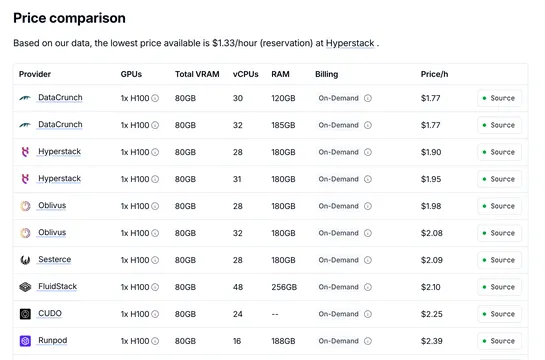
Are OpenAI and Anthropic Really Losing Money on Inference?

DeepSeek R1 running on H100s puts input-token costs near$0.003 per million—while output tokens still punch in north of$3. That’s a 1,000x spread. So if a job leans heavy on input—think code linting or parsing big docs—those margins stay fat, even with cautious compute. System shift:This lop-sided .. read more  
Are OpenAI and Anthropic Really Losing Money on Inference?
Link
@faun shared a link, 9 months, 2 weeks ago
FAUN.dev()

37 Things I Learned About Information Retrieval in Two Years at a Vector Database Company

A Weaviate engineer pulls back the curtain on two years of hard-earned lessons in vector search—breaking downBM25,embedding models,ANN algorithms, andRAG pipelines. The real story? Retrieval workflows keep moving—from keyword-heavy (sparse) toward embedding-driven (dense). Across IR use cases, the .. read more  

Link
@faun shared a link, 9 months, 2 weeks ago
FAUN.dev()

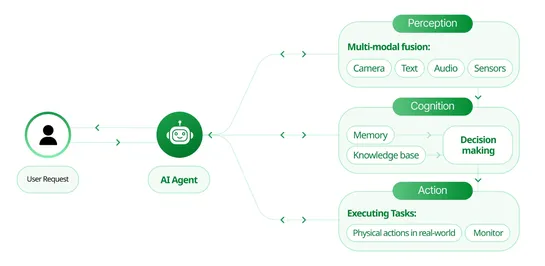
Combining GenAI & Agentic AI to build scalable, autonomous systems

Agentic AI doesn’t just crank out content—it takes the wheel. Where GenAI reacts, Agentic AI plans, perceives, and acts. Think less autocomplete, more autonomous ops. Hook them together, and you get a full-stack brain: content creation, real-time decisions, adaptive workflows, all learning as they .. read more  

Combining GenAI & Agentic AI to build scalable, autonomous systems
Link
@faun shared a link, 9 months, 2 weeks ago
FAUN.dev()

How to prepare for the Bitnami Changes coming soon

The Bitnami team has delayed the deletion of the Bitnami public catalog until September 29th. They will conduct a series of brownouts to prepare users for the upcoming changes, with the affected applications list being published on the day of each brownout. Users are advised to switch to Bitnami Sec.. read more  

Link
@faun shared a link, 9 months, 2 weeks ago
FAUN.dev()

Observability in Go: What Real Engineers Are Saying in 2025

Go observability still feels like pulling teeth. Manual instrumentation? Tedious. Span coverage? Spotty. Telemetry volume? Totally out of hand. Even with OpenTelemetry gaining traction, Go lags behind Java and Python when it comes to auto-instrumentation and clean context propagation. Devs are hunt.. read more  

Observability in Go: What Real Engineers Are Saying in 2025
Link
@faun shared a link, 9 months, 2 weeks ago
FAUN.dev()

Availability Models: Because “Highly Available” Isn’t Saying Much

Antithesis and Jepsen want to kill hand-wavy "high availability" talk. Instead, they push for clearavailability models—majority,total,sticky, etc.—that spell out when an operationactuallyworks during failures. It's about precision, not platitudes. Why it matters:This reframes availability from a va.. read more  

Availability Models: Because “Highly Available” Isn’t Saying Much
Link
@faun shared a link, 9 months, 2 weeks ago
FAUN.dev()

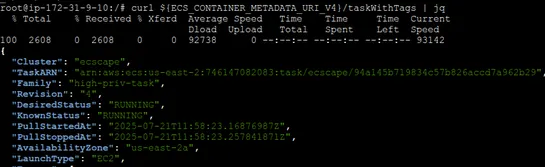
ECScape: Understanding IAM Privilege Boundaries in Amazon ECS

A new ECS security mess—ECScape—lets low-privileged tasks on EC2 act like the ECS agent. That’s bad. Real bad. Why? Because it opens the door to stealing IAM credentials from other ECS tasks sharing the same host. Here’s the trick: The attacker hits the instance metadata service (IMDS) and fakes a .. read more  

ECScape: Understanding IAM Privilege Boundaries in Amazon ECS
Link
@faun shared a link, 9 months, 2 weeks ago
FAUN.dev()

Google Develops KFuzzTest For Fuzzing Internal Linux Kernel Functions

Google droppedKFuzzTest, a lean fuzzing tool built to hit Linux kernel internals—way past just syscalls. It brings a clean API, docs, and sample targets to get fuzzing fast. Why it matters:KFuzzTest marks a shift. Kernel fuzzing’s no longer just about hammering syscalls—it’s going deeper into the g.. read more  

Link
@faun shared a link, 9 months, 2 weeks ago
FAUN.dev()

v1.34: User preferences (kuberc) are available for testing in kubectl 1.34

Kubernetes v1.34 pusheskubectlinto the future with a betauser preferencessystem. Drop a.kubercfile in place, and you can bake in default flags, toggle features likeinteractive deleteorServer-Side Apply, and wire up custom aliases—including pre- and post-args... read more  

Link
@faun shared a link, 9 months, 2 weeks ago
FAUN.dev()

CNCF Incubates OpenYurt for Kubernetes at the Edge

OpenYurt just leveled up—now officially an incubating project under the CNCF. It pushes Kubernetes out past the data center, into the messy edges of the network, without breaking upstream compatibility. No forks, no duct tape. The maintainer roster’s growing too. Folks fromVMware,Microsoft, andInte.. read more  

CNCF Incubates OpenYurt for Kubernetes at the Edge
Flask is an open-source web framework written in Python and created by Armin Ronacher in 2010. It is known as a microframework, not because it is weak or incomplete, but because it provides only the essential building blocks for developing web applications. Its core focuses on handling HTTP requests, defining routes, and rendering templates, while leaving decisions about databases, authentication, form handling, and other components to the developer. This minimalistic design makes Flask lightweight, flexible, and easy to learn, but also powerful enough to support complex systems when extended with the right tools.

At the heart of Flask are two libraries: Werkzeug, which is a WSGI utility library that handles the low-level details of communication between web servers and applications, and Jinja2, a templating engine that allows developers to write dynamic HTML pages with embedded Python logic. By combining these two, Flask provides a clean and pythonic way to create web applications without imposing strict architectural patterns.

One of the defining characteristics of Flask is its explicitness. Unlike larger frameworks such as Django, Flask does not try to hide complexity behind layers of abstraction or dictate how a project should be structured. Instead, it gives developers complete control over how they organize their code and which tools they integrate. This explicit nature makes applications easier to reason about and gives teams the freedom to design solutions that match their exact needs. At the same time, Flask benefits from a vast ecosystem of extensions contributed by the community. These extensions cover areas such as database integration through SQLAlchemy, user session and authentication management, form validation with CSRF protection, and database migration handling. This modular approach means a developer can start with a very simple application and gradually add only the pieces they require, avoiding the overhead of unused components.

Flask is also widely appreciated for its simplicity and approachability. Many developers write their first web application in Flask because the learning curve is gentle, the documentation is clear, and the framework itself avoids unnecessary complexity. It is particularly well suited for building prototypes, REST APIs, microservices, or small to medium-sized web applications. At the same time, production-grade deployments are supported by running Flask applications on WSGI servers such as Gunicorn or uWSGI, since the development server included with Flask is intended only for testing and debugging.

The strengths of Flask lie in its minimalism, flexibility, and extensibility. It gives developers the freedom to assemble their application architecture, choose their own libraries, and maintain tight control over how things work under the hood. This is attractive to experienced engineers who dislike being boxed in by heavy frameworks. However, the same freedom can become a limitation. Flask does not include features like an ORM, admin interface, or built-in authentication system, which means teams working on very large applications must take on more responsibility for enforcing patterns and maintaining consistency. In situations where a project requires an opinionated, all-in-one solution, Django or another full-stack framework may be a better fit.

In practice, Flask has grown far beyond its initial positioning as a lightweight tool. It has been used by startups for rapid prototypes and by large companies for production systems. Its design philosophy—keep the core simple, make extensions easy, and let developers decide—continues to attract both beginners and professionals. This balance between simplicity and power has made Flask one of the most enduring and widely used Python web frameworks.