Join us

ContentUpdates and recent posts about Flask..
Link
@faun shared a link, 8 months, 3 weeks ago
FAUN.dev()

Fast, Secure Kubernetes with AKS Automatic

Azure dropped **AKS Automatic**, a new managed Kubernetes tier that tries to do it all—so you don’t have to. It comes with baked-in best practices: autoscaling via HPA, VPA, KEDA, and Karpenter. Automated patching. Node repair. Monitoring. All wired up by default. You still get full access to the .. read more  
Fast, Secure Kubernetes with AKS Automatic
Link
@faun shared a link, 8 months, 3 weeks ago
FAUN.dev()

v1.34: Decoupled Taint Manager Is Now Stable

Kubernetes 1.34 graduates the taint eviction controller to GA. Now, the node lifecycle controller only applies taints, while a dedicated taint eviction controller manages pod eviction. First split in 1.29, now stable in 1.34... read more  

Link
@faun shared a link, 8 months, 3 weeks ago
FAUN.dev()

Kubernetes Security: Best Practices to Protect Your Cluster

A new JetBrains IDE plugin throws Kubernetes security best practices straight into your deployment manifests—right where they belong. Think: checks for `runAsRoot`, privileged mode, `hostPath`, host ports, and sketchy sysctls. No hand-waving. It enforces stuff like: - Default `runAsNonRoot` - Drop .. read more  

Kubernetes Security: Best Practices to Protect Your Cluster
Link
@faun shared a link, 8 months, 3 weeks ago
FAUN.dev()

v1.34: Recovery From Volume Expansion Failure (GA)

Kubernetes v1.34 bumps **automated recovery from botched PVC expansions** to GA. Users can now fix bad volume size requests—no admin, no drama. It cleans up unused quota, slows down retry spam, and surfaces progress with new PVC status fields... read more  

Link
@faun shared a link, 8 months, 3 weeks ago
FAUN.dev()

v1.34: Pods Report DRA Resource Health

Kubernetes v1.34 lands with an alpha upgrade to **[KEP-4680](https://github.com/kubernetes/enhancements/tree/master/keps/sig-node/4680-add-resource-health-to-pod-status)**, pushing **Dynamic Resource Allocation (DRA)** into smarter territory: health-aware Pods. DRA drivers can now stream device heal.. read more  

Link
@faun shared a link, 8 months, 3 weeks ago
FAUN.dev()

v1.34: DRA Consumable Capacity

Kubernetes 1.34 rolls in **consumable capacity** for Dynamic Resource Allocation (DRA). That means device plugins can now carve up resources—GPU memory, NIC bandwidth, etc.—into precise slices for Pods, ResourceClaims, and namespaces. The scheduler tracks it all, so nothing spills over... read more  

Story
@laura_garcia shared a post, 8 months, 3 weeks ago
Software Developer, RELIANOID

Secure Boot Advanced Targeting (SBAT): Scaling Boot Security 🔐

Discover how SBAT enhances Secure Boot by introducing a smarter way to handle vulnerabilities, reducing overhead, and ensuring your system's boot process stays secure. Learn how it works, how it addresses scalability, and why it's a game-changer for modern boot security across Linux and Windows envi..

KB-Secure Boot Advanced Targeting
Story
@laura_garcia shared a post, 8 months, 4 weeks ago
Software Developer, RELIANOID

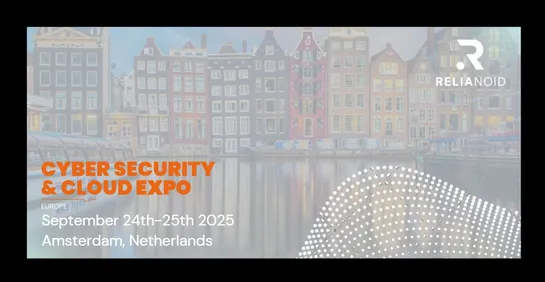
Cyber Security & Cloud Expo Europe in Amsterdam

🔐 On 24–25 September 2025, RELIANOID will be at Cyber Security & Cloud Expo Europe in Amsterdam! Join us to explore how we enable secure, scalable, and Zero Trust–ready application delivery. 👉 https://www.relianoid.com/about-us/events/cyber-security-cloud-expo-2025/ #CyberSecurity#Cloud#ZeroTrust#De..

cybersecurity and cloud expo amsterdam event
Story
@laura_garcia shared a post, 8 months, 4 weeks ago
Software Developer, RELIANOID

Cyber Security & Cloud Expo Europe in Amsterdam

🔐 On 24–25 September 2025, RELIANOID will be at Cyber Security & Cloud Expo Europe in Amsterdam! Join us to explore how we enable secure, scalable, and Zero Trust–ready application delivery. 👉 https://www.relianoid.com/about-us/events/cyber-security-cloud-expo-2025/ #CyberSecurity#Cloud#ZeroTrust#De..

cybersecurity and cloud expo amsterdam event
Story
@laura_garcia shared a post, 8 months, 4 weeks ago
Software Developer, RELIANOID

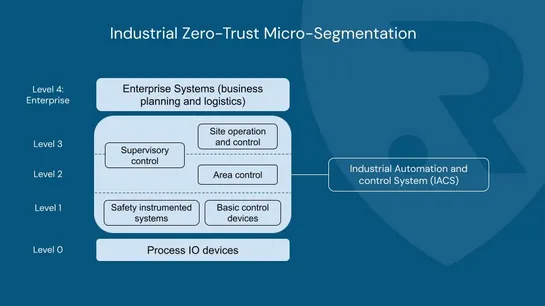
🔐 Industrial networks face increasing complexity and evolving cyber threats.

To strengthen defenses, many organizations are moving beyond traditional segmentation and adopting microsegmentation — a strategy that creates independent, secure zones to better protect critical assets. We’ve prepared a clear diagram to illustrate how defense-in-depth and microsegmentation can be a..

Industrial Zero-Trust Micro-Segmentation
Flask is an open-source web framework written in Python and created by Armin Ronacher in 2010. It is known as a microframework, not because it is weak or incomplete, but because it provides only the essential building blocks for developing web applications. Its core focuses on handling HTTP requests, defining routes, and rendering templates, while leaving decisions about databases, authentication, form handling, and other components to the developer. This minimalistic design makes Flask lightweight, flexible, and easy to learn, but also powerful enough to support complex systems when extended with the right tools.

At the heart of Flask are two libraries: Werkzeug, which is a WSGI utility library that handles the low-level details of communication between web servers and applications, and Jinja2, a templating engine that allows developers to write dynamic HTML pages with embedded Python logic. By combining these two, Flask provides a clean and pythonic way to create web applications without imposing strict architectural patterns.

One of the defining characteristics of Flask is its explicitness. Unlike larger frameworks such as Django, Flask does not try to hide complexity behind layers of abstraction or dictate how a project should be structured. Instead, it gives developers complete control over how they organize their code and which tools they integrate. This explicit nature makes applications easier to reason about and gives teams the freedom to design solutions that match their exact needs. At the same time, Flask benefits from a vast ecosystem of extensions contributed by the community. These extensions cover areas such as database integration through SQLAlchemy, user session and authentication management, form validation with CSRF protection, and database migration handling. This modular approach means a developer can start with a very simple application and gradually add only the pieces they require, avoiding the overhead of unused components.

Flask is also widely appreciated for its simplicity and approachability. Many developers write their first web application in Flask because the learning curve is gentle, the documentation is clear, and the framework itself avoids unnecessary complexity. It is particularly well suited for building prototypes, REST APIs, microservices, or small to medium-sized web applications. At the same time, production-grade deployments are supported by running Flask applications on WSGI servers such as Gunicorn or uWSGI, since the development server included with Flask is intended only for testing and debugging.

The strengths of Flask lie in its minimalism, flexibility, and extensibility. It gives developers the freedom to assemble their application architecture, choose their own libraries, and maintain tight control over how things work under the hood. This is attractive to experienced engineers who dislike being boxed in by heavy frameworks. However, the same freedom can become a limitation. Flask does not include features like an ORM, admin interface, or built-in authentication system, which means teams working on very large applications must take on more responsibility for enforcing patterns and maintaining consistency. In situations where a project requires an opinionated, all-in-one solution, Django or another full-stack framework may be a better fit.

In practice, Flask has grown far beyond its initial positioning as a lightweight tool. It has been used by startups for rapid prototypes and by large companies for production systems. Its design philosophy—keep the core simple, make extensions easy, and let developers decide—continues to attract both beginners and professionals. This balance between simplicity and power has made Flask one of the most enduring and widely used Python web frameworks.