Join us

ContentUpdates and recent posts about Flask..
Link
@faun shared a link, 8 months, 1 week ago
FAUN.dev()

What are Error Budgets? A Guide to Managing Reliability

OneUptime shows how to put **error budgets** to work—keeping feature velocity in check without tanking reliability. The goal: ship fast, stay within SLOs. They do it by tracking **burn rates**, syncing across teams, and tuning SLOs to match how users actually use the product. Less guesswork, more s.. read more  
Link
@faun shared a link, 8 months, 1 week ago
FAUN.dev()

Why Rancher's Founders Pivoted From Kubernetes to Agentic AI

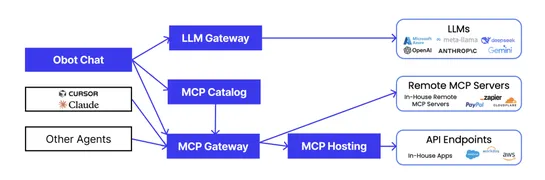
Obot.ai just dropped out of stealth with $35M in seed and a big swing: it’s building a control plane for agentic AI, anchored on the now-standard **Model Context Protocol (MCP)**. Its **MCP Gateway** handles registry, secure proxying, RBAC, and observability for MCP servers. Think API gateway, but .. read more  

Why Rancher's Founders Pivoted From Kubernetes to Agentic AI
Link
@faun shared a link, 8 months, 1 week ago
FAUN.dev()

Intelligent Kubernetes Load Balancing at Databricks

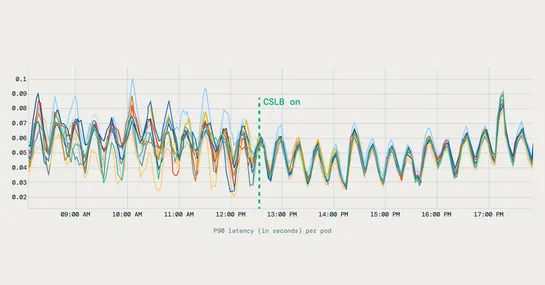
Databricks replaced default Kubernetes load balancing for a **proxyless, client-side gRPC setup**, wired up through a custom control plane. No more **CoreDNS**. No more **kube-proxy**. Clients now get live endpoint discovery through **xDS**, plus smarter routing tricks like **Power of Two Choices** .. read more  

Intelligent Kubernetes Load Balancing at Databricks
Link
@faun shared a link, 8 months, 1 week ago
FAUN.dev()

v1.34: Pod Level Resources Graduated to Beta

Kubernetes v1.34 bumps **Pod Level Resources** to Beta—and flips them on by default. Now you can set CPU, memory, and hugepages limits for the whole Pod, not just per container. That means smoother scheduling, stricter resource caps, and less sidecar thrashing. **Why it matters:** This shifts Kuber.. read more  

Link
@faun shared a link, 8 months, 1 week ago
FAUN.dev()

KubeCon + CloudNativeCon North America 2025 Co-Located Event Deep Dive: Kubernetes on Edge Day

The inaugural Edge Day launched as a co-located event at KubeCon + CloudNativeCon EU in 2022, focusing on edge computing and the evolution from centralized data centers to the network edge. The event brings together academic research, enterprise use cases, and insights from the Kubernetes community... read more  

KubeCon + CloudNativeCon North America 2025 Co-Located Event Deep Dive: Kubernetes on Edge Day
Link
@faun shared a link, 8 months, 1 week ago
FAUN.dev()

Fluentd to Fluent Bit: A Migration Guide

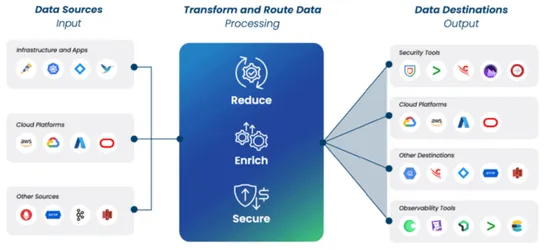
Fluent Bit just edged out Fluentd as the CNCF’s go-to log processor. Why? It's fast—up to 40× faster. Built in C. Embedded plugins. Native OpenTelemetry. Full observability baked in. It handles routing, schema changes, and telemetry across containers and edge systems without flinching. No Ruby here.. read more  

Fluentd to Fluent Bit: A Migration Guide
Link
@faun shared a link, 8 months, 1 week ago
FAUN.dev()

Top 10 Kubernetes Deployment Errors: Causes and Fixes (And Tips)

Misconfigured YAML. Broken image refs. Botched resource settings. Most Kubernetes deploys don't fail mysteriously—they fail predictably. This guide breaks down the top 10 culprits: things like `CrashLoopBackOff`, bad image pulls, and `OOMKills`. More importantly, it shows how to dodge them with bet.. read more  

Top 10 Kubernetes Deployment Errors: Causes and Fixes (And Tips)
Story FAUN.dev() Team
@eon01 shared a post, 8 months, 1 week ago
Founder, FAUN.dev

Data-Driven Developer Journalism: Announcing FAUN.dev News, a Smarter Way to Read Developer News

We launched a new news experience at FAUN.dev that uses advanced retrieval to deliver context-rich, insightful news for developers.

FAUN.dev Developer Journalism
News FAUN.dev() Team
@varbear shared an update, 8 months, 1 week ago
FAUN.dev()

Perplexity AI's Comet Browser Launches Globally, Free for All Users

Perplexity AI launches the Comet browser globally, offering it for free to enhance internet usage with features like the Comet Assistant and Background Assistants, aiming to foster curiosity and productivity.

 Activity
Flask is an open-source web framework written in Python and created by Armin Ronacher in 2010. It is known as a microframework, not because it is weak or incomplete, but because it provides only the essential building blocks for developing web applications. Its core focuses on handling HTTP requests, defining routes, and rendering templates, while leaving decisions about databases, authentication, form handling, and other components to the developer. This minimalistic design makes Flask lightweight, flexible, and easy to learn, but also powerful enough to support complex systems when extended with the right tools.

At the heart of Flask are two libraries: Werkzeug, which is a WSGI utility library that handles the low-level details of communication between web servers and applications, and Jinja2, a templating engine that allows developers to write dynamic HTML pages with embedded Python logic. By combining these two, Flask provides a clean and pythonic way to create web applications without imposing strict architectural patterns.

One of the defining characteristics of Flask is its explicitness. Unlike larger frameworks such as Django, Flask does not try to hide complexity behind layers of abstraction or dictate how a project should be structured. Instead, it gives developers complete control over how they organize their code and which tools they integrate. This explicit nature makes applications easier to reason about and gives teams the freedom to design solutions that match their exact needs. At the same time, Flask benefits from a vast ecosystem of extensions contributed by the community. These extensions cover areas such as database integration through SQLAlchemy, user session and authentication management, form validation with CSRF protection, and database migration handling. This modular approach means a developer can start with a very simple application and gradually add only the pieces they require, avoiding the overhead of unused components.

Flask is also widely appreciated for its simplicity and approachability. Many developers write their first web application in Flask because the learning curve is gentle, the documentation is clear, and the framework itself avoids unnecessary complexity. It is particularly well suited for building prototypes, REST APIs, microservices, or small to medium-sized web applications. At the same time, production-grade deployments are supported by running Flask applications on WSGI servers such as Gunicorn or uWSGI, since the development server included with Flask is intended only for testing and debugging.

The strengths of Flask lie in its minimalism, flexibility, and extensibility. It gives developers the freedom to assemble their application architecture, choose their own libraries, and maintain tight control over how things work under the hood. This is attractive to experienced engineers who dislike being boxed in by heavy frameworks. However, the same freedom can become a limitation. Flask does not include features like an ORM, admin interface, or built-in authentication system, which means teams working on very large applications must take on more responsibility for enforcing patterns and maintaining consistency. In situations where a project requires an opinionated, all-in-one solution, Django or another full-stack framework may be a better fit.

In practice, Flask has grown far beyond its initial positioning as a lightweight tool. It has been used by startups for rapid prototypes and by large companies for production systems. Its design philosophy—keep the core simple, make extensions easy, and let developers decide—continues to attract both beginners and professionals. This balance between simplicity and power has made Flask one of the most enduring and widely used Python web frameworks.