Join us

ContentUpdates and recent posts about FastMCP..
Link
@faun shared a link, 10 months, 1 week ago
FAUN.dev()

Kali Linux can now run in Apple containers on macOS systems

Cybersecurity professionals can now launch Kali Linux in a virtualized container on macOS Sequoia using Apple's new containerization framework. Apple announced a new framework at WWDC 2025, allowing Apple Silicon hardware to run isolated Linux distros in a virtualized environment. There are limitati.. read more  
Link
@faun shared a link, 10 months, 1 week ago
FAUN.dev()

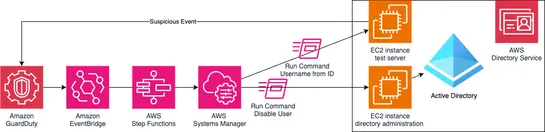
How to automatically disable users in AWS Managed Microsoft AD based on GuardDuty findings

AWS just dropped a new threat-response setup that tiesGuardDuty,EventBridge,Step Functions, andSystems Manager Run Commandinto one clean pipeline. The goal? Hunt for EC2 threats and lock downActive Directoryaccounts—automatically. GuardDuty kicks off the flow when it spots trouble. From there, Even.. read more  

How to automatically disable users in AWS Managed Microsoft AD based on GuardDuty findings
Link
@faun shared a link, 10 months, 1 week ago
FAUN.dev()

Building on the foundation of OpenTelemetry eBPF Instrumentation: what’s new in Grafana Beyla 2.5

Grafana Beyla 2.5 goes all-in on upstreamOpenTelemetry eBPF Instrumentation, baking it right into the core. This release addsauto-instrumentation for MongoDB and JSON-RPC,manual spans in Go, and tightertrace correlation for NodeJS. New in town:survey mode. Think lightweight service discovery—no ful.. read more  

Building on the foundation of OpenTelemetry eBPF Instrumentation: what’s new in Grafana Beyla 2.5
Link
@faun shared a link, 10 months, 1 week ago
FAUN.dev()

How I eliminated networking complexity

A fresh pattern’s gaining traction:Docker + Tailscale sidecarsreplacing old-school reverse proxies and clunky VPNs. Each service runs as its ownmesh-routed node, containerized and independent. The trick?Network namespace sharing.App containers hook into the Tailscale mesh with no exposed ports, no .. read more  

Link
@faun shared a link, 10 months, 1 week ago
FAUN.dev()

MariaDB Kubernetes Operator 25.08.0 Adds AI Vector Support and Disaster Recovery Enhancements

MariaDB Kubernetes Operator 25.08.0 drops some real upgrades. First up:physical backups. Now supported through native MariaDB tools and Kubernetes CSI snapshots—huge win if you're dealing with chunky datasets and tight recovery windows. It alsodefaults to MariaDB 11.8, which brings in anative vect.. read more  

MariaDB Kubernetes Operator 25.08.0 Adds AI Vector Support and Disaster Recovery Enhancements
Link
@faun shared a link, 10 months, 1 week ago
FAUN.dev()

Cloud native is not just for hyperscalers

CNCF just dropped anAI workload conformance program, built like the Kubernetes one—so AI tools play nice across clusters. Portability, meet your referee. It’s tightening the loop betweenOpenTelemetry and OpenSearch, turning ad-hoc hacks into actual cross-project coordination. AndBackstage and GitOp.. read more  

Cloud native is not just for hyperscalers
Link
@faun shared a link, 10 months, 1 week ago
FAUN.dev()

AI inference supercharges on Google Kubernetes Engine

Google Cloud's pushingGKEbeyond container orchestration, framing it as an AI inference engine. Meet the new crew: theInference Gateway(smart load balancer, talks models and hardware),custom compute classes, and aDynamic Workload Schedulerthat tunes for both speed and spend. The setup handles GPU an.. read more  

Link
@faun shared a link, 10 months, 1 week ago
FAUN.dev()

Introducing Headlamp AI Assistant

Headlamp just dropped an AI Assistant plugin that foldsLLM-driven actions and queriesstraight into the Kubernetes UI. It taps intocontext-aware promptsto spot issues, restart deployments, and hunt down flaky pods—without leaving the interface. System shift:This pushes Kubernetes toward intent-based.. read more  

Link
@faun shared a link, 10 months, 1 week ago
FAUN.dev()

Kubernetes Observability: Pillars, Tools & Best Practices

Kubernetes observability isn’t just about catching metrics or tailing logs. It’s about stitching togethermetrics, logs, and tracesto see what’s actually happening—across services, over time, and through the chaos. Thing is, Kubernetes doesn’t come with this built in. So teams hack together toolchai.. read more  

Link
@faun shared a link, 10 months, 1 week ago
FAUN.dev()

How We Saved $1.22 Million Annually on GCP Costs in a Few Simple Steps

Arpeely chopped$140K/monthoff their cloud bill using a surgical mix of GCP tricks. Committed Use Discounts (CUDs) for high-availability services? Check. Smarter Kubernetes HPA configs? Definitely. Archiving old BigQuery data into GCS Archive? That one alone slashed storage costs 16x. The real kicker.. read more  

How We Saved $1.22 Million Annually on GCP Costs in a Few Simple Steps
FastMCP is an open-source Python framework designed to simplify the development of Model Context Protocol servers. It allows developers to define MCP components such as tools, resources, and prompts using decorators, and to organize them through a modular architecture built around providers and transforms. Providers determine where components originate, including local code, directories, OpenAPI specifications, or remote MCP servers. Transforms modify components as they flow to clients, enabling namespacing, filtering, versioning, and visibility control.

The framework supports component versioning, per-component authorization, and middleware for cross-cutting concerns such as authentication and logging. It includes a built-in command-line interface for listing, calling, discovering, and installing MCP servers. FastMCP also supports session-scoped state, background task execution, OpenTelemetry tracing, pagination for large component sets, and transport options including stdio and HTTP-based protocols.

FastMCP is intended for developers building agent-compatible backends and structured tool interfaces for large language model systems that implement the Model Context Protocol.