Join us

ContentUpdates and recent posts about FastMCP..
Story
@idjuric660 shared a post, 9 months, 3 weeks ago
Technical Content Writer, Mailtrap

I Tested 6 Postmark Alternatives: Here’s What I Found

Let’s not kid ourselves, Postmark is a great email service inalmostevery regard. However, if you’re reading this, the chances are that it doesn’t fit your needs anymore, and you’d like to switch it up a little bit. Luckily, you’ve come to the right place! I’ve interviewed our very own deliverability..

Link
@faun shared a link, 9 months, 3 weeks ago
FAUN.dev()

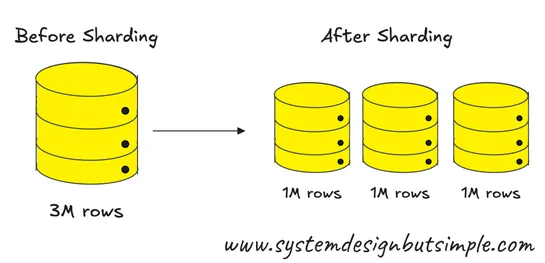
Database Sharding in 1 diagram and 204 words

Sharding breaks a heavyweight database into bite-sized chunks spread across servers. That means better scalability, less strain on any one node. The key? Picking the right shard key. Get that wrong, and you’re in cross-shard query hell. Modulo, range, and consistent hashing each slice the pie diff.. read more  

Database Sharding in 1 diagram and 204 words
Link
@faun shared a link, 9 months, 3 weeks ago
FAUN.dev()

AI Agents and Test Suites: Lessons from the Trenches

AI agents can help wrangletest suite maintenance—if you treat them likejunior devs. That means tight prompts, clear boundaries, and someone keeping an eye on them. Teams get better results when they feed agents sharp context and task them with small, scoped jobs instead of vague laundry lists... read more  

AI Agents and Test Suites: Lessons from the Trenches
Link
@faun shared a link, 9 months, 3 weeks ago
FAUN.dev()

Deeper theories of program design

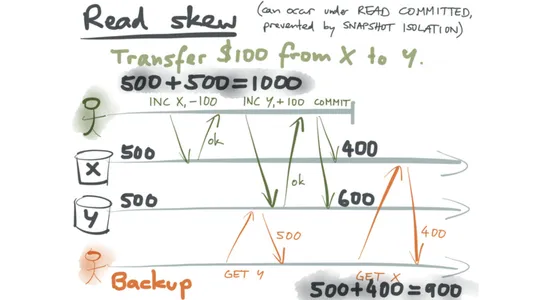
A sharp teardown ofWindows vs. Unix file deletion semanticslands on this: Windows leans on read-write locks; Unix rolls with a looser, non-blocking vibe—more likeweakly-isolated DB transactions. It trades consistency for concurrency, dodging locks even if it means the rules get fuzzy. The post zoom.. read more  

Deeper theories of program design
Link
@faun shared a link, 9 months, 3 weeks ago
FAUN.dev()

Why I chose OCaml as my primary language

OCaml’s grown up. Multicore support is in. So are user-defined effects. Under the hood, affine types, staged metaprogramming, and effect typing are steering it toward resource-safe programming—with actual thrust. Its type system still slaps: powerful modules, GADTs, algebraic types, and now first-c.. read more  

Link
@faun shared a link, 9 months, 3 weeks ago
FAUN.dev()

How I Use Claude Code to Ship Like a Team of Five

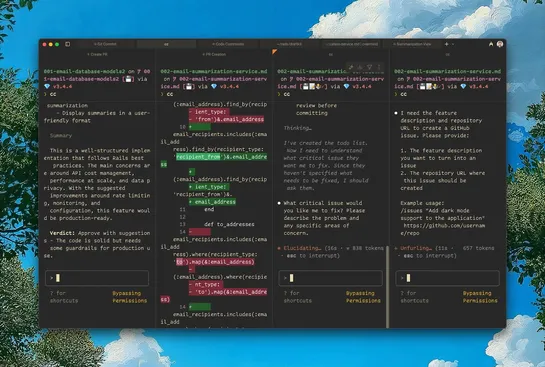
Claude Code zips out Ruby functions, tests, and pull requests viaCLIprompts across multiplegit worktrees. It slays manual typing and ejects IDE plugins. It spins up ephemeraltest environmentsto replay bugs, pries open externalgemcode, and syncs branches, commits, and PRs in one go... read more  

How I Use Claude Code to Ship Like a Team of Five
Link
@faun shared a link, 9 months, 3 weeks ago
FAUN.dev()

Ship tools as standalone static binaries

OpenAI’s rewritingCodexinRust, ditching the oldTypeScriptversion. Why? To ship it as a single static binary—no messy installs, no glue code juggling. Just run. Rust cuts down runtime failures, trims the attack surface, and kills off toolchain sprawl. Less fragility. More control. System shift:Team.. read more  

Link
@faun shared a link, 9 months, 3 weeks ago
FAUN.dev()

Git Branching Strategies: A Comprehensive Guide

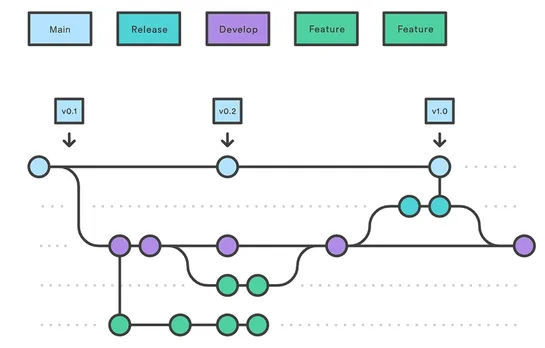
This guide breaks down the major Git branching strategies—GitFlow,GitHub Flow,GitLab Flow,Trunk-Based Development, and a few others that still show up in wild repos. Each one gets sized up by structure, use case, and trade-offs. Think: how big the team is, how fast releases go out, and how people l.. read more  

Git Branching Strategies: A Comprehensive Guide
Link
@faun shared a link, 9 months, 3 weeks ago
FAUN.dev()

The great SQLite rewrite

Turso just dropped the alpha of itsRust-based SQLite rethink—rewritten from scratch to handle today’s mess:async APIs,built-in vector search, and actualconcurrent writes. Forget the old SQLite playbook. Turso’s version leans into modularity, bakes in deterministic tests, and still aims for SQLite-l.. read more  

The great SQLite rewrite
Link
@faun shared a link, 9 months, 3 weeks ago
FAUN.dev()

Lessons from scaling PostgreSQL queues to 100K events

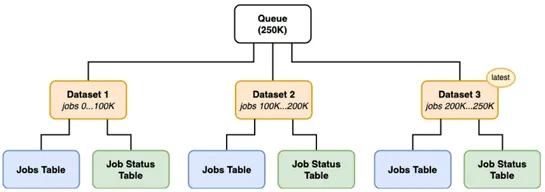
RudderStack crankedPostgreSQLup to100K events/secas a queuing engine. The secret sauce: tight tuning of job partitioning, smarter indexing, tuned VACUUM timing, and compaction that didn't choke. Recursive CTEs stood in for loose index scans. Caching cut I/O repeats. They ditched byte slices to side.. read more  

Lessons from scaling PostgreSQL queues to 100K events
FastMCP is an open-source Python framework designed to simplify the development of Model Context Protocol servers. It allows developers to define MCP components such as tools, resources, and prompts using decorators, and to organize them through a modular architecture built around providers and transforms. Providers determine where components originate, including local code, directories, OpenAPI specifications, or remote MCP servers. Transforms modify components as they flow to clients, enabling namespacing, filtering, versioning, and visibility control.

The framework supports component versioning, per-component authorization, and middleware for cross-cutting concerns such as authentication and logging. It includes a built-in command-line interface for listing, calling, discovering, and installing MCP servers. FastMCP also supports session-scoped state, background task execution, OpenTelemetry tracing, pagination for large component sets, and transport options including stdio and HTTP-based protocols.

FastMCP is intended for developers building agent-compatible backends and structured tool interfaces for large language model systems that implement the Model Context Protocol.