Join us

ContentUpdates and recent posts about Botkube..
Link
@faun shared a link, 1 year ago
FAUN.dev()

Shift Left with Confidence: A Practical Guide to DevSecOps Using GitHub Actions for Python Projects

GitHub Actions turns your Python projects into armored tanks, shifting security left to catch skeletons in your code's closet. It scans for secrets, polices package licenses, and hunts down bugs before they even think of moving in. Automated unit tests, Docker scans, vulnerability checks—your CI/CD .. read more  

Link
@faun shared a link, 1 year ago
FAUN.dev()

How to use on-demand rotation for AWS KMS imported keys

AWS KMShas this cool trick now: on-demand rotation for imported key material. Your key ID stays put, so your code won’t throw a tantrum. Who wants more manual updates anyway?.. read more  

Link
@faun shared a link, 1 year ago
FAUN.dev()

How Red Hat just quietly, radically transformed enterprise server Linux

Old-school package pain fizzles out with the rise of 🚀immutable Linuxserving swift updates and rock-solid security. Bonus: Red Hat's jumping in with both feet!.. read more  

How Red Hat just quietly, radically transformed enterprise server Linux
Link
@faun shared a link, 1 year ago
FAUN.dev()

AlloyDB vs Amazon Aurora for PostgreSQL

AlloyDBoutperforms AWS Aurora for PostgreSQL in the TPC-C benchmark, handling2,875,803 TPM compared to Aurora's 1,245,459, and is 2.42 times more cost-effective at $0.075 per transaction. AlloyDB shows superior performance with substantial cost savings, making it a prime choice for transactional wor.. read more  

Link
@faun shared a link, 1 year ago
FAUN.dev()

Beyond API Uptime: Modern Metrics That Matter

Catchpoint's IPM reports a jaw-dropping 51% of companies hemorrhaging over$1 million each monthfrom API disasters. It's about performance, not just uptime. Modern API tools need to zero in on user experience metrics. Ditch the tired up/down routine. Embrace chaos engineering, pair it with proactive .. read more  

Link
@faun shared a link, 1 year ago
FAUN.dev()

Amazon EKS and Amazon EKS Distro now supports Kubernetes version 1.33

Kubernetes 1.33struts onto the scene with stablesidecar containers, topology-aware routing, and pod topology spread constraints. No beta testing anymore; it's fully unleashed onAWS EKS... read more  

Amazon EKS and Amazon EKS Distro now supports Kubernetes version 1.33
Link
@faun shared a link, 1 year ago
FAUN.dev()

The Risk of Default Configuration: How Out-of-the-Box Helm Charts Can Breach Your Cluster

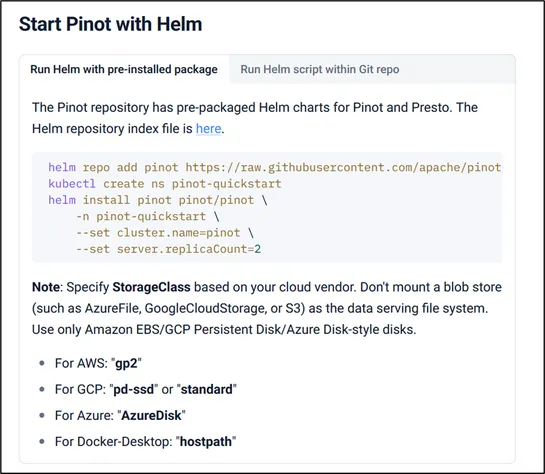
Apache Pinot's Helm setup is a welcome mat for troublemakers.It throws the doors open to critical services without bothering to ask, "Who goes there?" It's the kind of oversight attackers savor.Meshery and Selenium join the party too.Their default settings flirt with disaster, leaving the gates ajar.. read more  

The Risk of Default Configuration: How Out-of-the-Box Helm Charts Can Breach Your Cluster
Link
@faun shared a link, 1 year ago
FAUN.dev()

What’s New in Networking for Kubernetes in the Isovalent Platform 1.17

The Isovalent Platform 1.17 release brings major upgrades to Kubernetes networking, including a new standalone Egress Gateway, dynamic BGP features, enhanced multi-tenant security policies, and smoother Calico-to-Cilium migrations. This version also introduces easier observability with integrated Ti.. read more  

Link
@faun shared a link, 1 year ago
FAUN.dev()

AI Runs Best On Cloud Native—Who's Managing the Kubernetes Platform?

AI workloads thrive on cloud-native platforms like Kubernetes because they offer the scalability, portability, and speed needed for modern machine learning—but building and running this infrastructure is highly complex and distracts from core AI work. The post argues that unless your business is inf.. read more  

Link
@faun shared a link, 1 year ago
FAUN.dev()

Announcing new Model Context Protocol (MCP) Servers for AWS Serverless and Containers - AWS

AWS's Model Context Protocol (MCP) servers arm AI code assistantsto deftly wrangle AWS Lambda, ECS, and EKS. They launch apps at warp speed.MCP servers cram in AWS best practices and operational secrets,freeing you from infrastructure drudgery. You get to dive straight into crafting the heart of you.. read more  

Announcing new Model Context Protocol (MCP) Servers for AWS Serverless and Containers - AWS
Botkube is a Kubernetes-centric chatbot that aids in Kubernetes troubleshooting and provides valuable insights for various aspects of Kubernetes operations. This open-source tool integrates with popular messaging platforms like Slack and helps streamline Kubernetes management and problem-solving processes.

Key functionalities of Botkube include:

Alert Notifications: Botkube can be configured to receive and relay alerts from various monitoring tools (e.g., Prometheus, Grafana) directly to your team's communication platform, ensuring prompt incident awareness.

Kubernetes Event Monitoring: It continuously monitors Kubernetes cluster events, offering real-time information on changes and issues within your cluster, such as pod crashes or node failures.

Troubleshooting Assistance: Botkube can provide context-sensitive guidance and suggestions for debugging and resolving common Kubernetes problems, making it a valuable resource for both beginners and experienced Kubernetes users.

Resource Management: It can assist in resource optimization by providing recommendations for scaling deployments, managing resource quotas, and handling updates to your applications.

Security Insights: Botkube can help maintain Kubernetes security by alerting you to security breaches, unauthorized access, and vulnerabilities, allowing you to take immediate action.

Customization: Botkube is highly customizable, allowing you to tailor it to your specific needs and integrate it with other tools and scripts in your Kubernetes ecosystem.

In summary, Botkube serves as a Kubernetes assistant that enhances communication and awareness within your team while providing automated support for troubleshooting, monitoring, and managing your Kubernetes clusters, ultimately contributing to a more efficient and reliable Kubernetes operation.