Join us

ContentUpdates and recent posts about Botkube..
Link
@faun shared a link, 7 months ago
FAUN.dev()

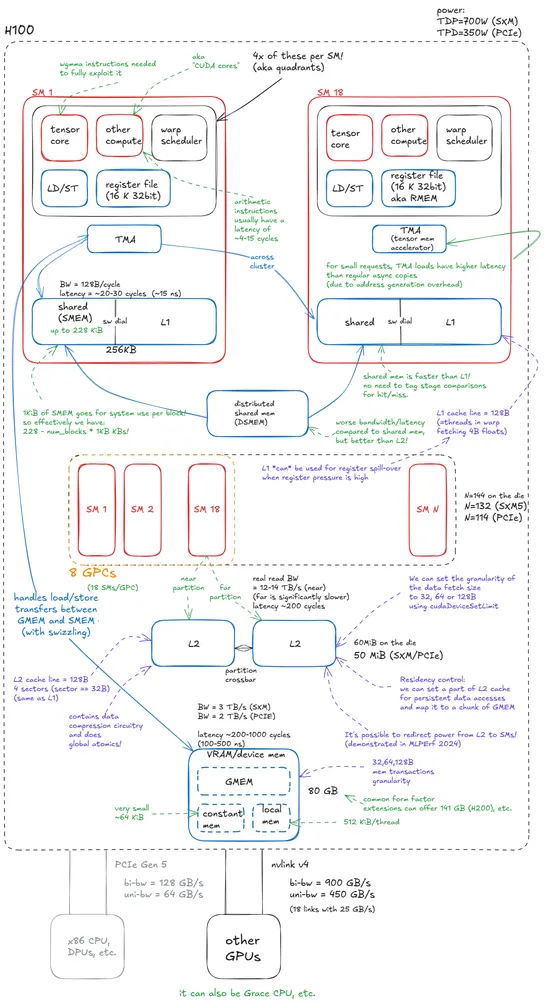
Inside NVIDIA GPUs: Anatomy of high performance matmul kernels

NVIDIA Hopper packs serious architectural tricks. At the core: **Tensor Memory Accelerator (TMA)**, **tensor cores**, and **swizzling**—the trio behind async, cache-friendly matmul kernels that flirt with peak throughput. But folks aren't stopping at cuBLAS. They're stacking new tactics: **warp-gro.. read more  
Inside NVIDIA GPUs: Anatomy of high performance matmul kernels
Link
@faun shared a link, 7 months ago
FAUN.dev()

Becoming a Research Engineer at a Big LLM Lab - 18 Months of Strategic Career Development

To land a big career role like Mistral, mix efficient **tactical** moves (like LeetCode practice) with **strategic** ups, like building a powerful portfolio and a solid network. Balance is key; aim to impress and prepare well without overlooking the power of strategy in shaping a successful career... read more  

Link
@faun shared a link, 7 months ago
FAUN.dev()

Shai-Hulud npm Supply Chain Attack

Malicious npm packages just leveled up: this one dropped a self-spreading worm that hijacks repos and leaks secrets the moment it lands. It abuses `postinstall` scripts to run TruffleHog and swipe tokens straight from your codebase. Then it uses GitHub Actions to exfiltrate the loot and auto-publis.. read more  

Shai-Hulud npm Supply Chain Attack
Link
@faun shared a link, 7 months ago
FAUN.dev()

How FinOps Drives Value for Every Engineering Dollar

Duolingo’s FinOps crew didn’t just track cloud costs—they wired up sharp, automated observability across 100+ microservices. Real-time alerts now catch AI and infra spend spikes before they torch the budget. They sliced TTS costs by 40% with in-memory caching. Dumped pricey CloudWatch metrics for P.. read more  

How FinOps Drives Value for Every Engineering Dollar
Link
@faun shared a link, 7 months ago
FAUN.dev()

Demystifying Log Retention in Azure

Azure logs come in three flavors: **Activity Logs**, **Diagnostic Logs**, and **Log Analytics**. Each with its own rules for retention and billing. The catch? Those differences aren’t quirks—they’re baked in... read more  

Link
@faun shared a link, 7 months ago
FAUN.dev()

Observability for the Invisible: Tracing Message Drops in Kafka Pipelines

When an event drops silently in a distributed system, it is not a bug, it is an architectural blind spot. Detect, debug, and prevent message loss in Kafka-based streaming pipelines using tools like OpenTelemetry, Fluent Bit, Jaeger, and dead-letter queues. Make sure observability gaps in event strea.. read more  

Link
@faun shared a link, 7 months ago
FAUN.dev()

Introducing DigitalOcean Organizations, a new and comprehensive account layer

DigitalOcean just dropped **Organizations**—a real upgrade for anyone juggling multiple Teams. Think one top-level account to rule them all: centralized user control, one invoice to track, and org-wide settings for taxes, credits, and permissions... read more  

Introducing DigitalOcean Organizations, a new and comprehensive account layer
Link
@faun shared a link, 7 months ago
FAUN.dev()

Top 30 Argo CD Anti-Patterns to Avoid When Adopting Gitops

A teardown of Argo CD anti-patterns calls out 28 common misfires—stuff like skipping Git for Application CRDs or stuffing Helm/Kustomize config right into Argo CD manifests. Yikes. It pushes for a cleaner setup: use **ApplicationSets** instead of rolling your own YAML, turn on **auto-sync/self-heal.. read more  

Link
@faun shared a link, 7 months ago
FAUN.dev()

What are Error Budgets? A Guide to Managing Reliability

OneUptime shows how to put **error budgets** to work—keeping feature velocity in check without tanking reliability. The goal: ship fast, stay within SLOs. They do it by tracking **burn rates**, syncing across teams, and tuning SLOs to match how users actually use the product. Less guesswork, more s.. read more  

Link
@faun shared a link, 7 months ago
FAUN.dev()

v1.34: Pod Level Resources Graduated to Beta

Kubernetes v1.34 bumps **Pod Level Resources** to Beta—and flips them on by default. Now you can set CPU, memory, and hugepages limits for the whole Pod, not just per container. That means smoother scheduling, stricter resource caps, and less sidecar thrashing. **Why it matters:** This shifts Kuber.. read more  

Botkube is a Kubernetes-centric chatbot that aids in Kubernetes troubleshooting and provides valuable insights for various aspects of Kubernetes operations. This open-source tool integrates with popular messaging platforms like Slack and helps streamline Kubernetes management and problem-solving processes.

Key functionalities of Botkube include:

Alert Notifications: Botkube can be configured to receive and relay alerts from various monitoring tools (e.g., Prometheus, Grafana) directly to your team's communication platform, ensuring prompt incident awareness.

Kubernetes Event Monitoring: It continuously monitors Kubernetes cluster events, offering real-time information on changes and issues within your cluster, such as pod crashes or node failures.

Troubleshooting Assistance: Botkube can provide context-sensitive guidance and suggestions for debugging and resolving common Kubernetes problems, making it a valuable resource for both beginners and experienced Kubernetes users.

Resource Management: It can assist in resource optimization by providing recommendations for scaling deployments, managing resource quotas, and handling updates to your applications.

Security Insights: Botkube can help maintain Kubernetes security by alerting you to security breaches, unauthorized access, and vulnerabilities, allowing you to take immediate action.

Customization: Botkube is highly customizable, allowing you to tailor it to your specific needs and integrate it with other tools and scripts in your Kubernetes ecosystem.

In summary, Botkube serves as a Kubernetes assistant that enhances communication and awareness within your team while providing automated support for troubleshooting, monitoring, and managing your Kubernetes clusters, ultimately contributing to a more efficient and reliable Kubernetes operation.