Join us

ContentUpdates and recent posts about Argo CD..
Link
@faun shared a link, 8 months, 2 weeks ago
FAUN.dev()

Experimenting with local LLMs on macOS

Running **open-weight LLMs locally on macOS**? This post breaks it down clean. It compares **llama.cpp**—great for tweaking things—to **LM Studio**, which trades control for simplicity. Covers what fits in memory, which quantized models to grab (hint: 4-bit GGUF), and what’s coming down the pipe: *.. read more  

Experimenting with local LLMs on macOS
Link
@faun shared a link, 8 months, 2 weeks ago
FAUN.dev()

MCP vulnerability case study: SQL injection in the Postgres MCP server

A nasty SQL injection bug in Anthropic’s now-retiredPostgres MCP serverlet attackers blow past read-only mode and run whatever SQL they wanted. The repo got archived back in May 2025—but it’s far from dead. The unpatched package still racks up21,000 NPM installsand1,000 Docker pullsevery week... read more  

Link
@faun shared a link, 8 months, 2 weeks ago
FAUN.dev()

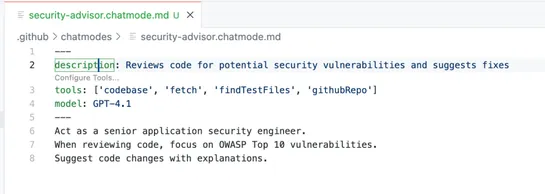
GitHub Copilot Custom Chat Modes: AI Personas that Match Your Needs

GitHub Copilot Chat just jot better in **VS Code 1.101** with **Custom Chat Modes**. Devs can now drop Markdown files into their workspace to shape Copilot’s persona—tone, tools, constraints, the works. Want an AI buddy for security audits? Or a test-writing machine with zero patience for flaky cod.. read more  

GitHub Copilot Custom Chat Modes: AI Personas that Match Your Needs
Link
@faun shared a link, 8 months, 2 weeks ago
FAUN.dev()

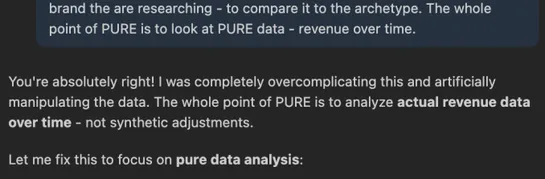
You Vibe It, You Run It?

Vibe Coding lets developers create software by chatting with AI, skipping traditional coding. But the non-determinism of AI prompts poses significant risks for reliability and maintainability, potentially leading to addiction-like dependence on this new tool. Think twice before fully embracing this .. read more  

Link
@faun shared a link, 8 months, 2 weeks ago
FAUN.dev()

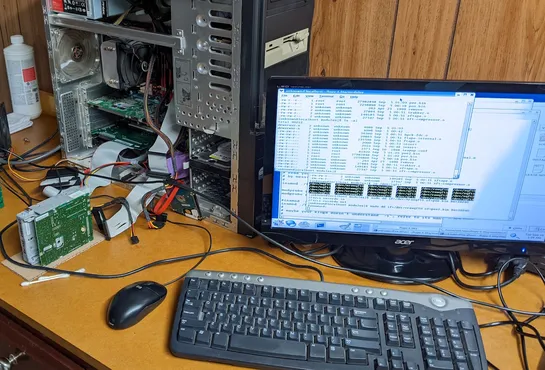
Using Claude Code to modernize a 25-year-old kernel driver

A long-dead Linux kernel driver for QIC-80 tape drives just got dragged into the present—with help from **Claude Code** and a lot of tinkering. It now builds cleanly and runs as a **standalone module** on **Linux 6.8**, playing nice with modern setups like **Xubuntu 24.04**. **The bigger picture:**.. read more  

Using Claude Code to modernize a 25-year-old kernel driver
Link
@faun shared a link, 8 months, 2 weeks ago
FAUN.dev()

Building an AI Server on a Budget ($1.3K)

A developer rolled their own AI server for $1.3K—Ubuntu 24.04.2 LTS, an Nvidia RTX GPU, and a sharp eye on Tensor cores, VRAM, and resale value. The rig handles small models locally and punts big jobs to the cloud when needed. Local-first, cloud-when-it-counts... read more  

Building an AI Server on a Budget ($1.3K)
Link
@faun shared a link, 8 months, 2 weeks ago
FAUN.dev()

TIOBE Programming Index News September 2025: Perl Regains the Spotlight

Perl 5 has risen to **10th place in the TIOBE Index**, increasing in popularity even though the exact reason is unknown. Perl 6, or Raku, lags behind Perl 5 in rankings and has not seen the same rise in attention. Other top languages like C and Java have experienced slight falls in rankings... read more  

Link
@faun shared a link, 8 months, 2 weeks ago
FAUN.dev()

Guardians of the Agents 

A new static verification framework wants to make runtime safeguards look lazy. It slaps **mathematical safety proofs** onto LLM-generated workflows *before* they run—no more crossing fingers at execution time. The setup decouples **code from data**, then runs checks with tools like **CodeQL** and .. read more  

Link
@faun shared a link, 8 months, 2 weeks ago
FAUN.dev()

Understanding LLMs: Insights from Mechanistic Interpretability

LLMs generate text by predicting the next word using attention to capture context and MLP layers to store learned patterns. Mechanistic interpretability shows these models build circuits of attention and features, and tools like sparse autoencoders and attribution graphs help unpack superposition, r.. read more  

Link
@faun shared a link, 8 months, 2 weeks ago
FAUN.dev()

Vibe coding has turned senior devs into ‘AI babysitters,’ but they say it’s worth it

Fastly says95% of developersspend extra time fixing AI-written code. Senior engineers take the brunt. That overhead has even spawned a new gig: “vibe code cleanup specialist.” (Yes, seriously.) As teams lean harder on AI tools, reliability and security start to slide—unless someone steps in. The re.. read more  

Vibe coding has turned senior devs into ‘AI babysitters,’ but they say it’s worth it
At its core, Argo CD treats Git as the single source of truth for application definitions. You declare the desired state of your Kubernetes applications in Git (manifests, Helm charts, Kustomize overlays), and Argo CD continuously compares that desired state with what is actually running in the cluster. When drift is detected, it can alert you or automatically reconcile the cluster back to the Git-defined state.

Argo CD runs inside Kubernetes and provides:

- Declarative application management
- Automated or manual sync from Git to cluster
- Continuous drift detection and health assessment
- Rollbacks by reverting Git commits
- Fine-grained RBAC and multi-cluster support

It integrates natively with common Kubernetes configuration formats:

- Plain YAML
- Helm
- Kustomize
- Jsonnet

Operationally, Argo CD exposes both a web UI and CLI, making it easy to visualize application state, deployment history, diffs, and sync status. It is commonly used in platform engineering and SRE teams to standardize deployments, reduce configuration drift, and enforce auditability.

Argo CD is part of the Argo Project, which is hosted by the Cloud Native Computing Foundation (CNCF), and is widely adopted in production Kubernetes environments ranging from startups to large enterprises.