Join us

ContentUpdates and recent posts about AIStor..
Link
@devopslinks shared a link, 5 months, 1 week ago
FAUN.dev()

Post-quantum (ML-DSA) code signing with AWS Private CA and AWS KMS

AWS Private CA now supportspost-quantum ML-DSA X.509 certificates. That means quantum-resistant roots of trust - for code signing, mTLS, and device auth. It's wired up with AWS KMS, so you can handle signing workflows usingML-DSA keysand verify them with standard tools like OpenSSL usingCMS detached.. read more  

Post-quantum (ML-DSA) code signing with AWS Private CA and AWS KMS
Link
@devopslinks shared a link, 5 months, 1 week ago
FAUN.dev()

WTF is ... - AI-Native SAST?

AI-native SAST is replacing the “LLM as magic scanner” myth. Instead, the smart play is combining language models with real static analysis. That’s how teams are catching the gnarlier stuff - like business logic bugs - that usually slip through. The trick?Use static analysis to grab clean, relevant .. read more  

News FAUN.dev() Team
@varbear shared an update, 5 months, 1 week ago
FAUN.dev()

New MCP Release v0.10.0 Supercharges AI-Assisted Web Development

chrome-devtools-mcp

Chrome DevTools MCP v0.10.0 unlocks deeper AI-powered debugging with new tools for DOM access, network request detection, page reload automation, performance insights, and snapshot saving.

Google Launches Chrome DevTools MCP Server Preview for AI-Driven Web Debugging
News FAUN.dev() Team
@varbear shared an update, 5 months, 1 week ago
FAUN.dev()

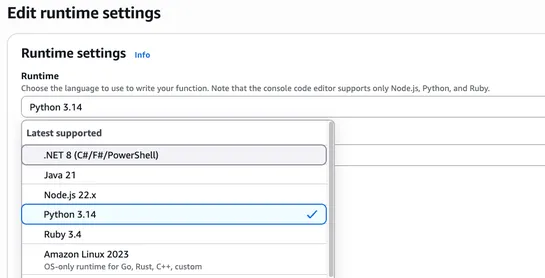
AWS Lambda Gets Python 3.14: Faster, Smarter, and More Serverless-Friendly

AWS Lambda

Python 3.14 is now available in AWS Lambda, enabling developers to leverage new Python features for serverless applications.

AWS Lambda Gets Python 3.14: Faster, Smarter, and More Serverless-Friendly
News FAUN.dev() Team
@kaptain shared an update, 5 months, 1 week ago
FAUN.dev()

The Most Absurd (and Brilliant) Kubernetes Cluster at KubeCon 2025

Kubernetes Talos Linux

Engineer Justin Garrison showcased a backpack-sized PETAFLOP Kubernetes cluster at KubeCon 2025, demonstrating localized AI capabilities without cloud reliance.

The Most Absurd (and Brilliant) Kubernetes Cluster at KubeCon 2025
News FAUN.dev() Team
@kaptain shared an update, 5 months, 1 week ago
FAUN.dev()

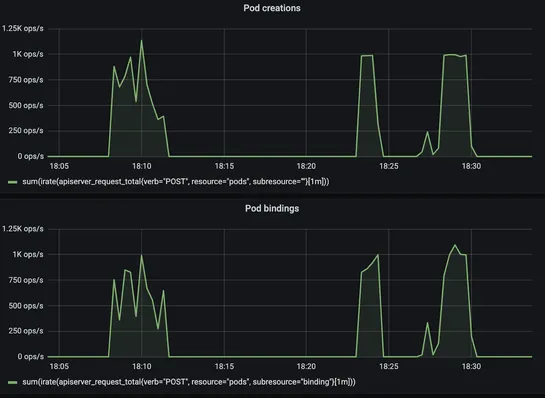
Google Breaks Kubernetes Limits Again: Inside the 130,000-Node GKE Cluster

#GKE  #Google ...  #Google  #AI  #kuberne... 
Google Kubernetes Engine (GKE) kueue

Google successfully operates a 130,000-node Kubernetes cluster to enhance GKE's scalability for AI workloads.

Control plane throughput: Sustaining up to 1,000 operations per second for both Pod creation and Pod binding during intense scheduling phases.
News FAUN.dev() Team
@devopslinks shared an update, 5 months, 1 week ago
FAUN.dev()

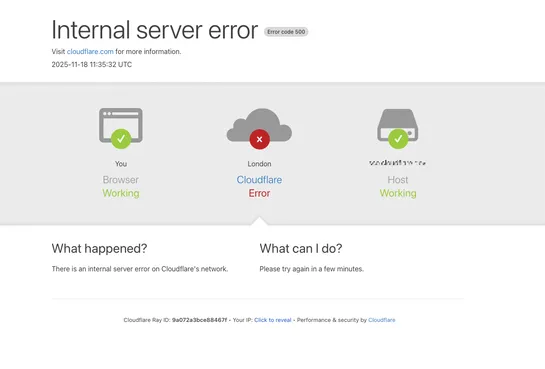
Inside Cloudflare's Worst Outage Since 2019: How a Single Config File Broke the Internet

Cloudflare Cloudflare Workers

A database permissions change led to a Cloudflare outage by creating an oversized feature file, causing network failures initially mistaken for a DDoS attack.

Inside Cloudflare's Worst Outage Since 2019: How a Single Config File Broke the Internet
News FAUN.dev() Team
@devopslinks shared an update, 5 months, 1 week ago
FAUN.dev()

Valkey 9.0 Released: Faster Clusters, New TTL Controls, and Big Networking Gains

Valkey

Valkey 9.0 debuts with atomic slot migrations, hash field expiration, and improved cluster mode support, enhancing data management and scalability.

Valkey 9.0 Released: Faster Clusters, New TTL Controls, and Big Networking Gains
News FAUN.dev() Team
@devopslinks shared an update, 5 months, 1 week ago
FAUN.dev()

Grafana 12.3 Lands With New Learning Tools, Better Logs, and a Critical Security Fix

Grafana

Grafana 12.3 enhances user experience with interactive learning, improved logs visualization, and a critical security fix, alongside new features like dashboard image export and expanded data source support.

Grafana 12.3 Lands With New Learning Tools, Better Logs, and a Critical Security Fix
News FAUN.dev() Team
@kala shared an update, 5 months, 1 week ago
FAUN.dev()

Google Unveils Antigravity: An Agentic IDE Built for Autonomous Coding

Google Antigravity

Google introduces Antigravity, an AI-driven platform enhancing IDEs with autonomous coding capabilities, now in public preview.

Google Unveils Antigravity: An Agentic IDE Built for Autonomous Coding
AIStor is an enterprise-grade, high-performance object storage platform built for modern data workloads such as AI, machine learning, analytics, and large-scale data lakes. It is designed to handle massive datasets with predictable performance, operational simplicity, and hyperscale efficiency, while remaining fully compatible with the Amazon S3 API. AIStor is offered under a commercial license as a subscription-based product.

At its core, AIStor is a software-defined, distributed object store that runs on commodity hardware or in containerized environments like Kubernetes. Rather than being limited to traditional file or block interfaces, it exposes object storage semantics that scale from petabytes to exabytes within a single namespace, enabling consistent, flat addressing of vast datasets. It is engineered to sustain very high throughput and concurrency, with examples of multi-TiB/s read performance on optimized clusters.

AIStor is optimized specifically for AI and data-intensive workloads, where throughput, low latency, and horizontal scalability are critical. It integrates broadly with modern AI and analytics tools, including frameworks such as TensorFlow, PyTorch, Spark, and Iceberg-style table engines, making it suitable as the foundational storage layer for pipelines that demand both performance and consistency.

Security and enterprise readiness are central to AIStor’s design. It includes capabilities like encryption, replication, erasure coding, identity and access controls, immutability, lifecycle management, and operational observability, which are important for mission-critical deployments that must meet compliance and data protection requirements.

AIStor is positioned as a platform that unifies diverse data workloads — from unstructured storage for application data to structured table storage for analytics, as well as AI training and inference datasets — within a consistent object-native architecture. It supports multi-tenant environments and can be deployed across on-premises, cloud, and hybrid infrastructure.