Join us

ContentUpdates and recent posts about AIStor..
Link
@faun shared a link, 10 months, 3 weeks ago
FAUN.dev()

Introducing Cloud Storage bucket relocation

Google's Cloud Storage bucket relocationmakes data moves a breeze. Downtime? Forget about it. Your metadata and storage class stay intact, so you can focus on optimizing costs instead of stressing over logistics... read more  

Introducing Cloud Storage bucket relocation
Link
@faun shared a link, 10 months, 3 weeks ago
FAUN.dev()

AI is making developers faster, but at a cost

AI adoption edges code quality up by 3.4% and speeds up reviews by 3.1%, but beware—a 7.2% nosedive in delivery stability rears ugly security holes.Mask AI’s risky behavior with afortress-like infrastructure, a central vault for secrets,and a transparency upgrade to reclaim stability and nail compli.. read more  

AI is making developers faster, but at a cost
Link
@faun shared a link, 10 months, 3 weeks ago
FAUN.dev()

Debugging the One-in-a-Million Failure: Migrating Pinterest’s Search Infrastructure to Kubernetes

Migrating Pinterest's search infrastructure to Kubernetes—toasty, right? But it tripped over a rare hiccup: sluggish 5-second latencies. The culprit? cAdvisor, overzealously spying on memory like a helicopter parent. Flicking off WSS? Problem evaporated... read more  

Debugging the One-in-a-Million Failure: Migrating Pinterest’s Search Infrastructure to Kubernetes
Link
@faun shared a link, 10 months, 3 weeks ago
FAUN.dev()

Use Terraform Modules in Pulumi Without Conversion

Pulumijust leveled up. It now runsTerraformmodules straight up. This means all that slick Pulumi magic paired with the Terraform groundwork you've already laid. Drop in a module, and Pulumi takes over execution and state management. Consider it your bridge to full Pulumi bliss... read more  

Link
@faun shared a link, 10 months, 3 weeks ago
FAUN.dev()

The reality of GitOps application recreation

52%of teams believe they're ace at cloning apps from Git. High-performers?70%of them share in this delusion. Yet, lurking infrastructure wrinkles often deflate their grand plans. GitOps, that wild ride, inspires confidence. It dips, then soars. But just when enthusiasts think they're cruising, they .. read more  

Link
@faun shared a link, 10 months, 3 weeks ago
FAUN.dev()

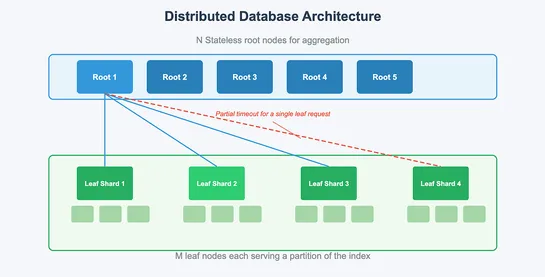
Implementing High-Performance LLM Serving on GKE: An Inference Gateway Walkthrough

GKE Inference Gatewayflips LLM serving on its head. It’s all about that GPU-aware smart routing. By juggling the KV Cache in real time, it amps up throughput and slices latency like a hot knife through butter... read more  

Implementing High-Performance LLM Serving on GKE: An Inference Gateway Walkthrough
Link
@faun shared a link, 10 months, 3 weeks ago
FAUN.dev()

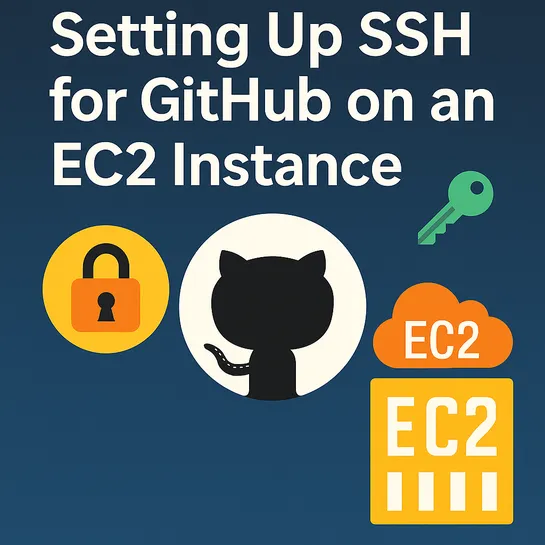
Stop Wasting Time: The Only Guide You’ll Ever Need to Setup/Fix SSH on EC2

GitHub's giving passwords the boot for HTTPS logins. Say hello topublic-key SSHor a Personal Access Token. So, load up those SSH keys—or hit the road... read more  

Stop Wasting Time: The Only Guide You’ll Ever Need to Setup/Fix SSH on EC2
Link
@faun shared a link, 10 months, 3 weeks ago
FAUN.dev()

Report - AI tools slow down experienced developers by 19%. A wake up call for industry hype?

Open-source devs got stuck, wasting 19% more time on tasks thanks to AI tools—oppose the hype and vendor bluster.Yet, a baffling 69% clung to AI, suggesting some sneaky perks lurk beneath the surface... read more  

Link
@faun shared a link, 10 months, 3 weeks ago
FAUN.dev()

Server-Driven UI: Agile Interfaces Without App Releases

Server-driven UI (SDUI) shifts UI control to the server, allowing for instant, dynamic updates without app releases. JSON payloads define components, improving agility but requiring client-side rendering adjustments. Complex UI changes may still need app updates due to missing client-side components.. read more  

Link
@faun shared a link, 10 months, 3 weeks ago
FAUN.dev()

Wix Adds Chaos to CI/CD Pipelines with AI and Improves Reliability

Wixhas slipped probabilistic AI into the mix inCI/CD, and it doesn't clutter the works. This AI chews through build logs, shaving off hours from developer workloads. Migrating 100 modules took three months? Not anymore. They've sliced it to a mere 24-48 hours by marrying AI insights with their sharp.. read more  

Wix Adds Chaos to CI/CD Pipelines with AI and Improves Reliability
AIStor is an enterprise-grade, high-performance object storage platform built for modern data workloads such as AI, machine learning, analytics, and large-scale data lakes. It is designed to handle massive datasets with predictable performance, operational simplicity, and hyperscale efficiency, while remaining fully compatible with the Amazon S3 API. AIStor is offered under a commercial license as a subscription-based product.

At its core, AIStor is a software-defined, distributed object store that runs on commodity hardware or in containerized environments like Kubernetes. Rather than being limited to traditional file or block interfaces, it exposes object storage semantics that scale from petabytes to exabytes within a single namespace, enabling consistent, flat addressing of vast datasets. It is engineered to sustain very high throughput and concurrency, with examples of multi-TiB/s read performance on optimized clusters.

AIStor is optimized specifically for AI and data-intensive workloads, where throughput, low latency, and horizontal scalability are critical. It integrates broadly with modern AI and analytics tools, including frameworks such as TensorFlow, PyTorch, Spark, and Iceberg-style table engines, making it suitable as the foundational storage layer for pipelines that demand both performance and consistency.

Security and enterprise readiness are central to AIStor’s design. It includes capabilities like encryption, replication, erasure coding, identity and access controls, immutability, lifecycle management, and operational observability, which are important for mission-critical deployments that must meet compliance and data protection requirements.

AIStor is positioned as a platform that unifies diverse data workloads — from unstructured storage for application data to structured table storage for analytics, as well as AI training and inference datasets — within a consistent object-native architecture. It supports multi-tenant environments and can be deployed across on-premises, cloud, and hybrid infrastructure.