Join us

ContentUpdates and recent posts about AIStor..
Link
@faun shared a link, 10 months, 1 week ago
FAUN.dev()

Building a Redis Clone from Scratch – In-Memory KV Store with TCP

A solo dev just spun up a public build of aRedis-style key-value store in Java—lean, thread-safe, and backed by a custom TCP server. Right now it handlesGET,SET, andDELETEover a socket-level protocol. No HTTP. No bloat. At its core: aConcurrentHashMapdoing the heavy lifting. Fast, in-memory, and de.. read more  

Link
@faun shared a link, 10 months, 1 week ago
FAUN.dev()

How we discovered, and recovered from, Postgres corruption on the homeserver

PostgreSQL index corruption silently broke the matrix.org homeserver. State groups were corrupted, active data was deleted, and restoring consistency took a week of forensic debugging and reindexing. The root cause? Unclear. Hardware, maybe. But not Postgres or Synapse. The team’s fix involved disab.. read more  

Story
@laura_garcia shared a post, 10 months, 1 week ago
Software Developer, RELIANOID

📌 New: netstat Command Cheatsheet

Need to check active connections, monitor listening ports, or debug network issues? The Linux netstat command remains a go-to tool for quick and effective diagnostics. We’ve created a clear, quick-reference cheatsheet with: 🔍 Essential command flags 📊 Real-world use cases ⚙️ Integration tips for REL..

The_Linux_netstat_command_Cheatsheet
Link
@faun shared a link, 10 months, 1 week ago
FAUN.dev()

Building Reproducible ML Systems with Apache Iceberg and SparkSQL

Apache Iceberg +SparkSQLbringsACID transactions,schema evolution, andtime travelto data lakes. That means ML pipelines finally get reproducibility and consistency without the hacks. Iceberg’s snapshot-based guts track every version, handle parallel writes without stepping on toes, and keep training .. read more  

Building Reproducible ML Systems with Apache Iceberg and SparkSQL
Link
@faun shared a link, 10 months, 1 week ago
FAUN.dev()

Using generative AI for building AWS networks

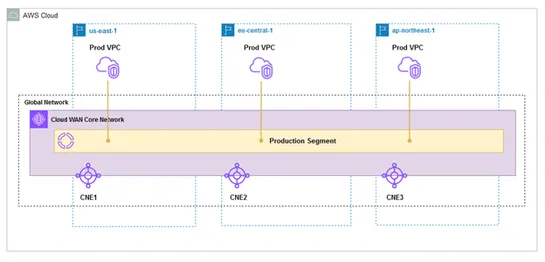
Amazon Q Developer CLI and Bedrock just leveled up. You can now spin up AWS Cloud WANs and VPCs using plain English. Type what you need—get full deployments, phased migrations, and IaC for both CloudFormation and Terraform. Agents handle the whole stack: network discovery, rollout, and config. No m.. read more  

Using generative AI for building AWS networks
Link
@faun shared a link, 10 months, 1 week ago
FAUN.dev()

How to Build an Agent

A new framework lays out six sharp steps for building agents that actually ship. It kicks off with a grounded task, locks in SOPs, then tunes high-leverage prompts. The real choke point? LLM reasoning. Everything else—architecture, data flow, testing—is scoped to chase tight, measurable gains there... read more  

Link
@faun shared a link, 10 months, 1 week ago
FAUN.dev()

AWS AgentCore: The Overlooked Privilege Escalation Path in Bedrock’s AI Tooling

AWS Bedrock AgentCore just got a new trick: agents (and anyone IAM-blessed) can now runCode Interpreters. Think arbitrary code execution—with custom or predefined IAM roles. But here’s the kicker: these interpreters skipresource policies, lean on control plane APIs, and don’t log squat—unlessyou fl.. read more  

Link
@faun shared a link, 10 months, 1 week ago
FAUN.dev()

Introducing the Amazon Bedrock AgentCore Code Interpreter

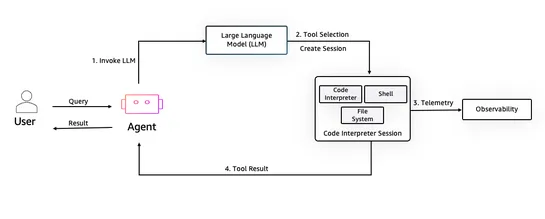
AWS just droppedAgentCore Code Interpreter—a managed box where AI agents can run Python, JavaScript, and TypeScript in isolation. Think of it as a secure playground with autoscaling, controlled file access, and deep hooks into frameworks likeLangChain,LangGraph,Strands, andCrewAI. Big picture: This.. read more  

Introducing the Amazon Bedrock AgentCore Code Interpreter
Link
@faun shared a link, 10 months, 1 week ago
FAUN.dev()

Typed languages are better suited for vibecoding

Claude’s making typed, compiled languages feel like cheating. Rust, Go, TypeScript—rising fast where Python used to reign. Why? AI coding tools now catch bugs early, validate sprawling diffs, and help devs grok unfamiliar codebases without breaking a sweat. Compiler guarantees + AI pair = fast, safe.. read more  

Link
@faun shared a link, 10 months, 1 week ago
FAUN.dev()

Azure AI Speech Service Configuration

Azure AI Speech now splits config paths forTTS(text-to-speech) andSTT(speech-to-text) when usingmanaged identity—and yes, they're different enough to matter. Roles, env vars, and auth flows don’t line up. Private endpoints? They nuke regional fallbacks, so you’ll need to pass full URLs. A shared ut.. read more  

AIStor is an enterprise-grade, high-performance object storage platform built for modern data workloads such as AI, machine learning, analytics, and large-scale data lakes. It is designed to handle massive datasets with predictable performance, operational simplicity, and hyperscale efficiency, while remaining fully compatible with the Amazon S3 API. AIStor is offered under a commercial license as a subscription-based product.

At its core, AIStor is a software-defined, distributed object store that runs on commodity hardware or in containerized environments like Kubernetes. Rather than being limited to traditional file or block interfaces, it exposes object storage semantics that scale from petabytes to exabytes within a single namespace, enabling consistent, flat addressing of vast datasets. It is engineered to sustain very high throughput and concurrency, with examples of multi-TiB/s read performance on optimized clusters.

AIStor is optimized specifically for AI and data-intensive workloads, where throughput, low latency, and horizontal scalability are critical. It integrates broadly with modern AI and analytics tools, including frameworks such as TensorFlow, PyTorch, Spark, and Iceberg-style table engines, making it suitable as the foundational storage layer for pipelines that demand both performance and consistency.

Security and enterprise readiness are central to AIStor’s design. It includes capabilities like encryption, replication, erasure coding, identity and access controls, immutability, lifecycle management, and operational observability, which are important for mission-critical deployments that must meet compliance and data protection requirements.

AIStor is positioned as a platform that unifies diverse data workloads — from unstructured storage for application data to structured table storage for analytics, as well as AI training and inference datasets — within a consistent object-native architecture. It supports multi-tenant environments and can be deployed across on-premises, cloud, and hybrid infrastructure.