Join us

ContentUpdates and recent posts about AIStor..
Link
@faun shared a link, 9 months, 3 weeks ago
FAUN.dev()

Terraform Validate Disagrees with Terraform Docs

Terraform’s CLI will throw errors on configs that match the docs—because your local provider schema might be stale or out of sync. Docs follow the latest release. Your machine might not. So even supported fields can break validation. Love that for us... read more  

Link
@faun shared a link, 9 months, 3 weeks ago
FAUN.dev()

How I Cut AWS Compute Costs by 70% with a Multi-Arch EKS Cluster and Karpenter

Swapping out Kubernetes Cluster Autoscaler forKarpentercut node launch times to under 20 seconds and dropped compute bills by 70%. The secret sauce? Smarter, faster spot instance scaling. Bonus perks: architecture-aware scheduling formulti-CPU (ARM64/x86)workloads—more performance, better utilizati.. read more  

How I Cut AWS Compute Costs by 70% with a Multi-Arch EKS Cluster and Karpenter
Link
@faun shared a link, 9 months, 3 weeks ago
FAUN.dev()

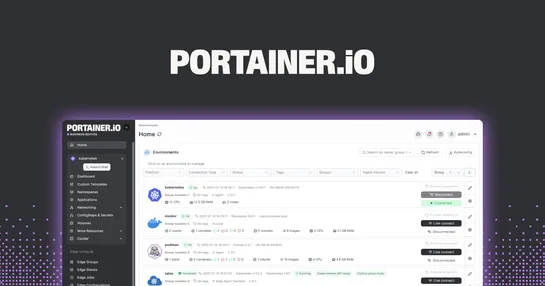
Estimate Your K8s Deployment Costs (Portainer Calculator)

A new TCO calculator breaks down what it really costs to run Kubernetes—DIY CNCF stacks, COSS platforms, and Portainer Business Edition. It crunches infra, labor, and software spend, then maps out staffing needs. It shows exactly where Portainer cuts Kubernetes bloat: itmaybe biased but it's worth t.. read more  

Estimate Your K8s Deployment Costs (Portainer Calculator)
Link
@faun shared a link, 9 months, 3 weeks ago
FAUN.dev()

Kubernetes 1.34 Debuts KYAML to Resolve YAML Challenges

Kubernetes 1.34 drops on August 27, 2025, and it’s bringingKYAML—a smarter, stricter take on YAML. No more surprise type coercion or “why is this indented wrong?” bugs. Think of it as YAML that behaves. kubectlgets a new trick too:-o kyaml. Use it to spit out manifests in KYAML format—easier to deb.. read more  

Kubernetes 1.34 Debuts KYAML to Resolve YAML Challenges
Link
@faun shared a link, 9 months, 3 weeks ago
FAUN.dev()

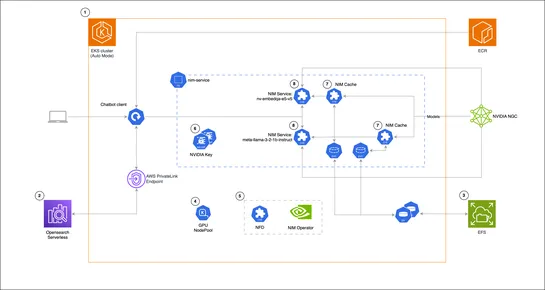
Building a RAG chat-based assistant on Amazon EKS Auto Mode and NVIDIA NIMs

AWS and NVIDIA just dropped a full-stack recipe for running Retrieval-Augmented Generation (RAG) onAmazon EKS Auto Mode—built on top ofNVIDIA NIM microservices. It's LLMs on Kubernetes, but without the hair-pulling. Inference? GPU-accelerated. Embeddings? Covered. Vector search? Handled byAmazon Op.. read more  

Building a RAG chat-based assistant on Amazon EKS Auto Mode and NVIDIA NIMs
Link
@faun shared a link, 9 months, 3 weeks ago
FAUN.dev()

Scale AI/ML Workloads with Amazon EKS: Up to 100K Nodes

Amazon EKS just leveled up—clusters can now run withup to 100,000 nodeswith support ofKubernetes 1.30and up. That's not just big—it’s AI-and-ML-scale big. Cluster setup got a lot less manual, too. The AWS Console’s"auto mode"auto-builds your VPC and IAM configs.eksctlplugs right into the flow... read more  

Scale AI/ML Workloads with Amazon EKS: Up to 100K Nodes
Link
@faun shared a link, 9 months, 3 weeks ago
FAUN.dev()

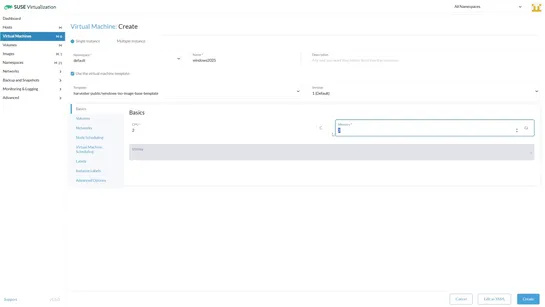
SUSE Adds Arm Support to HCI Platform for Running Monolithic Apps on Kubernetes

SUSE Virtualization 1.5 lands with64-bit Arm and Intelsupport,CSIstorage compatibility, and a tighter4-month release loopsynced with Kubernetes. Built on Harvester and KubeVirt, the update pushes harder on a clear trend: legacy VMs and cloud-native apps sharing the same Kubernetes real estate. Sys.. read more  

SUSE Adds Arm Support to HCI Platform for Running Monolithic Apps on Kubernetes
Link
@faun shared a link, 9 months, 3 weeks ago
FAUN.dev()

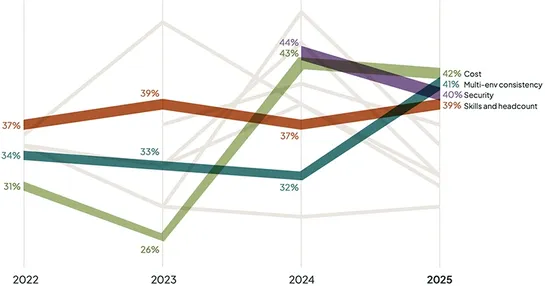
AI is changing Kubernetes faster than most teams can keep up

AI workloads are taking over Kubernetes. Fastest-growing use case on the block. 90% of orgs expect that growth to keep climbing. 92% are betting on AI-driven ops tools to keep up. Edge Kubernetes? Up from 38% to 50% in a year. Real-time inference is pushing workloads closer to the source.System shif.. read more  

AI is changing Kubernetes faster than most teams can keep up
Link
@faun shared a link, 9 months, 3 weeks ago
FAUN.dev()

Kubernetes: Web UI Headlamp gets an AI assistant

Headlamp 0.34 drops an alphaAI Assistantplugin—natural language for your cluster, powered by OpenAI, Anthropic, or Mistral. Ask it to explain logs, troubleshoot issues, manage resources. It speaks Kubernetes, with tooling and model config baked in.System shift:Cluster UIs are getting chatty. Less cl.. read more  

Kubernetes: Web UI Headlamp gets an AI assistant
Link
@mmk4mmk_simplifies shared a link, 9 months, 3 weeks ago

Workload Identity Federation: The School Trip Analogy You’ll Remember

Secrets in repos, API keys in scripts, and forgotten credentials create massive security gaps. Workload Identity Federation (WIF) solves this with short-lived tokens and trust-based authentication across clouds.

To explain it clearly, I’ve put together a 2-minute video that uses a school trip analogy (students, teachers, and wristbands) to break it down step by step.

Video: https://youtu.be/UZa5LWndb8k

Reade more at : https://medium.com/@mmk4mmk.mrani/how-my-kids-school-trip-helped-me-understand-workload-identity-federation-f680a2f4672b

ChatGPT Image Aug 16, 2025, 05_51_02 PM_compressed
AIStor is an enterprise-grade, high-performance object storage platform built for modern data workloads such as AI, machine learning, analytics, and large-scale data lakes. It is designed to handle massive datasets with predictable performance, operational simplicity, and hyperscale efficiency, while remaining fully compatible with the Amazon S3 API. AIStor is offered under a commercial license as a subscription-based product.

At its core, AIStor is a software-defined, distributed object store that runs on commodity hardware or in containerized environments like Kubernetes. Rather than being limited to traditional file or block interfaces, it exposes object storage semantics that scale from petabytes to exabytes within a single namespace, enabling consistent, flat addressing of vast datasets. It is engineered to sustain very high throughput and concurrency, with examples of multi-TiB/s read performance on optimized clusters.

AIStor is optimized specifically for AI and data-intensive workloads, where throughput, low latency, and horizontal scalability are critical. It integrates broadly with modern AI and analytics tools, including frameworks such as TensorFlow, PyTorch, Spark, and Iceberg-style table engines, making it suitable as the foundational storage layer for pipelines that demand both performance and consistency.

Security and enterprise readiness are central to AIStor’s design. It includes capabilities like encryption, replication, erasure coding, identity and access controls, immutability, lifecycle management, and operational observability, which are important for mission-critical deployments that must meet compliance and data protection requirements.

AIStor is positioned as a platform that unifies diverse data workloads — from unstructured storage for application data to structured table storage for analytics, as well as AI training and inference datasets — within a consistent object-native architecture. It supports multi-tenant environments and can be deployed across on-premises, cloud, and hybrid infrastructure.