Join us

ContentUpdates and recent posts about AIStor..
Link
@faun shared a link, 8 months, 2 weeks ago
FAUN.dev()

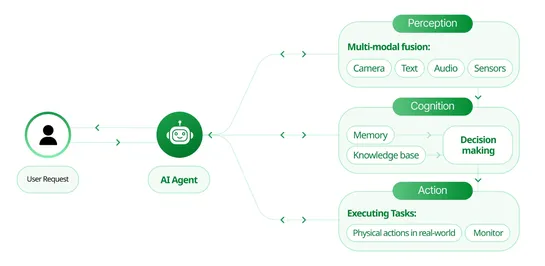
Combining GenAI & Agentic AI to build scalable, autonomous systems

Agentic AI doesn’t just crank out content—it takes the wheel. Where GenAI reacts, Agentic AI plans, perceives, and acts. Think less autocomplete, more autonomous ops. Hook them together, and you get a full-stack brain: content creation, real-time decisions, adaptive workflows, all learning as they .. read more  
Combining GenAI & Agentic AI to build scalable, autonomous systems
Link
@faun shared a link, 8 months, 2 weeks ago
FAUN.dev()

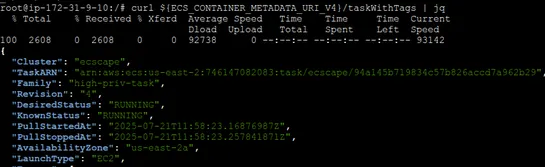
ECScape: Understanding IAM Privilege Boundaries in Amazon ECS

A new ECS security mess—ECScape—lets low-privileged tasks on EC2 act like the ECS agent. That’s bad. Real bad. Why? Because it opens the door to stealing IAM credentials from other ECS tasks sharing the same host. Here’s the trick: The attacker hits the instance metadata service (IMDS) and fakes a .. read more  

ECScape: Understanding IAM Privilege Boundaries in Amazon ECS
Link
@faun shared a link, 8 months, 2 weeks ago
FAUN.dev()

How to prepare for the Bitnami Changes coming soon

The Bitnami team has delayed the deletion of the Bitnami public catalog until September 29th. They will conduct a series of brownouts to prepare users for the upcoming changes, with the affected applications list being published on the day of each brownout. Users are advised to switch to Bitnami Sec.. read more  

Link
@faun shared a link, 8 months, 2 weeks ago
FAUN.dev()

Availability Models: Because “Highly Available” Isn’t Saying Much

Antithesis and Jepsen want to kill hand-wavy "high availability" talk. Instead, they push for clearavailability models—majority,total,sticky, etc.—that spell out when an operationactuallyworks during failures. It's about precision, not platitudes. Why it matters:This reframes availability from a va.. read more  

Availability Models: Because “Highly Available” Isn’t Saying Much
Link
@faun shared a link, 8 months, 2 weeks ago
FAUN.dev()

Observability in Go: What Real Engineers Are Saying in 2025

Go observability still feels like pulling teeth. Manual instrumentation? Tedious. Span coverage? Spotty. Telemetry volume? Totally out of hand. Even with OpenTelemetry gaining traction, Go lags behind Java and Python when it comes to auto-instrumentation and clean context propagation. Devs are hunt.. read more  

Observability in Go: What Real Engineers Are Saying in 2025
Link
@faun shared a link, 8 months, 2 weeks ago
FAUN.dev()

Google Develops KFuzzTest For Fuzzing Internal Linux Kernel Functions

Google droppedKFuzzTest, a lean fuzzing tool built to hit Linux kernel internals—way past just syscalls. It brings a clean API, docs, and sample targets to get fuzzing fast. Why it matters:KFuzzTest marks a shift. Kernel fuzzing’s no longer just about hammering syscalls—it’s going deeper into the g.. read more  

Link
@faun shared a link, 8 months, 2 weeks ago
FAUN.dev()

v1.34: User preferences (kuberc) are available for testing in kubectl 1.34

Kubernetes v1.34 pusheskubectlinto the future with a betauser preferencessystem. Drop a.kubercfile in place, and you can bake in default flags, toggle features likeinteractive deleteorServer-Side Apply, and wire up custom aliases—including pre- and post-args... read more  

Link
@faun shared a link, 8 months, 2 weeks ago
FAUN.dev()

v1.34: Of Wind & Will (O' WaW)

Kubernetes v1.34 drops with58 updates, and23 just hit stable. Highlights: Dynamic Resource Allocation (DRA), per-Pod resource limits, and secure image pulls using Pod-specific ServiceAccount tokens. Scalability gets a lift from streaming list responses. Security tightens with finer anonymous auth r.. read more  

v1.34: Of Wind & Will (O' WaW)
Link
@faun shared a link, 8 months, 2 weeks ago
FAUN.dev()

An introduction to platform engineering

Platform engineering is stepping in where DevOps didn’t quite land. Think fewer duct-taped pipelines, more thoughtful systems. The fix? Internal Developer Platforms (IDPs), usually riding on Kubernetes, built to tame the sprawl. Gartner says 80% of big engineering orgs will run platform teams by 20.. read more  

An introduction to platform engineering
Link
@faun shared a link, 8 months, 2 weeks ago
FAUN.dev()

Kubernetes in an AI-Native World: Can It Stay Relevant?

At KubeCon + CloudNativeCon Hyderabad 2025, CNCF leads made it clear:cloud-native infraisn’t just supporting AI—it’s becoming its backbone. The conversation’s moved on from“Can Kubernetes run AI?”to“How does it evolve for AI-first everything?”.. read more  

Kubernetes in an AI-Native World: Can It Stay Relevant?
AIStor is an enterprise-grade, high-performance object storage platform built for modern data workloads such as AI, machine learning, analytics, and large-scale data lakes. It is designed to handle massive datasets with predictable performance, operational simplicity, and hyperscale efficiency, while remaining fully compatible with the Amazon S3 API. AIStor is offered under a commercial license as a subscription-based product.

At its core, AIStor is a software-defined, distributed object store that runs on commodity hardware or in containerized environments like Kubernetes. Rather than being limited to traditional file or block interfaces, it exposes object storage semantics that scale from petabytes to exabytes within a single namespace, enabling consistent, flat addressing of vast datasets. It is engineered to sustain very high throughput and concurrency, with examples of multi-TiB/s read performance on optimized clusters.

AIStor is optimized specifically for AI and data-intensive workloads, where throughput, low latency, and horizontal scalability are critical. It integrates broadly with modern AI and analytics tools, including frameworks such as TensorFlow, PyTorch, Spark, and Iceberg-style table engines, making it suitable as the foundational storage layer for pipelines that demand both performance and consistency.

Security and enterprise readiness are central to AIStor’s design. It includes capabilities like encryption, replication, erasure coding, identity and access controls, immutability, lifecycle management, and operational observability, which are important for mission-critical deployments that must meet compliance and data protection requirements.

AIStor is positioned as a platform that unifies diverse data workloads — from unstructured storage for application data to structured table storage for analytics, as well as AI training and inference datasets — within a consistent object-native architecture. It supports multi-tenant environments and can be deployed across on-premises, cloud, and hybrid infrastructure.