Join us

ContentUpdates and recent posts about AIStor..
Link
@faun shared a link, 7 months, 3 weeks ago
FAUN.dev()

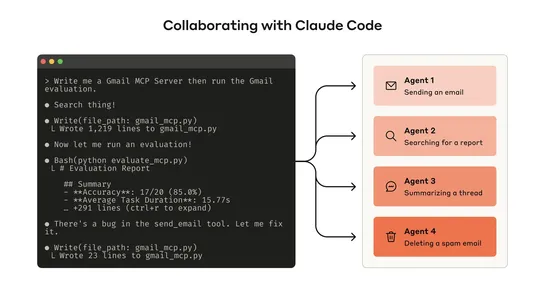
Writing effective tools for AI agents—using AI agents

Anthropic’s sharpening the blueprint for building tools that play nice withLLM agents. TheirModel Context Protocol (MCP)leans hard into three pillars: test in loops, design for humans, format like context matters—because it does. They co-develop tools with agents like Claude Code. That means protot.. read more  
Writing effective tools for AI agents—using AI agents
Link
@faun shared a link, 7 months, 3 weeks ago
FAUN.dev()

Easy will always trump simple

Rich Hickey’s classic “Simple Made Easy” talk is making the rounds again—as a mirror held up to dev culture under pressure. The punchline: we keep picking solutions that areeasy but tangled, instead ofsimple and sane. The essay draws a sharp line between that habit and a concept from biology: exapt.. read more  

Link
@faun shared a link, 7 months, 3 weeks ago
FAUN.dev()

Paused Kubernetes project finds path forward

TheExternal Secrets Operator (ESO)is moving again. After hitting pause from maintainer burnout, it’s back under CNCF incubation—with a rebooted structure in place. New governance, clear contributor paths, and support tracks for CI, core dev, and testing are all in. But don’t expect fresh releases ju.. read more  

Paused Kubernetes project finds path forward
Link
@faun shared a link, 7 months, 3 weeks ago
FAUN.dev()

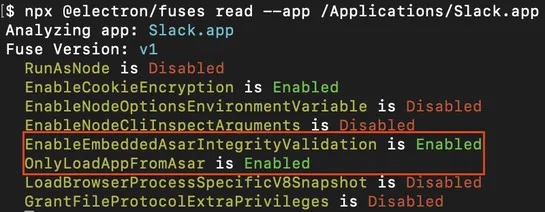
Subverting code integrity checks to locally backdoor Signal, 1Password, Slack, and more

A fresh CVE (2025-55305) just put Electron apps in the hot seat. The bug? Chromium-based apps fail to treatV8 heap snapshot filesas potential attack vectors. That crack lets unsigned JavaScript slip past code signing and run inside heavyweight targets like Slack, 1Password, and Signal. The heart of.. read more  

Subverting code integrity checks to locally backdoor Signal, 1Password, Slack, and more
Link
@faun shared a link, 7 months, 3 weeks ago
FAUN.dev()

The Hidden AWS Cost Traps No One Warns You About (and How I Avoid Them)

Calling outfive sneaky AWS cost traps—the kind that creep in through overlooked defaults and quiet misconfigs, then blow up your bill while no one's watching... read more  

The Hidden AWS Cost Traps No One Warns You About (and How I Avoid Them)
Link
@faun shared a link, 7 months, 3 weeks ago
FAUN.dev()

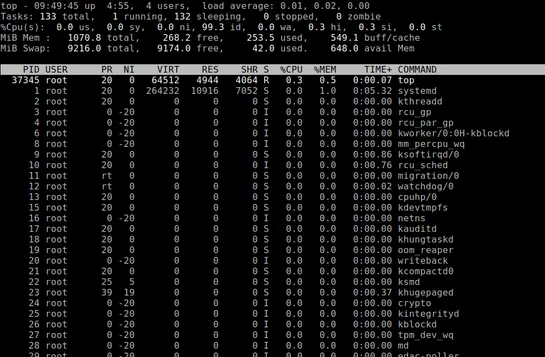
24 Best Command Line Performance Monitoring Tools for Linux

A fresh look at Linux monitoring tools shows the classics still hold—but the visual crowd’s moving in. Old-school command-liners liketopandvmstatremain go-to’s for quick reads. But picks likeNetdata,btop, andMonitbring dashboards, colors, and actual UX. Tools likeiftop,Nmon, andSuricatastretch deep.. read more  

24 Best Command Line Performance Monitoring Tools for Linux
Link
@faun shared a link, 7 months, 3 weeks ago
FAUN.dev()

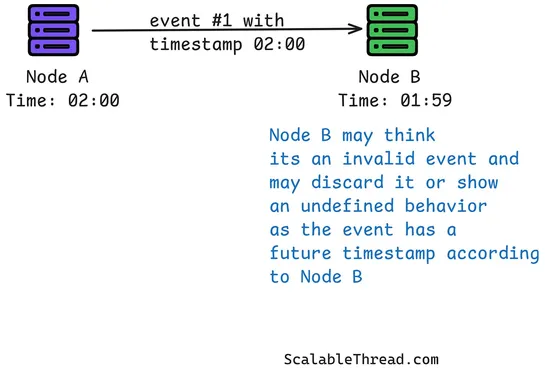
Why "What Happened First?" Is One of the Hardest Questions in Large-Scale Systems

Logical clocks trackevent orderin distributed systems—no need for synced wall clocks. Each node keeps a counter. On every event: tick it. On every message: tack on your counter. When you receive one? Merge and bump. This flips the script. Instead of chasing global time, distributed systems lean int.. read more  

Why "What Happened First?" Is One of the Hardest Questions in Large-Scale Systems
Link
@faun shared a link, 7 months, 3 weeks ago
FAUN.dev()

Pooling Connections with RDS Proxy at Klaviyo

Klaviyo replaced ProxySQL on EC2 and moved toAWS RDS Proxy. Why? Less overhead. Simpler failovers. Smarter pooling. RDS Proxy handlesmultiplexing, packing thousands of client queries into way fewer DB connections. IAM access and built-in failover routing sweeten the deal... read more  

Pooling Connections with RDS Proxy at Klaviyo
Link
@faun shared a link, 7 months, 3 weeks ago
FAUN.dev()

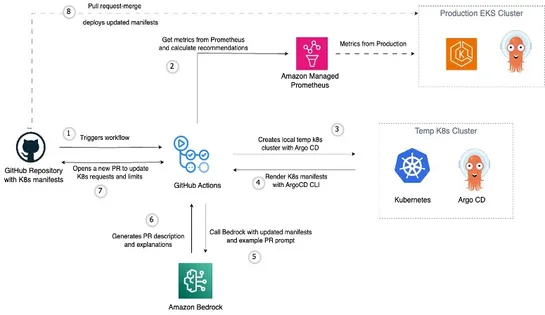
Kubernetes right-sizing with metrics-driven GitOps automation

AWS just dropped a GitOps-native pattern for tuning EKS resources—built to runoutsidethe cluster. It’s wired up withAmazon Managed Service for Prometheus,Argo CD, andBedrockto automate resource recommendations straight into Git. Here’s the play: it maps usage metrics to templated manifests, then sp.. read more  

Kubernetes right-sizing with metrics-driven GitOps automation
Link
@faun shared a link, 7 months, 3 weeks ago
FAUN.dev()

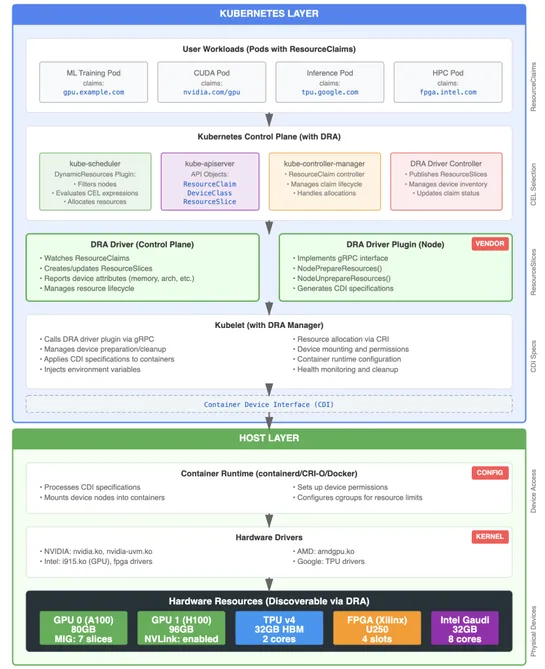
Kubernetes Primer: Dynamic Resource Allocation (DRA) for GPU Workloads

Kubernetes 1.34 brings serious heat for anyone juggling GPUs or accelerators. MeetDynamic Resource Allocation (DRA)—a new way to schedule hardware like you mean it. DRA addsResourceClaims,DeviceClasses, andResourceSlices, slicing device management away from pod specs. It replaces the old device plu.. read more  

Kubernetes Primer: Dynamic Resource Allocation (DRA) for GPU Workloads
AIStor is an enterprise-grade, high-performance object storage platform built for modern data workloads such as AI, machine learning, analytics, and large-scale data lakes. It is designed to handle massive datasets with predictable performance, operational simplicity, and hyperscale efficiency, while remaining fully compatible with the Amazon S3 API. AIStor is offered under a commercial license as a subscription-based product.

At its core, AIStor is a software-defined, distributed object store that runs on commodity hardware or in containerized environments like Kubernetes. Rather than being limited to traditional file or block interfaces, it exposes object storage semantics that scale from petabytes to exabytes within a single namespace, enabling consistent, flat addressing of vast datasets. It is engineered to sustain very high throughput and concurrency, with examples of multi-TiB/s read performance on optimized clusters.

AIStor is optimized specifically for AI and data-intensive workloads, where throughput, low latency, and horizontal scalability are critical. It integrates broadly with modern AI and analytics tools, including frameworks such as TensorFlow, PyTorch, Spark, and Iceberg-style table engines, making it suitable as the foundational storage layer for pipelines that demand both performance and consistency.

Security and enterprise readiness are central to AIStor’s design. It includes capabilities like encryption, replication, erasure coding, identity and access controls, immutability, lifecycle management, and operational observability, which are important for mission-critical deployments that must meet compliance and data protection requirements.

AIStor is positioned as a platform that unifies diverse data workloads — from unstructured storage for application data to structured table storage for analytics, as well as AI training and inference datasets — within a consistent object-native architecture. It supports multi-tenant environments and can be deployed across on-premises, cloud, and hybrid infrastructure.