Join us

ContentUpdates from The Open Source Security Foundation (OpenSSF) is a...
Link
@faun shared a link, 6 months, 4 weeks ago
FAUN.dev()

Why language models hallucinate

OpenAI sheds light on the persistence ofhallucinationsin language models due to evaluation methods favoring guessing over honesty, requiring a shift towards rewarding uncertainty acknowledgment. High model accuracy does not equate to the eradication of hallucinations, as some questions are inherentl.. read more  

Why language models hallucinate
Link
@faun shared a link, 6 months, 4 weeks ago
FAUN.dev()

From Zero to GPU: A Guide to Building and Scaling Production-Ready CUDA Kernels

Hugging Face just dropped Kernel Builder—a full-stack toolchain for building, versioning, and shippingcustom CUDA kernels as native PyTorch ops. Kernels arearchitecture-aware,semantically versioned, andpullable straight from the Hub. It tracks changes with lockfiles and bakes inDocker deploysout of.. read more  

Link
@faun shared a link, 6 months, 4 weeks ago
FAUN.dev()

Simplifying Large-Scale LLM Processing across Instacart with Maple

Instacart builtMaple, a backend brain for handling millions of LLM prompts—fast, cheap, and shared across teams. It’s not just another service. Maple runs onTemporal,PyArrow, andS3, strip-mines away provider-specific boilerplate, auto-batches prompts, retries failures, and slashes LLM costs by up t.. read more  

Simplifying Large-Scale LLM Processing across Instacart with Maple
Link
@faun shared a link, 6 months, 4 weeks ago
FAUN.dev()

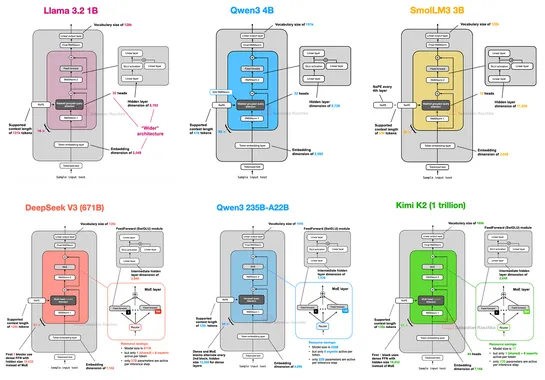
The Big LLM Architecture Comparison

Architectures since GPT-2 still ride transformers. They crank memory and performance withRoPE, swapGQAforMLA, sprinkle in sparseMoE, and roll sliding-window attention. Teams shiftRMSNorm. They tweak layer norms withQK-Norm, locking in training stability across modern models. Trend to watch:In 2025,.. read more  

The Big LLM Architecture Comparison
Link
@faun shared a link, 6 months, 4 weeks ago
FAUN.dev()

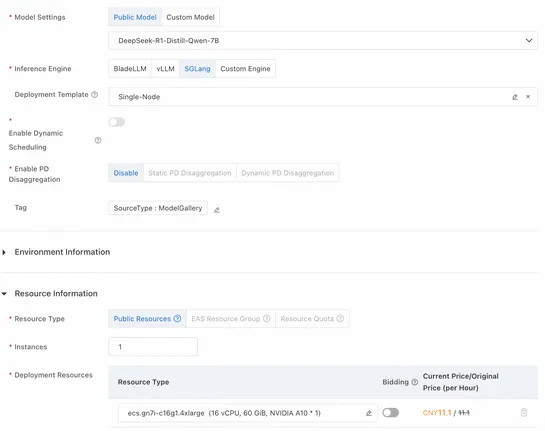
Best Practices for High Availability of LLM Based on AI Gateway

Alibaba Cloud’s AI Gateway just got sharper. It now handlesreal-time overload protectionandLLM fallback routingusing passive health checks, first packet timeouts, and traffic shaping. It proxies both BYO and cloud LLMs—think PAI-EAS, Tongyi Qianwen—and redirects load spikes or failures on the fly. F.. read more  

Best Practices for High Availability of LLM Based on AI Gateway
Story
@laura_garcia shared a post, 6 months, 4 weeks ago
Software Developer, RELIANOID

RELIANOID Load Balancer Community Edition v7 on AWS using Terraform

🚀 New Guide Available! Learn how to quickly deploy RELIANOID Load Balancer Community Edition v7 on AWS using Terraform. Our step-by-step article shows you how to provision everything automatically — from VPCs and subnets to EC2 and key pairs — in just minutes. 👉 https://www.relianoid.com/resources/k..

Knowledge base Deploy RELIANOID Load Balancer Community Edition v7 with Terraform on AWS
Link
@faun shared a link, 6 months, 4 weeks ago
FAUN.dev()

AWS, Microsoft and Google unite behind Linux Foundation DocumentDB database to cut enterprise costs and limit vendor lock-in

Document databases are crucial for AI apps in the gen AI era. Microsoft's open-source DocumentDB project, based on PostgreSQL, is moving to the Linux Foundation, offering a vendor-neutral, open-source alternative to MongoDB. DocumentDB's compatibility with MongoDB drivers and open source governance .. read more  

Link
@faun shared a link, 6 months, 4 weeks ago
FAUN.dev()

Sandboxed to Compromised: New Research Exposes Credential Exfiltration Paths in AWS Code Interpreters

Researchers poked holes insandboxed Bedrock AgentCore code interpreters—and found a way to leak execution role credentials through theMicroVM Metadata Service (MMDS). No outside network? Doesn’t matter. The exploit dodges basic string filters in requests and lets non-agentic code swipe AWS creds to .. read more  

Link
@faun shared a link, 6 months, 4 weeks ago
FAUN.dev()

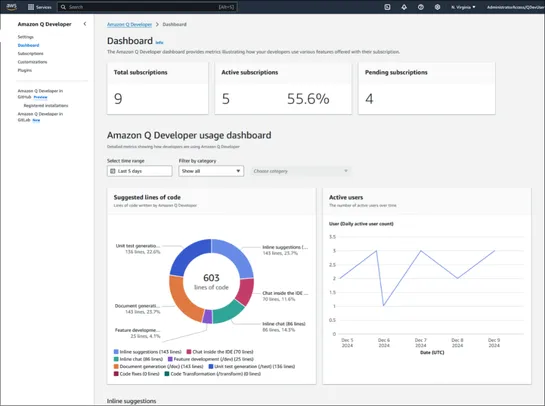
Measuring Developer Productivity with Amazon Q Developer and Jellyfish

Amazon Q Developer now plugs into Jellyfish. Teams get a clearer view of how AI fits into the real flow of work—prompt usage, code adoption, PR throughput. Not just surface stats. The setup pipes data from AWS S3 straight into Jellyfish’s analytics engine. It tags AI users, tracks velocity gains, an.. read more  

Measuring Developer Productivity with Amazon Q Developer and Jellyfish
Link
@faun shared a link, 6 months, 4 weeks ago
FAUN.dev()

Deploy a containerized application with Kamal and Terraform

A Docker-first workflow combinesTerraformandKamalinto a lean, Elastic Beanstalk-ish alternative—without the bloat. Terraform spins up a three-tier VPC and wires it toECR. Kamal takes it from there, booting containers on a raw EC2 box: app, proxy, monitor. One script. Done... read more  

Deploy a containerized application with Kamal and Terraform
The Open Source Security Foundation (OpenSSF) is an industry-backed foundation focused on strengthening the security of the global open source software ecosystem. It brings together major technology companies, cloud providers, open source communities, and security experts to address systemic security challenges that affect how software is built, distributed, and consumed.

OpenSSF was launched in 2021 and operates under the Linux Foundation, combining efforts from earlier initiatives such as the Core Infrastructure Initiative (CII) and industry-led supply chain security programs. Its mission is to make open source software more trustworthy, resilient, and secure by default, without placing unrealistic burdens on maintainers.

The foundation works across several key areas:

- Supply chain security: Developing frameworks, best practices, and tools to secure the software lifecycle from source to deployment. This includes stewardship of projects like sigstore and leadership on SLSA (Supply-chain Levels for Software Artifacts).

- Security tooling: Supporting and incubating open source tools that help developers detect, prevent, and remediate vulnerabilities at scale.

- Vulnerability management: Improving how vulnerabilities are discovered, disclosed, scored, and fixed across open source projects.

- Education and best practices: Publishing guidance, training, and maturity models such as the OpenSSF Best Practices Badge Program, which helps projects assess and improve their security posture.

- Metrics and research: Advancing data-driven approaches to understanding open source security risks and ecosystem health.

OpenSSF operates through working groups and special interest groups (SIGs) that focus on specific problem areas like securing builds, improving dependency management, or automating provenance generation. This structure allows practitioners to collaborate on concrete, actionable solutions rather than high-level policy alone.

By aligning maintainers, enterprises, and security teams, OpenSSF plays a central role in reducing large-scale risks such as dependency confusion, compromised build systems, and malicious package injection. Its work underpins many modern DevSecOps and cloud-native security practices and is increasingly referenced by governments and enterprises as a baseline for secure software development.