Join us

ContentUpdates from OpenAI...
Link
@faun shared a link, 7 months ago
FAUN.dev()

Privacy for subdomains: the solution

A two-container setup using **acme.sh** gets Let's Encrypt certs running on a Synology NAS—thanks, Docker. No built-in Certbot support? No problem. Cloudflare DNS API token handles auth. Scheduled tasks handle renewal... read more  

Privacy for subdomains: the solution
Link
@faun shared a link, 7 months ago
FAUN.dev()

Users Only Care About 20% of Your Application

Modern apps burst with features most people never touch. Users stick to their favorite 20%. The rest? Frustration, bloat, ignored edge cases. Tools like **VS Code**, **Slack**, and **Notion** nail it by staying lean at the core and letting users stack what they need. Extensions, plug-ins, integrati.. read more  

Link
@faun shared a link, 7 months ago
FAUN.dev()

Authentication Explained: When to Use Basic, Bearer, OAuth2, JWT & SSO

Modern apps don’t just check passwords—they rely on **API tokens**, **OAuth**, and **Single Sign-On (SSO)** to know who’s knocking before they open the door... read more  

Link
@faun shared a link, 7 months ago
FAUN.dev()

Uncommon Uses of Common Python Standard Library Functions

A fresh guide gives old Python friends a second look—turns out, tools like **itertools.groupby**, **zip**, **bisect**, and **heapq** aren’t just standard; they’re slick solutions to real problems. Think run-length encoding, matrix transposes, or fast, sorted inserts without bringing in another depen.. read more  

Link
@faun shared a link, 7 months ago
FAUN.dev()

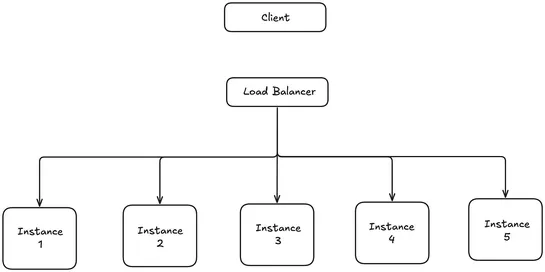
Writing Load Balancer From Scratch In 250 Line of Code

A developer rolled out a fully working **Go load balancer** with a clean **Round Robin** setup—and hooks for dropping in smarter strategies like **Least Connection** or **IP Hash**. Backend servers live in a custom server pool. Swapping balancing logic? Just plug into the interface... read more  

Writing Load Balancer From Scratch In 250 Line of Code
Link
@faun shared a link, 7 months ago
FAUN.dev()

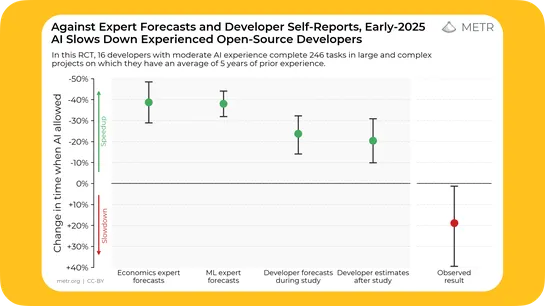
The productivity paradox of AI coding assistants

A July 2025 METR trial dropped a twist: seasoned devs using Cursor with Claude 3.5/3.7 moved **19% slower** - while thinking they were **20% faster**. Chalk it up to AI-induced confidence inflation. Faros AI tracked over **10,000 developers**. More AI didn’t mean more done. It meant more juggling, .. read more  

The productivity paradox of AI coding assistants
Link
@faun shared a link, 7 months ago
FAUN.dev()

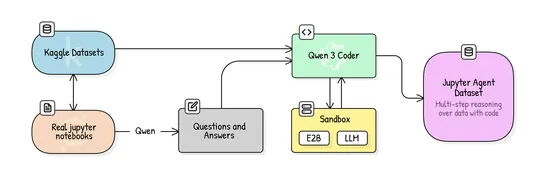
Jupyter Agents: training LLMs to reason with notebooks

Hugging Face dropped an open pipeline and dataset for training small models—think **Qwen3-4B**—into sharp **Jupyter-native data science agents**. They pulled curated Kaggle notebooks, whipped up synthetic QA pairs, added lightweight **scaffolding**, and went full fine-tune. Net result? A **36% jump .. read more  

Jupyter Agents: training LLMs to reason with notebooks
Link
@faun shared a link, 7 months ago
FAUN.dev()

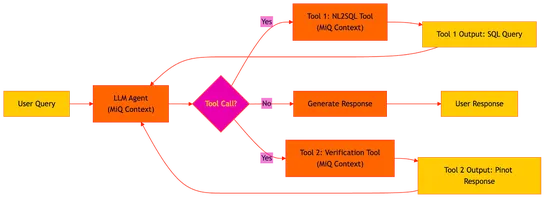
Building a Natural Language Interface for Apache Pinot with LLM Agents

MiQ plugged **Google’s Agent Development Kit** into their stack to spin up **LLM agents** that turn plain English into clean, validated SQL. These agents speak directly to **Apache Pinot**, firing off real-time queries without the usual parsing pain. Behind the scenes, it’s a slick handoff: NL2SQL .. read more  

Building a Natural Language Interface for Apache Pinot with LLM Agents
Link
@faun shared a link, 7 months ago
FAUN.dev()

Implementing Vector Search from Scratch: A Step-by-Step Tutorial

Search is a fundamental problem in computing, and vector search aims to match meanings rather than exact words. By converting queries and documents into numerical vectors and calculating similarity, vector search retrieves contextually relevant results. In this tutorial, a vector search system is bu.. read more  

Link
@faun shared a link, 7 months ago
FAUN.dev()

5 Free AI Courses from Hugging Face

Hugging Face just rolled out a sharp set of free AI courses. Real topics, real tools—think **AI agents, LLMs, diffusion models, deep RL**, and more. It’s hands-on from the jump, packed with frameworks like LangGraph, Diffusers, and Stable Baselines3. You don’t just read about models—you build ‘em i.. read more  

OpenAI is an independent artificial intelligence research organization that was founded in 2015 with the goal of promoting the development and safe use of advanced AI technologies. The organization's research focuses on a wide range of AI applications, including natural language processing, computer vision, and robotics. OpenAI's research is driven by a team of world-class researchers and engineers who work to develop cutting-edge AI technologies that are both powerful and safe.

One of the key goals of OpenAI is to promote responsible AI development. To this end, the organization works closely with policymakers, industry leaders, and other stakeholders to ensure that AI is developed in a way that is ethical and beneficial for society. OpenAI also provides resources and training to help people better understand AI and its potential impacts.

OpenAI's research has led to numerous breakthroughs in the field of AI, including the development of advanced language models like GPT-3, which can generate coherent and human-like text. The organization has also developed AI technologies that are used in a variety of applications, from self-driving cars to medical diagnostics.

Overall, OpenAI is at the forefront of AI research and development, and is working to ensure that AI is developed in a way that benefits everyone.