Join us

ContentUpdates from FAUN.dev()...
Link
@kaptain shared a link, 1 month, 3 weeks ago
FAUN.dev()

Why MicroVMs: The Architecture Behind Sandboxes

Docker Sandboxes puts each agent session in a dedicatedmicroVM. Each microVM runs a privateDocker daemoninside the VM boundary. That blocks access to the host. A new cross‑platformVMMruns on macOS, Windows, and Linux hypervisors. It slashes cold starts and runs fullDockerbuild, run, and compose work.. read more  
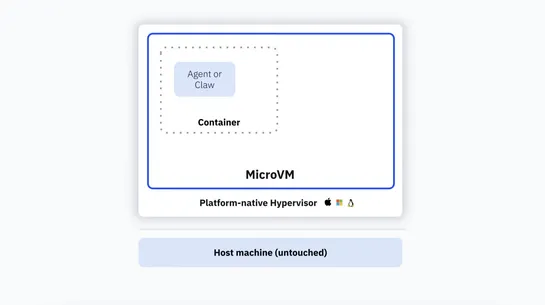
Why MicroVMs: The Architecture Behind Sandboxes
Link
@kaptain shared a link, 1 month, 3 weeks ago
FAUN.dev()

v1.36: User Namespaces in are finally GA

Kubernetesv1.36promotesUser Namespacesto GA on Linux. It brings rootless workload isolation. Kubelet leans on kernelID-mapped mounts. It sidesteps expensivechownby remappingUID/GIDat mount time and confines privileged processes. No more mass-chown screams... read more  

Link
@kaptain shared a link, 1 month, 3 weeks ago
FAUN.dev()

Building a fault-tolerant metrics storage system at Airbnb

Airbnb built a metrics system that ingests50M samples/s, stores2.5PBof logical time series, and hosts1.3B active series. They use tenant-per-service grouping andshuffle sharding. They enforce per-tenant guardrails and a consolidatedcontrol plane. They shard queries and compaction. They run zone-awar.. read more  

Building a fault-tolerant metrics storage system at Airbnb
Link
@kaptain shared a link, 1 month, 3 weeks ago
FAUN.dev()

The AI-driven shift in vulnerability discovery: What maintainers and bug finders need to know

AI modelslet non-experts craft real and fake vulnerabilities at scale. They spit out low-quality noise and the occasional high-value report. Reports floodOSS maintainers. Triage, patching, release cadences, and downstreamupgrade/compliancepipelines buckle under the load. Guidance recommends publishi.. read more  

The AI-driven shift in vulnerability discovery: What maintainers and bug finders need to know
Link
@kala shared a link, 1 month, 3 weeks ago
FAUN.dev()

Introducing Coregit

Coregit reimplements Git's object model inTypeScriptand runs onCloudflare Workersas a serverless edge Git API. Its commit endpoint accepts up to 1,000 file changes per request and replaces 105+ GitHub calls with one. Yes - one. It acknowledges writes inDurable Objects(~2ms), then flushes objects toR.. read more  

Link
@kala shared a link, 1 month, 3 weeks ago
FAUN.dev()

How LLMs Work — A Visual Deep Dive

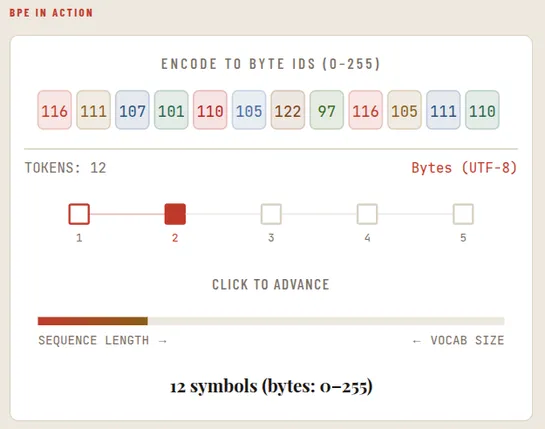
A complete walkthrough of how large language models like ChatGPT are built, from raw internet text to a conversational assistant... read more  

How LLMs Work — A Visual Deep Dive
Link
@kala shared a link, 1 month, 3 weeks ago
FAUN.dev()

Introducing Ternary Bonsai: Top Intelligence at 1.58 Bits

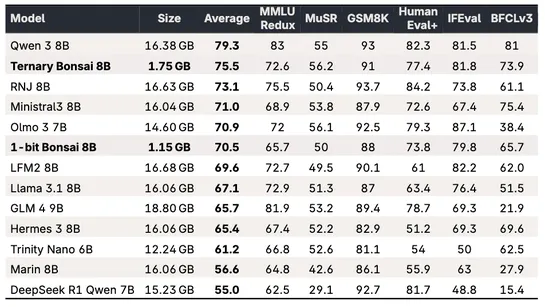
PrismML unveilsTernary Bonsai: a family of1.58-bitLMs in1.7B,4B, and8Bsizes. Models use ternary weights {-1,0,+1} with group-wise quantization. Weights are ternary (-1,0,+1). Each group of128weights shares anFP16scale. That cuts memory by ~9x versus 16-bit and boosts benchmark scores. The8Bhits 75.5.. read more  

Introducing Ternary Bonsai: Top Intelligence at 1.58 Bits
Link
@kala shared a link, 1 month, 3 weeks ago
FAUN.dev()

The PR you would have opened yourself

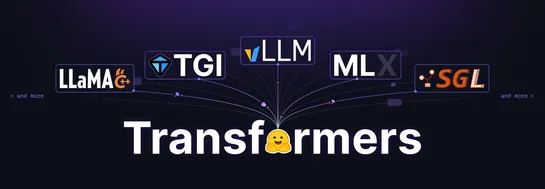
ASkillports models fromtransformerstomlx-lm. It bootstraps an env, discovers variants, downloads checkpoints, writes MLX implementations, and runs layered tests. It produces disclosed PRs with per-layer diffs, dtype checks, generation examples, numerical comparisons, and a reproducible, non-agentict.. read more  

The PR you would have opened yourself
Link
@kala shared a link, 1 month, 3 weeks ago
FAUN.dev()

A GitHub agentic workflow

The developer automated parsing of unstructured release notes withGitHub agentic workflows. The pipeline compilesMarkdowntoYAML, then runs an agent. The setup requires afine-grained Copilot token. It enforces a hardenedsandboxpolicy and forbids Marketplace actions. CI runs a compile-then-compare che.. read more  

A GitHub agentic workflow
Link
@devopslinks shared a link, 1 month, 3 weeks ago
FAUN.dev()

Why We Chose the Harder Path: Hardened Images, One Year Later

Docker Hardened Images surpassed500k daily pullsand now hosts2,000+ hardened images, all built in aSLSA Build Level 3pipeline. It compiles tens of thousands ofDebianandAlpinepackages from source. It runs 1M+ builds. It ships17 signed attestationsper image. It auto-rebuilds customized images under SL.. read more  

Why We Chose the Harder Path: Hardened Images, One Year Later
FAUN.dev() is a developer-first platform built with a simple goal: help engineers stay sharp without wasting their time. It curates practical newsletters, thoughtful technical blogs, and useful developer tools that focus on signal over noise.

Created by engineers, for engineers, FAUN.dev() is where experienced developers turn to keep up with the fast-moving world of DevOps, Kubernetes, Cloud Native, AI, and modern programming. We handpick what matters and skip the fluff.

If it’s on FAUN.dev(), it’s worth your attention.

Beyond curation, we run a course marketplace (WIP) designed to keep developers current. These courses go deep into the subjects that shape real-world work—things like Kubernetes internals, modern DevOps workflows, cloud-native architecture, and using AI tools to build faster and smarter. It’s practical learning, taught by people who’ve done the work. Developers from companies like GitHub, Netflix, and Shopify already rely on FAUN.dev() to stay on top of their game. They trust us because we keep it real: no hype, no filler, just what you need to grow and do your best work. For sponsors and partners, FAUN.dev() offers access to a focused, engaged audience of technical professionals. This isn’t just another broad developer community—it’s a place where smart engineers go to get smarter. If you have something meaningful to offer them, you’ll be in good company. In short, FAUN.dev() is more than a content hub. It’s a place to grow, to learn, and to connect with what really matters in software today.