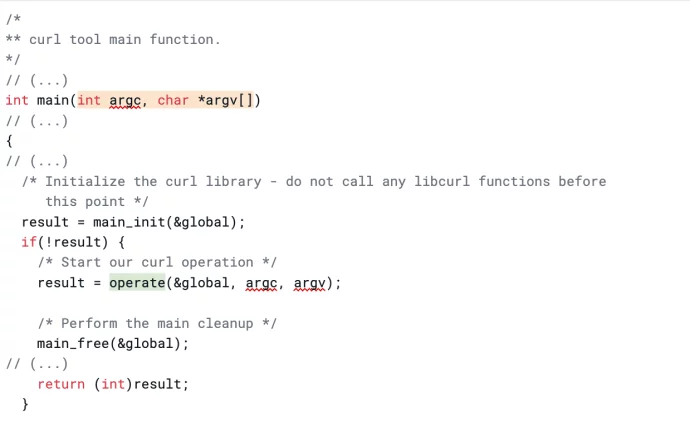
They discovered memory corruption bugs, specifically use-after-free issues, double-free issues, and memory leaks through fuzzing cURL's command-line interface (CLI). They used AFL++ fuzzer to generate a large amount of random input data for cURL's CLI and identified vulnerabilities that were fixed in cURL 7.86.0 and 7.87.0.
They also created a Dockerfile to help developers set up a fuzzing harness to immediately fuzz cURL's CLI arguments.
The team notes that CLI exploitation has a relatively limited attack surface but can result in privilege escalation if the affected tool is a SUID binary.
Let's keep in touch!
Stay updated with my latest posts and news. I share insights, updates, and exclusive content.
Unsubscribe anytime. By subscribing, you share your email with @faun and accept our Terms & Privacy.
Give this a Pawfive!
Only registered users can post comments. Please, login or signup.
Start writing about what excites you in tech — connect with developers, grow your voice, and get rewarded.
Join other developers and claim your FAUN.dev() account now!

The FAUN watches over the forest of developers. It roams between Kubernetes clusters, code caves, AI trails, and cloud canopies, gathering the signals that matter and clearing out the noise.
Developer Influence
0
Influence
441k
Total Hits
3711
Posts
Hey, sign up or sign in to add a reaction to my post.
Join thousands of other developers, 100% free, leave anytime.
Hey there! 👋 I created FAUN.dev(), an effortless, straightforward way for busy developers to keep up with the technologies they love 🚀
Aymen @eon01
Founder of FAUN.dev()
Join thousands of developers and engineering teams who use FAUN.dev() to stay up-to-date with the technologies they love, without the overwhelm.