TL;DR
Google releases Magika 1.0, an AI file detection system rebuilt in Rust for improved performance and security.
Key Points
Highlight key points with color coding based on sentiment (positive, neutral, negative).Magika 1.0 has been rebuilt in Rust which enhances its performance and security.
It now supports over 200 file types, doubling its previous capacity.
The new version includes improved accuracy for detecting complex formats, particularly challenging text-based formats like code and configuration files.
The update addresses data volume and scarcity challenges by using a 3TB training dataset and generative AI to create synthetic training sets
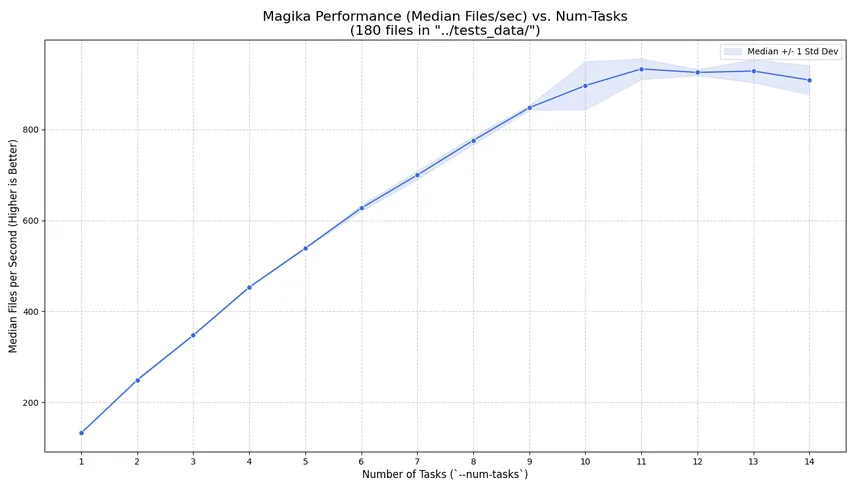
The high-performance Rust engine allows Magika to identify hundreds of files per second on a single core, scaling to thousands per second on modern multi-core CPUs.
Developers can integrate Magika into their applications using the revamped Python and TypeScript modules, and a native Rust command-line client is available for maximum speed and security.
Google has released Magika 1.0, an update in AI-powered file type detection technology. This version, developed in Rust, supports over 200 file types, doubling the capacity of its predecessor. It includes modern and specialized formats such as Jupyter Notebooks, Numpy arrays, PyTorch models, and programming languages like Swift and Kotlin.
Magika 1.0 features a new Rust engine, providing a high-performance, memory-safe environment. It processes hundreds of files per second on a single core and thousands on multi-core CPUs. The system uses the ONNX Runtime for model inference and Tokio for asynchronous processing. A 3TB training dataset and generative AI were used to create synthetic training sets, addressing data volume and scarcity challenges.
The update improves accuracy in distinguishing complex text-based formats. A new native Rust command-line client is introduced. Python and TypeScript modules have been updated for integration.
The development involved contributions from individuals and the open-source community, including Ange Albertini, Loua Farah, Francois Galilee, Giancarlo Metitieri, Alex Petit-Bianco, Kurt Thomas, Luca Invernizzi, Lenin Simicich, and Amanda Walker.
Key Numbers
Present key numerics and statistics in a minimalist format.The number of file types supported by Magika 1.0.
The size of the training dataset used for Magika 1.0 when uncompressed.
The number of files Magika 1.0 can identify per second on a single core.
The number of files Magika 1.0 can identify per second on modern multi-core CPUs.
Stakeholder Relationships
An interactive diagram mapping entities directly or indirectly involved in this news. Drag nodes to rearrange them and see relationship details.People
Key entities and stakeholders, categorized for clarity: people, organizations, tools, events, regulatory bodies, and industries.Contributed to the development and success of Magika 1.0.
Provided feedback and support for the Magika 1.0 project.
Played a significant role in the development of Magika 1.0.
Supported the development and success of Magika 1.0.
Contributed to the feedback and development of Magika 1.0.
Involved in the development and support of Magika 1.0.
Provided significant contributions to the Magika 1.0 project.
Supported the development and success of Magika 1.0.
Played a key role in the development and feedback process of Magika 1.0.
Organizations
Key entities and stakeholders, categorized for clarity: people, organizations, tools, events, regulatory bodies, and industries.Developed and released Magika 1.0, an AI-powered file type detection system.
Tools
Key entities and stakeholders, categorized for clarity: people, organizations, tools, events, regulatory bodies, and industries.Used to rewrite the core of Magika 1.0 for improved performance and security.
Utilized in Magika 1.0 for high-performance model inference.
Employed in Magika 1.0 for asynchronous parallel processing.
Events
Key entities and stakeholders, categorized for clarity: people, organizations, tools, events, regulatory bodies, and industries.Marks the launch of the stable version of Google's AI-powered file type detection system.
Industries
Key entities and stakeholders, categorized for clarity: people, organizations, tools, events, regulatory bodies, and industries.Benefits from Magika 1.0's improved file type detection and security features.
Utilizes Magika 1.0 for managing diverse codebases and configuration files.
Enhanced by Magika 1.0's support for data science and machine learning file formats.
Aided by Magika 1.0's detection of critical infrastructure and build files.
Improved by Magika 1.0's support for graphics and design file formats.
Facilitated by Magika 1.0's inclusion of database formats.
Timeline of Events
Timeline of key events and milestones.Google made Magika available as an open-source project, allowing developers to contribute and use the software freely.
The stable version of Magika, rebuilt in Rust, was announced, marking a significant milestone in its development.
Additional Resources
Enjoyed it?
Get weekly updates delivered straight to your inbox, it only takes 3 seconds!Subscribe to our weekly newsletter Kala to receive similar updates for free!
Give a Pawfive to this post!
Share with your friends and followers
Start writing about what excites you in tech — connect with developers, grow your voice, and get rewarded.
Join other developers and claim your FAUN.dev() account now!

FAUN.dev()
FAUN.dev() is a developer-first platform built with a simple goal: help engineers stay sharp withou…



Kala #GenAI
FAUN.dev()
@kalaDeveloper Influence
20
Influence
1
Total Hits
144
Posts