Join us

ContentUpdates and recent posts about Unsloth..
Link
@kala shared a link, 2 days, 2 hours ago
FAUN.dev()

The Problem is Prompt Debt

Teams create prompt debt when they hand-tune prompts. They turn natural-language instructions into fragile specs, spend more time adjusting wording, and tie the application to one model... read more  

The Problem is Prompt Debt
Link
@kala shared a link, 2 days, 2 hours ago
FAUN.dev()

Cisco Bets On WideField Security Acquisition To Tackle Agentic AI Security Gap

Cisco executives plan to acquire WideField Security so Cisco teams can add identity and session telemetry to agentic AI security operations... read more  

Cisco Bets On WideField Security Acquisition To Tackle Agentic AI Security Gap
Link
@kala shared a link, 2 days, 2 hours ago
FAUN.dev()

AI's Affordability Crisis

The AI platforms are running the drug-dealer's algorithm, with subsidies resulting in overwhelming demand for their products. Estimates show that the cost of generating tokens ranges from $8 to $14 to generate $1 in revenue. Companies transitioning to token-based pricing have seen significant increa.. read more  

Link
@kala shared a link, 2 days, 2 hours ago
FAUN.dev()

Model Size Scaling in 2023-2031

Token generation speed is constrained by the speed at which the relevant HBM can be read, depending on model size and pipeline setup. Model sizes feasible for each year between 2023 and 2031 range from 10T in 2026 to 1.4 quadrillion in 2031, with pretraining compute and HBM specifications playing es.. read more  

Link
@devopslinks shared a link, 2 days, 2 hours ago
FAUN.dev()

How we migrated a live routing system using AI-assisted refactoring

Datadog says engineers can use AI-assisted refactoring for critical migrations when they own the data model and use tests to limit each rewrite to one method. Engineers should keep system design and optimization in human hands... read more  

How we migrated a live routing system using AI-assisted refactoring
Link
@devopslinks shared a link, 2 days, 2 hours ago
FAUN.dev()

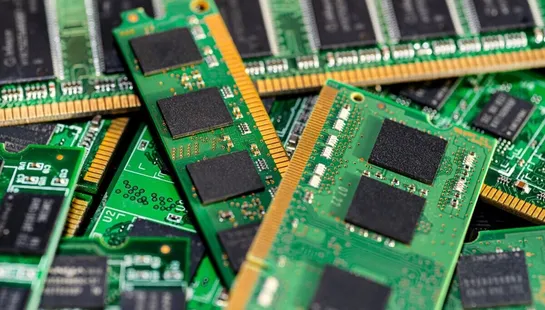
The memory crisis is getting so bad that even retro RAM prices are going to the Moon

DRAM buyers are switching to DDR2 as suppliers run short of mainstream memory, and some device makers are redesigning products around the legacy chip... read more  
The memory crisis is getting so bad that even retro RAM prices are going to the Moon
Link
@devopslinks shared a link, 2 days, 2 hours ago
FAUN.dev()

The database that refused to die: How Postgres survived its own creators

Postgres was developed by Michael Stonebraker and based on the Ingres database system, following ideas from Ted Codd for relational databases. Postgres introduced support for abstract data types, leading to its widespread adoption and compatibility with modern cloud infrastructure. Despite its succe.. read more  
The database that refused to die: How Postgres survived its own creators
Link
@devopslinks shared a link, 2 days, 2 hours ago
FAUN.dev()

Some notes on Lambda MicroVMs

AWS would give developers a middle tier between Lambda functions and ECS or EC2. You get per-VM identity, network addressability, and stronger process isolation while keeping Lambda's burst model. The runtime would fit workloads that need warm state, longer-lived workers, per-tenant sandboxes, proto.. read more  

Link
@devopslinks shared a link, 2 days, 2 hours ago
FAUN.dev()

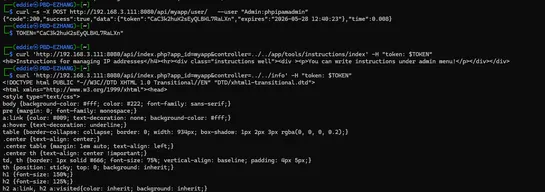
Local AI for Penetration Testing & Research

Model intelligence and tradecraft have progressed a lot in the year that's passed since I last tried something similar. There's a lot of hype around the research Anthropic is publishing; however, cost and privacy are still problems. When there's no guarantee that a thorough job was performed, this t.. read more  
Local AI for Penetration Testing & Research
Link
@devopslinks shared a link, 2 days, 2 hours ago
FAUN.dev()

.self: A new Top-Level Domain built from theground up to support self-hosting

Operated as a public good, .self TLD will be designed and implemented according to human-centered principles to enable anyone to take full ownership of their data... read more  

Unsloth is an open-source toolkit for training and fine-tuning large language models faster and with less memory than a standard Hugging Face stack. Its core library replaces PyTorch's default autograd with custom backpropagation kernels written in OpenAI's Triton language, which is where most of its speed and memory savings come from. It supports LoRA, QLoRA, full fine-tuning, reinforcement learning, pretraining, and 4-bit, 16-bit, and FP8 training, across more than 500 text, vision, audio, and embedding models.

The practical draw is hardware reach. QLoRA workflows in Unsloth let you fine-tune an 8B model on a single 12 GB consumer GPU, and the project headlines roughly 2x faster training with about 70 percent less VRAM versus baseline implementations, though the exact figures vary by model, GPU, and config. A 2026 update added faster mixture-of-experts training, with models like Qwen3-30B-A3B fine-tunable on about 17.5 GB of VRAM. It runs on NVIDIA (including Blackwell and DGX Spark), AMD, and Intel GPUs, with free Colab and Kaggle notebooks for trying it without local hardware.

It fits cleanly into the local-AI workflow. Unsloth integrates with Hugging Face transformers and TRL, and uses llama.cpp to save and run models, exporting to GGUF for Ollama or LM Studio as well as safetensors. As of 2026 it also ships Unsloth Studio, a local no-code GUI that covers the full lifecycle from dataset creation to training to running and comparing GGUF and safetensors models, with tool-calling, web search, and an OpenAI-compatible API, all running offline on Mac and Windows, with the core library under the Apache 2.0 license.