Join us

ContentUpdates and recent posts about NanoClaw..
 Activity
@goutham-annem started using tool AWS EKS , 2 days, 21 hours ago.
 Activity
@goutham-annem started using tool Amazon Web Services , 2 days, 21 hours ago.
 Activity
@goutham-annem started using tool Amazon ECS , 2 days, 21 hours ago.
 Activity
Link
@varbear shared a link, 3 days, 3 hours ago
FAUN.dev()

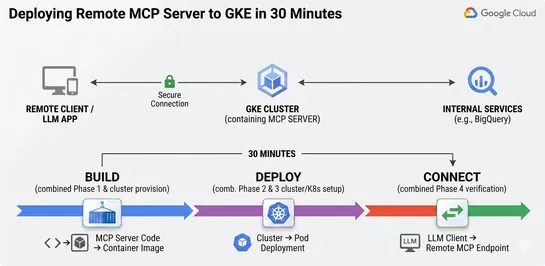
Build and Deploy a Remote MCP Server to GKE in 30 Minutes

Google walks you through shipping a remoteMCP serveronGKE AutopilotusingFastMCPandstreamable-http, swapping localstdiofor shared HTTP endpoints. The clever bit: theGateway APIhandles managed SSL plusCLIENT_IP session affinity, so one centralized server beats everyone running redundant local copies... read more  
Build and Deploy a Remote MCP Server to GKE in 30 Minutes
Link
@varbear shared a link, 3 days, 3 hours ago
FAUN.dev()

The unwritten laws of software engineering

- Always related - first rollback, then debug. - Backups aren’t real until restored. - You’ll hate yourself for bad logs. - ALWAYS have a rollback plan. - Every external dependency will fail. - If there's risk, use the “4 eyes” rule. - Nothing lasts like a temporary fix... read more  

The unwritten laws of software engineering
Link
@varbear shared a link, 3 days, 3 hours ago
FAUN.dev()

How building an HTML-first site doubled our users overnight

Building HTML-first forms using Astro instead of React dramatically increased completion rates and sustainability, highlighting the effectiveness of lightweight, accessible web components for all users, regardless of browser or connectivity... read more  

How building an HTML-first site doubled our users overnight
Link
@varbear shared a link, 3 days, 3 hours ago
FAUN.dev()

Everything a Senior Engineer Needs to Know About What's Inside an LLM

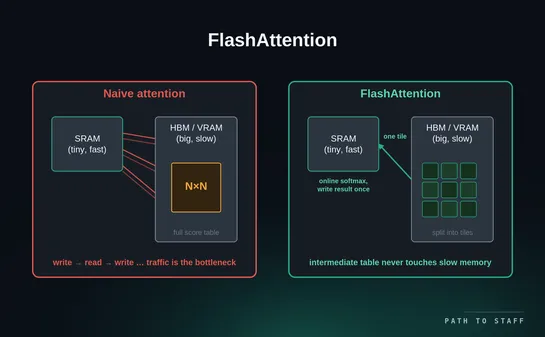
The shift from RNNs totransformerssolved sequential bottlenecks and long-range decay issues withself-attention. Transformers use encoding, decoding, and tokenization to process sequences efficiently and accurately. This evolution led to models like GPT, which excel at tasks with minimal fine-tuning .. read more  

Everything a Senior Engineer Needs to Know About What's Inside an LLM
Link
@varbear shared a link, 3 days, 3 hours ago
FAUN.dev()

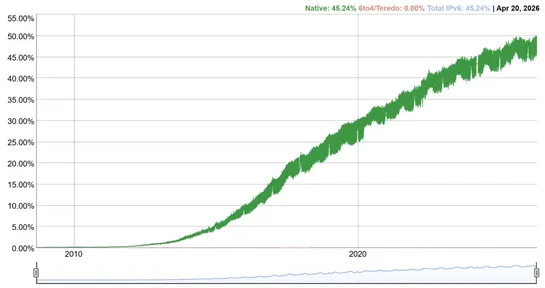
Google hits 50% IPv6

The 50% IPv6 milestone is real, but adoption differs by country. Analysts who report lower figures use population-weighted sampling, while their per-country adoption rates match the higher estimate... read more  

Google hits 50% IPv6
Link
@varbear shared a link, 3 days, 3 hours ago
FAUN.dev()

Building in the Age of Collaborative Coding

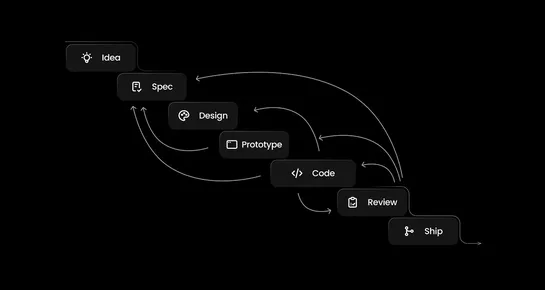
The speed of innovation is crucial for teams, and AI tools have enabled faster work. A collaborative coding model where teams build, review, and ship alongside AI agents is key to staying ahead in workflows. Three shifts have reshaped how teams build, leading to the adoption of a new collaborative c.. read more  

Building in the Age of Collaborative Coding
NanoClaw is an open-source personal AI agent designed to run locally on your machine while remaining small enough to fully understand and audit. Built as a lightweight alternative to larger agent frameworks, the system runs as a single Node.js process with roughly 3,900 lines of code spread across about 15 source files.

The agent integrates with messaging platforms such as WhatsApp and Telegram, allowing users to interact with their AI assistant directly through familiar chat applications. Each conversation group operates independently and maintains its own memory and execution environment.

A core design principle of NanoClaw is security through isolation. Every agent session runs inside its own container using Docker or Apple Container, ensuring that the agent can only access files and resources that are explicitly mounted. This approach relies on operating system–level sandboxing rather than application-level permission checks.

The architecture is intentionally simple: a single orchestrator process manages message queues, schedules tasks, launches containerized agents, and stores state in SQLite. Additional functionality can be added through a modular skills system, allowing users to extend capabilities without increasing the complexity of the core codebase.

By combining a minimal architecture with container-based isolation and messaging integration, NanoClaw aims to provide a transparent, customizable personal AI agent that users can run and control entirely on their own infrastructure.