Join us

ContentUpdates and recent posts about Lustre..
 Activity
@goutham-annem started using tool Amazon Web Services , 6 days, 7 hours ago.
 Activity
@goutham-annem started using tool Amazon ECS , 6 days, 7 hours ago.
 Activity
@eon01 gave 🐾 to The unwritten laws of software engineering , 6 days, 10 hours ago.
Link
@varbear shared a link, 6 days, 13 hours ago
FAUN.dev()

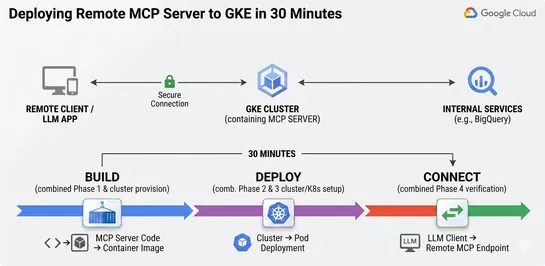
Build and Deploy a Remote MCP Server to GKE in 30 Minutes

Google walks you through shipping a remoteMCP serveronGKE AutopilotusingFastMCPandstreamable-http, swapping localstdiofor shared HTTP endpoints. The clever bit: theGateway APIhandles managed SSL plusCLIENT_IP session affinity, so one centralized server beats everyone running redundant local copies... read more  
Build and Deploy a Remote MCP Server to GKE in 30 Minutes
Link
@varbear shared a link, 6 days, 13 hours ago
FAUN.dev()

How building an HTML-first site doubled our users overnight

Building HTML-first forms using Astro instead of React dramatically increased completion rates and sustainability, highlighting the effectiveness of lightweight, accessible web components for all users, regardless of browser or connectivity... read more  

How building an HTML-first site doubled our users overnight
Link
@varbear shared a link, 6 days, 13 hours ago
FAUN.dev()

The unwritten laws of software engineering

- Always related - first rollback, then debug. - Backups aren’t real until restored. - You’ll hate yourself for bad logs. - ALWAYS have a rollback plan. - Every external dependency will fail. - If there's risk, use the “4 eyes” rule. - Nothing lasts like a temporary fix... read more  

The unwritten laws of software engineering
Link
@varbear shared a link, 6 days, 13 hours ago
FAUN.dev()

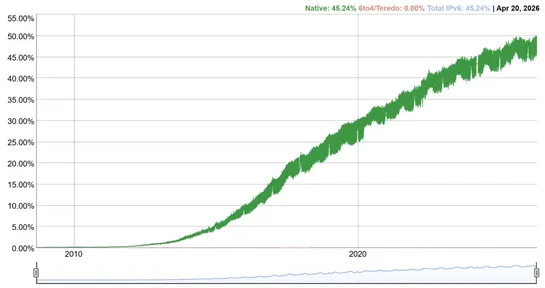
Google hits 50% IPv6

The 50% IPv6 milestone is real, but adoption differs by country. Analysts who report lower figures use population-weighted sampling, while their per-country adoption rates match the higher estimate... read more  

Google hits 50% IPv6
Link
@varbear shared a link, 6 days, 13 hours ago
FAUN.dev()

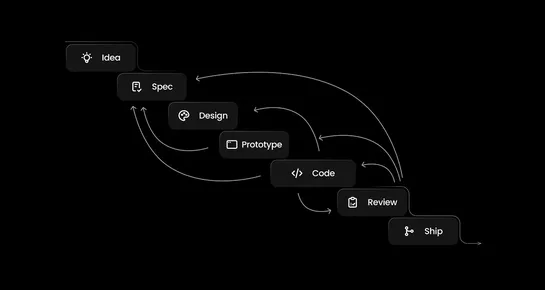
Building in the Age of Collaborative Coding

The speed of innovation is crucial for teams, and AI tools have enabled faster work. A collaborative coding model where teams build, review, and ship alongside AI agents is key to staying ahead in workflows. Three shifts have reshaped how teams build, leading to the adoption of a new collaborative c.. read more  

Building in the Age of Collaborative Coding
Link
@kaptain shared a link, 6 days, 14 hours ago
FAUN.dev()

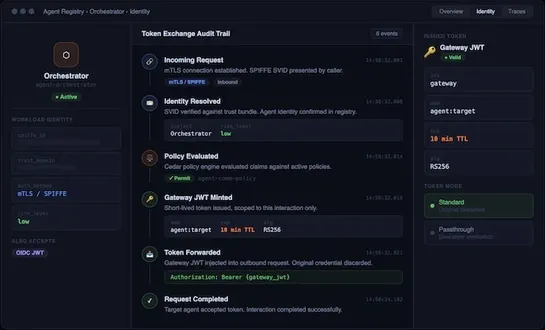
Tigera introduces unified control plane for Kubernetes-based AI agent security

Tigera launched Lynx for general availability, a Kubernetes-native control plane that operators place in the path of AI agent calls so teams can enforce identity and policy... read more  

Tigera introduces unified control plane for Kubernetes-based AI agent security
Link
@kaptain shared a link, 6 days, 14 hours ago
FAUN.dev()

How Netflix Simplified Batch Compute with Kueue

Netflix migratedmillions of batch jobsfrom their custom queuing system toKueue, a cloud-native job queueing system, as part of transitioning to a more Kubernetes-native infrastructure. Kueue offers features such as preemption, fair sharing, and hierarchical tenants that were missing in their homegro.. read more  

Lustre is an open-source, parallel distributed file system built for high-performance computing environments that require extremely fast, large-scale data access. Designed to serve thousands of compute nodes concurrently, Lustre enables HPC clusters to read and write data at multi-terabyte-per-second speeds while maintaining low latency and fault tolerance.

A Lustre deployment separates metadata and file data into distinct services—Metadata Servers (MDS) handling namespace operations and Object Storage Servers (OSS) serving file contents stored across multiple Object Storage Targets (OSTs). This architecture allows clients to access data in parallel, achieving performance far beyond traditional network file systems.

Widely adopted in scientific computing, supercomputing centers, weather modeling, genomics, and large-scale AI training, Lustre remains a foundational component of modern HPC stacks. It integrates with resource managers like Slurm, supports POSIX semantics, and is designed to scale from small clusters to some of the world’s fastest supercomputers.

With strong community and enterprise support, Lustre provides a mature, battle-tested solution for workloads that demand extreme I/O performance, massive concurrency, and petabyte-scale distributed storage.