Join us

ContentUpdates and recent posts about Grafana Tempo..
Quiz Advanced
@eon01 published a quiz, 1 day, 11 hours ago
Founder, FAUN.dev

Kubernetes Deep Dive: QoS, Eviction, HPA, Probes, and Sidecars

An advanced 10-question quiz on Kubernetes internals and runtime behavior, aimed at practitioners who run clusters in production. It targets the subtle traps: QoS assignment rules, OOM-kill vs eviction, whether node-pressure eviction honors PodDisruptionBudgets, the exact HPA scaling formula and …

Take quiz
Kubernetes Deep Dive: QoS, Eviction, HPA, Probes, and Sidecars
Quiz Average
@eon01 published a quiz, 1 day, 11 hours ago
Founder, FAUN.dev

Git Fundamentals: Commits, Branches, Merge, and Rebase

A 10-question quiz on how Git actually works under the hood, escalating from easy to hard. It covers what a commit really stores, branches as pointers, fast-forward vs merge commits, what rebase does to your history, the golden rule of …

Take quiz
Git Fundamentals: Commits, Branches, Merge, and Rebase
Quiz Average
@eon01 published a quiz, 1 day, 11 hours ago
Founder, FAUN.dev

SRE Fundamentals: SLOs, Error Budgets, and Reliability Practice

A 10-question quiz on core Site Reliability Engineering concepts, escalating from easy to hard. It covers the SLI/SLO/SLA distinction, error budgets, the four golden signals, toil, blameless postmortems, and availability math (the "nines").

Take quiz
SRE Fundamentals: SLOs, Error Budgets, and Reliability Practice
Quiz Average
@eon01 published a quiz, 1 day, 11 hours ago
Founder, FAUN.dev

Neural Network Fundamentals: From Activations to Gradients

A 10-question quiz on the core mechanics of neural networks, escalating from easy to hard. You will cover activation functions (ReLU, sigmoid, softmax), backpropagation, dropout, the vanishing gradient problem, and training vocabulary like epochs and iterations. Aimed at learners with …

Take quiz
Neural Network Fundamentals: From Activations to Gradients
 Activity
Link
@kala shared a link, 1 day, 13 hours ago
FAUN.dev()

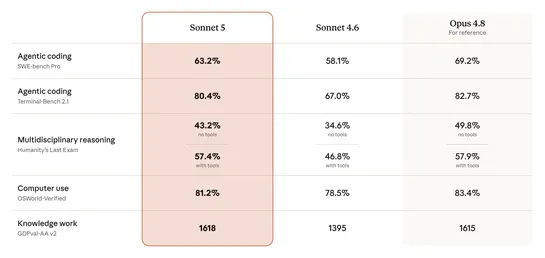
Introducing Claude Sonnet 5

Anthropic launched Claude Sonnet 5, its most agentic Sonnet model, and set it as the default for Free and Pro users... read more  

Introducing Claude Sonnet 5
Link
@varbear shared a link, 1 day, 23 hours ago
FAUN.dev()

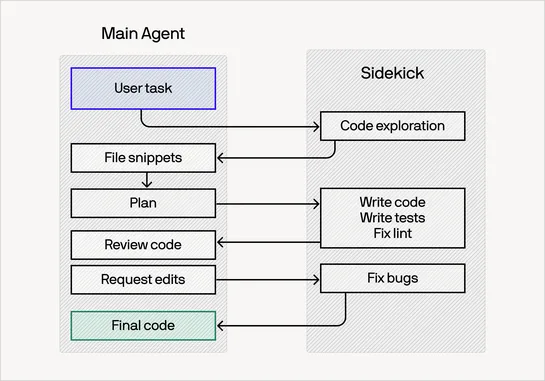
Devin Fusion

Devin Fusion maintains frontier performance at a 35% lower cost on the new FrontierCode benchmark, thanks to its innovative multi-model routing approach. By using both a frontier model and a cost-effective "sidekick" model, Devin Fusion optimizes performance and cost efficiency. The sidekick pattern.. read more  

Devin Fusion
Link
@varbear shared a link, 1 day, 23 hours ago
FAUN.dev()

Introducing Session Switcher. Swap Burp Sessions with One Click!

Doyensec released Session Switcher, a Burp Suite extension. You can save HTTP sessions under names, then swap cookies and headers inside the request editor... read more  

Introducing Session Switcher. Swap Burp Sessions with One Click!
Link
@varbear shared a link, 1 day, 23 hours ago
FAUN.dev()

Jobs and Software is Fu*ked

The writer, a software engineer with 10 years of experience, expresses frustration with the current job market, citing difficulties in navigating filters like Coderpad, hackerrank, and AI proctored exams. They feel disadvantaged by these filters and feel like companies are making it more difficult t.. read more  

Jobs and Software is Fu*ked
Link
@varbear shared a link, 1 day, 23 hours ago
FAUN.dev()

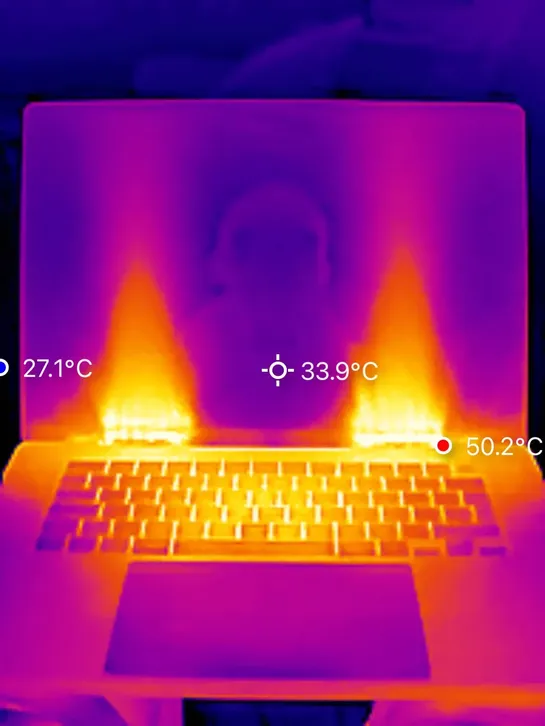
Qwen 3.6 27B is the sweet spot for local development

Qwen 3.6 is a local model that stands out as a general intelligence, offered in two variants: Qwen 3.6 35B A3B and Qwen 3.6 27B. Qwen 3.6 27B has been praised for punching above its weight, making it worth the heat it generates. Running Qwen 3.6 locally with llama.cpp is easier than ever, allowing f.. read more  

Qwen 3.6 27B is the sweet spot for local development
Grafana Tempo is a distributed tracing backend built for massive scale and low operational overhead. Unlike traditional tracing systems that depend on complex databases, Tempo uses object storage—such as S3, GCS, or Azure Blob Storage—to store trace data, making it highly cost-effective and resilient. Tempo is part of the Grafana observability stack and integrates natively with Grafana, Prometheus, and Loki, enabling unified visualization and correlation across metrics, logs, and traces.

Technically, Tempo supports ingestion from major tracing protocols including Jaeger, Zipkin, OpenCensus, and OpenTelemetry, ensuring easy interoperability. It features TraceQL, a domain-specific query language for traces inspired by PromQL and LogQL, allowing developers to perform targeted searches and complex trace-based analytics. The newer TraceQL Metrics capability even lets users derive metrics directly from trace data, bridging the gap between tracing and performance analysis.

Tempo’s Traces Drilldown UI further enhances usability by providing intuitive, queryless analysis of latency, errors, and performance bottlenecks. Combined with the tempo-cli and tempo-vulture tools, it delivers a full suite for trace collection, verification, and debugging.

Built in Go and following OpenTelemetry standards, Grafana Tempo is ideal for organizations seeking scalable, vendor-neutral distributed tracing to power observability at cloud scale.