Join us

ContentUpdates and recent posts about Claude..
 Activity
@goutham-annem started using tool Amazon ECS , 1 week, 1 day ago.
 Activity
@eon01 gave 🐾 to The unwritten laws of software engineering , 1 week, 1 day ago.
Link
@varbear shared a link, 1 week, 1 day ago
FAUN.dev()

Build and Deploy a Remote MCP Server to GKE in 30 Minutes

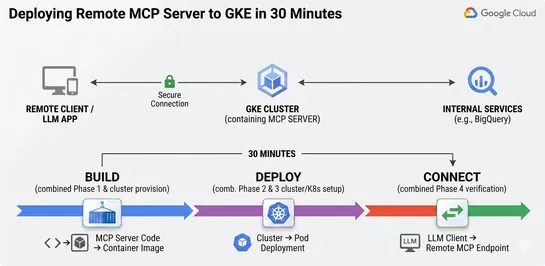
Google walks you through shipping a remoteMCP serveronGKE AutopilotusingFastMCPandstreamable-http, swapping localstdiofor shared HTTP endpoints. The clever bit: theGateway APIhandles managed SSL plusCLIENT_IP session affinity, so one centralized server beats everyone running redundant local copies... read more  
Build and Deploy a Remote MCP Server to GKE in 30 Minutes
Link
@varbear shared a link, 1 week, 1 day ago
FAUN.dev()

How building an HTML-first site doubled our users overnight

Building HTML-first forms using Astro instead of React dramatically increased completion rates and sustainability, highlighting the effectiveness of lightweight, accessible web components for all users, regardless of browser or connectivity... read more  

How building an HTML-first site doubled our users overnight
Link
@varbear shared a link, 1 week, 1 day ago
FAUN.dev()

The unwritten laws of software engineering

- Always related - first rollback, then debug. - Backups aren’t real until restored. - You’ll hate yourself for bad logs. - ALWAYS have a rollback plan. - Every external dependency will fail. - If there's risk, use the “4 eyes” rule. - Nothing lasts like a temporary fix... read more  

The unwritten laws of software engineering
Link
@varbear shared a link, 1 week, 1 day ago
FAUN.dev()

Google hits 50% IPv6

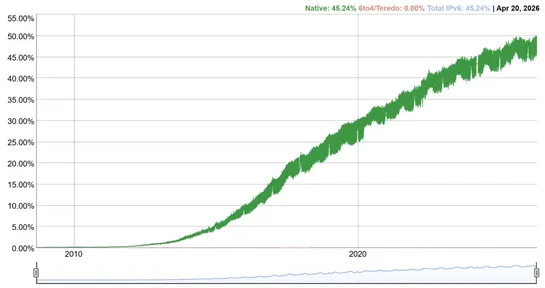
The 50% IPv6 milestone is real, but adoption differs by country. Analysts who report lower figures use population-weighted sampling, while their per-country adoption rates match the higher estimate... read more  

Google hits 50% IPv6
Link
@varbear shared a link, 1 week, 1 day ago
FAUN.dev()

Building in the Age of Collaborative Coding

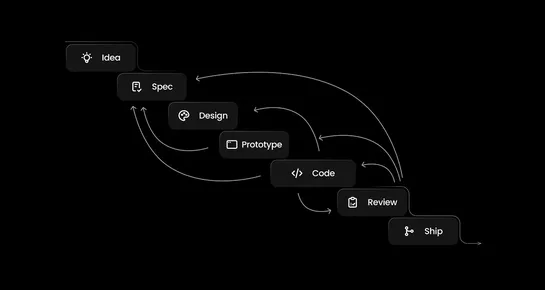
The speed of innovation is crucial for teams, and AI tools have enabled faster work. A collaborative coding model where teams build, review, and ship alongside AI agents is key to staying ahead in workflows. Three shifts have reshaped how teams build, leading to the adoption of a new collaborative c.. read more  

Building in the Age of Collaborative Coding
Link
@kaptain shared a link, 1 week, 1 day ago
FAUN.dev()

Tigera introduces unified control plane for Kubernetes-based AI agent security

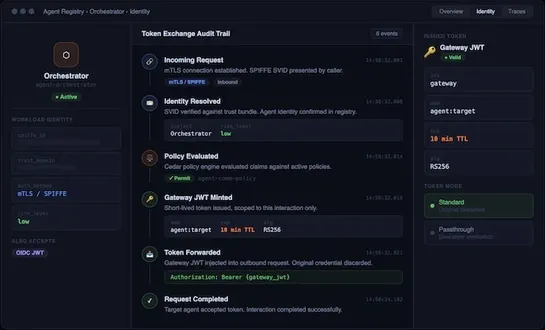
Tigera launched Lynx for general availability, a Kubernetes-native control plane that operators place in the path of AI agent calls so teams can enforce identity and policy... read more  

Tigera introduces unified control plane for Kubernetes-based AI agent security
Link
@kaptain shared a link, 1 week, 1 day ago
FAUN.dev()

How Netflix Simplified Batch Compute with Kueue

Netflix migratedmillions of batch jobsfrom their custom queuing system toKueue, a cloud-native job queueing system, as part of transitioning to a more Kubernetes-native infrastructure. Kueue offers features such as preemption, fair sharing, and hierarchical tenants that were missing in their homegro.. read more  

Link
@kaptain shared a link, 1 week, 1 day ago
FAUN.dev()

When failover isn’t safe: Building high-availability PostgreSQL on Kubernetes

Datadog made PostgreSQL failover safer by treating replica lag as the promotion gate. A zonal-failure gameday showed that detection and automation could not protect the database if the standby sat behind the primary. The team added lag-aware checks, clearer operator signals, and failure drills so en.. read more  

When failover isn’t safe: Building high-availability PostgreSQL on Kubernetes
Claude is an AI assistant built by Anthropic, a safety-focused AI research company. It's designed around three core principles - being helpful, harmless, and honest - which shapes how it approaches everything from simple questions to complex, multi-step tasks. In practice, Claude handles a broad range of work: writing and editing, coding and debugging, research and summarization, data analysis, brainstorming, and extended back-and-forth conversation. It's built to engage thoughtfully rather than just generate output - it can push back when something seems off, ask clarifying questions, and reason through problems step by step. What sets Claude apart from many AI assistants is its emphasis on nuance and judgment. It tries to give calibrated answers - acknowledging uncertainty when it exists, avoiding overconfidence, and flagging when a question might not have a clean answer. It also has a large context window, making it well suited for long documents, complex codebases, or extended workflows. Claude is available through Claude.ai for individual users, through an API for developers building products and tools, and through Claude Code for agentic coding tasks directly in the terminal. The current model family includes Claude Opus 4.6, Claude Sonnet 4.6, and Claude Haiku 4.5 - ranging from lightweight and fast to highly capable for complex reasoning tasks.