Join us

ContentUpdates and recent posts about BigQuery..
Story Palark Team Trending
@shurup shared a post, 2 weeks, 2 days ago
@palark

9 new CNCF projects from 2025: OpenTofu, kgateway, Cozystack, and others

Kubernetes OpenTofu Kubernetes Gateway API

Followingthe recent overviewof newly added CNCF projects in 2025, the next batch of Open Source tools for Cloud Native needs include: - KitOpsfor packaging AI/ML models into all-in-one bundles and deploying them. - OpenTofu, a Terraform fork created by the community. - kagent, a framework for buildi..
New CNCF Sandbox projects in 2025
Story
@laura_garcia shared a post, 2 weeks, 2 days ago
Software Developer, RELIANOID

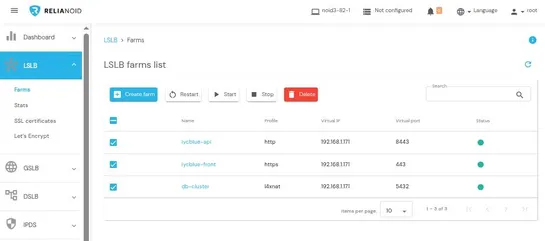
Load Balancing IYC BLUE with RELIANOID

⚓ How do you ensure a yacht and fleet management platform stays available 24/7, even across challenging maritime networks? Discover how 𝗥𝗘𝗟𝗜𝗔𝗡𝗢𝗜𝗗 delivers 𝘩𝘪𝘨𝘩 𝘢𝘷𝘢𝘪𝘭𝘢𝘣𝘪𝘭𝘪𝘵𝘺, 𝘴𝘦𝘤𝘶𝘳𝘪𝘵𝘺, 𝘢𝘯𝘥 𝘱𝘦𝘳𝘧𝘰𝘳𝘮𝘢𝘯𝘤𝘦 for 𝙄𝙔𝘾 𝘽𝙇𝙐𝙀 with intelligent load balancing, SSL offloading, API routing, and resilient failover. R..

iycblue_load_balancing_virtual_services
Link
@varbear shared a link, 2 weeks, 4 days ago
FAUN.dev()

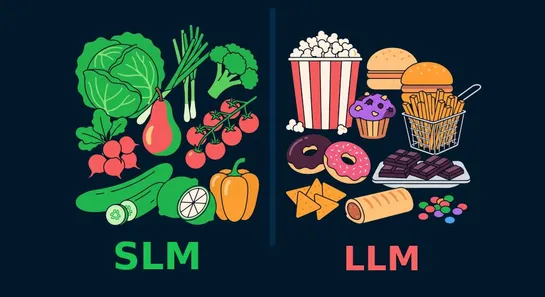
Using local LLMs for agentic coding

Alex Ewerlöf walks through running open-weight models likeGemma 4locally for agentic coding via LM Studio, wiring them into Copilot and Pi as custom endpoints, with the practical traps around context length, KV-cache quantization, and cold-start prompt processing... read more  

Using local LLMs for agentic coding
Link
@varbear shared a link, 2 weeks, 4 days ago
FAUN.dev()

I built a Go microservices framework in 2017.

Aafaq Zahid open-sourced Keel, a Go microservices framework he extracted from eight years of production systems... read more  

I built a Go microservices framework in 2017.
Link
@varbear shared a link, 2 weeks, 4 days ago
FAUN.dev()

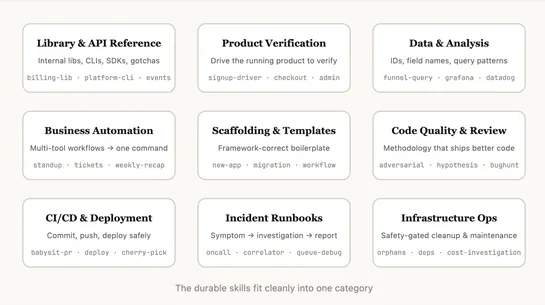
Lessons from building Code: How we use skills

The Claude Code team catalogs Anthropic's hundreds of internal skills into 9 categories, arguing the best skills fit one cleanly and that verification skills deliver the highest measurable gains, worth an engineer-week each... read more  

Lessons from building Code: How we use skills
Link
@varbear shared a link, 2 weeks, 4 days ago
FAUN.dev()

Hacking Google with A.I. for $500,000

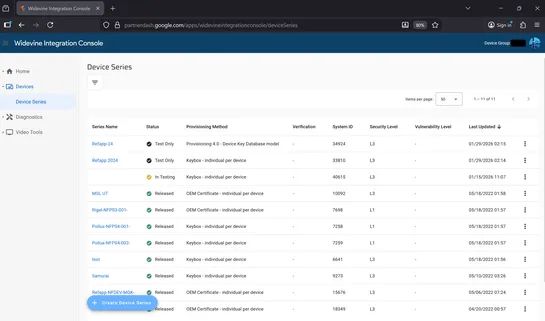
A security researcher used an AI fuzzing harness against 1,500+ Google APIs and earned $500,000 in bug bounties, surfacing access-control flaws across Google Voice, Widevine, AdExchange, and internal Cloud Console GraphQL endpoints... read more  

Hacking Google with A.I. for $500,000
Link
@varbear shared a link, 2 weeks, 4 days ago
FAUN.dev()

The Smallest Brain You Can Build

Devarsh Ranpara builds a single-input perceptron from scratch in Python with browser demos, using the weight, bias, and decision boundary to show why a line forced through zero cannot separate classes that sit far from it... read more  

Link
@kaptain shared a link, 2 weeks, 4 days ago
FAUN.dev()

Breaking free of a single datacenter: Practical geo-distributed AI operations with the k0smos platforms

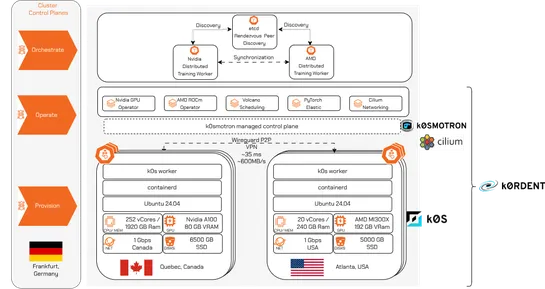
This post discusses the challenges of leveraging distributed resources for AI workloads and the role of Kubernetes in addressing these challenges. The k0smos stack is highlighted as a solution for operating geo-distributed AI infrastructure, divided into three technical layers: k0s, k0smotron, and k.. read more  

Breaking free of a single datacenter: Practical geo-distributed AI operations with the k0smos platforms
Link
@kaptain shared a link, 2 weeks, 4 days ago
FAUN.dev()

Kubernetes' Default CoreDNS Configuration is insecure

CoreDNS pods insecure option is the default in Kubernetes as it allows for the creation of arbitrary DNS A records. Combined with wildcard SSL certs, it poses a security risk, highlighted by Cilium's handling of network policies in the face of DNS manipulation. Time to shift to a more secure DNS con.. read more  

Kubernetes' Default CoreDNS Configuration is insecure
Link
@kaptain shared a link, 2 weeks, 4 days ago
FAUN.dev()

From Dashboard to Headlamp: Understanding the Transition

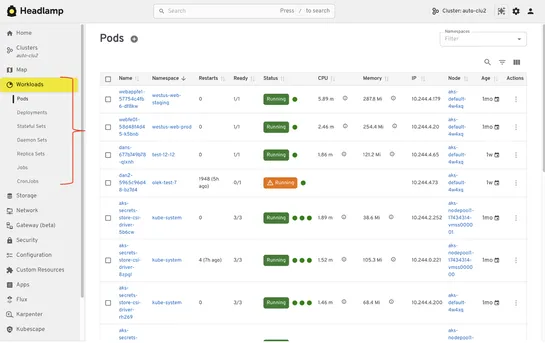
The Kubernetes Dashboard project has been archived, with Headlamp now carrying the legacy forward by offering a visual interface with enhanced capabilities like multi-cluster visibility and application-centric views. Headlamp keeps familiar workflows, while expanding to support multi-cluster environ.. read more  

From Dashboard to Headlamp: Understanding the Transition
BigQuery is a cloud-native, serverless analytics platform designed to store, query, and analyze massive volumes of structured and semi-structured data using standard SQL. It separates storage from compute, automatically scales resources, and eliminates the need for infrastructure management, indexing, or capacity planning.

BigQuery is optimized for analytical workloads such as business intelligence, log analysis, data science, and machine learning. It supports real-time data ingestion via streaming, batch loading from cloud storage, and federated queries across external data sources like Cloud Storage, Bigtable, and Google Drive.

Query execution is distributed and highly parallel, enabling interactive performance even on petabyte-scale datasets. The platform integrates deeply with the Google Cloud ecosystem, including Looker for BI, Vertex AI for ML workflows, Dataflow for streaming pipelines, and BigQuery ML, which allows users to train and run machine learning models directly using SQL.

Built-in security features include fine-grained IAM controls, column- and row-level security, encryption by default, and audit logging. BigQuery follows a consumption-based pricing model, charging for storage and queries (on-demand or reserved capacity).