Join us

ContentUpdates and recent posts about Arti..
Link
@kaptain shared a link, 1 week ago
FAUN.dev()

What job interviews taught me about Kubernetes

The recent shift towards Kubernetes adoption can be attributed to the benefits of uniform deployment, standardized knowledge, and traceability it offers. With managed K8s services maturing and Helm simplifying deployment, more companies are choosing Kubernetes regardless of their technical needs. Th.. read more  
Link
@kaptain shared a link, 1 week ago
FAUN.dev()

The feedback loops behind Kubernetes

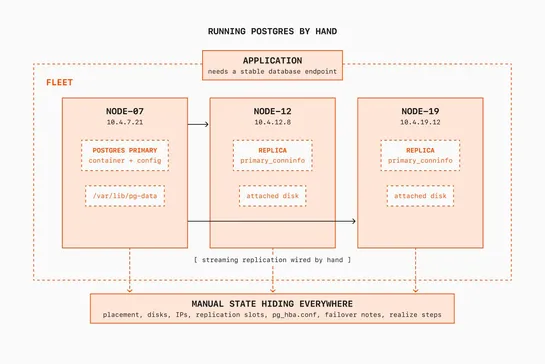
Kubernetes operatoris a closed feedback loop that ensures desired state for running workloads, similar to a thermostat's control. Operators automate manual tasks in managing databases like Postgres, improving efficiency by comparing and converging states. The same loop structure in a Bash script can.. read more  

The feedback loops behind Kubernetes
Link
@kala shared a link, 1 week ago
FAUN.dev()

Don't let the LLM speak, just probe it

When an LLM reads "here's some text, here's a criterion - does it satisfy it?", the answer often already exists in its hidden state before it generates a single token. So skip generation entirely: grab the hidden state at the last prompt token (~70% of the way up the model's layers), feed it to a ti.. read more  

Link
@kala shared a link, 1 week ago
FAUN.dev()

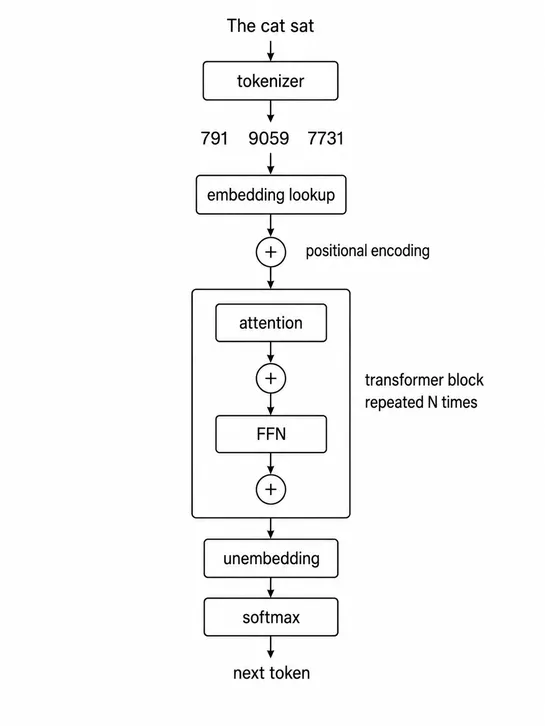
How LLMs Actually Work

This post covers the core mechanisms inside modern transformer-based LLMs, including tokens, embeddings, positional encoding, attention, multi-head attention, and more. Tokenization converts text into integer IDs, embeddings give tokens meaning through vectors, and positional encoding helps the mode.. read more  

How LLMs Actually Work
Link
@kala shared a link, 1 week ago
FAUN.dev()

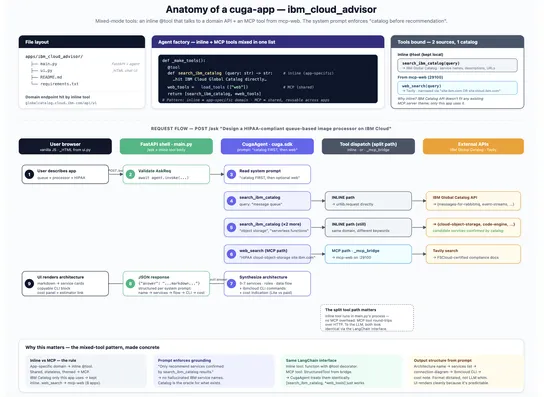
Build real agentic apps using CUGA: two dozen working examples on a lightweight harness

CUGA*, the Agent Harness for the Enterprise from IBM, streamlines agent building by handling planning, execution loop, tool calls, and state plumbing. Using it, you focus on defining tools and prompts while the rest is taken care of, leading to efficient agent development without needing to learn a .. read more  

Build real agentic apps using CUGA: two dozen working examples on a lightweight harness
Link
@kala shared a link, 1 week ago
FAUN.dev()

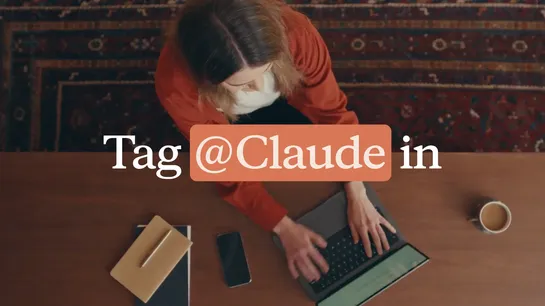
Introducing Claude Tag

Anthropic's Claude Tag beta gives Slack teams a shared agent they can tag in a channel, assign tasks to, and connect to approved tools. Teams gain three practical benefits: - Claude can keep channel context, so teammates avoid re-explaining project history. - Admins can scope memory and tool access .. read more  

Introducing Claude Tag
Link
@kala shared a link, 1 week ago
FAUN.dev()

OpenClaw’s Skill Marketplace and the Emerging AI Supply Chain Threat

Unit 42 researchers found five malicious ClawHub skills that attackers had designed to pass the marketplace's post-incident automated checks... read more  

OpenClaw’s Skill Marketplace and the Emerging AI Supply Chain Threat
Link
@kala shared a link, 1 week ago
FAUN.dev()

7,000 Langflow servers are under attack. LangGraph and LangChain have the same holes

Three popular AI agent frameworks had major vulnerabilities, from SQL injection to path traversal, allowing attackers to gain full remote code execution and access sensitive data. Exploits were publicly disclosed, and patches have been released for each framework... read more  

Link
@devopslinks shared a link, 1 week ago
FAUN.dev()

I Finally Tried Niri, The New Way Of Tiling Linux Users Are Going Crazy About

Niri lets you keep tiled windows in a scrollable strip, so you can add, move, and focus windows without rebuilding your layout. With Dank Linux, you get that workflow as a complete desktop, with polished defaults and the pieces you expect already wired up... read more  

I Finally Tried Niri, The New Way Of Tiling Linux Users Are Going Crazy About
Link
@devopslinks shared a link, 1 week ago
FAUN.dev()

Why your microVM sandbox solves a particular problem very well, but not the agent security problem.

Use MicroVMs to contain host-escape risk from coding agents. You still need capability controls: grant the agent access to specific files, scoped credentials, approved services, and permitted mutations after you place repos and credentials inside the VM... read more  

Arti is an official Tor Project initiative to rewrite the Tor client stack in Rust. Its primary goal is to address long-standing safety, reliability, and maintainability challenges inherent in the legacy C-based Tor implementation. By leveraging Rust’s strong compile-time guarantees for memory safety and concurrency, Arti eliminates entire classes of bugs that have historically affected Tor, including many security vulnerabilities.

Arti is architected as a modular, embeddable library rather than a monolithic application. This makes it easier for developers to integrate Tor networking capabilities directly into other applications, services, and platforms. From its earliest versions, Arti has supported multi-core cryptography, cleaner APIs, and a more maintainable internal design.

While early releases focused on client functionality such as bootstrapping, running as a SOCKS proxy, and routing traffic over the Tor network, the long-term roadmap includes full feature parity with the existing Tor client, support for onion services, anti-censorship mechanisms, and eventually Tor relay functionality. Arti represents the future foundation of the Tor ecosystem, prioritizing long-term security, developer velocity, and adaptability.