Join us

ContentUpdates and recent posts about AIStor..
Link
@kala shared a link, 1 week ago
FAUN.dev()

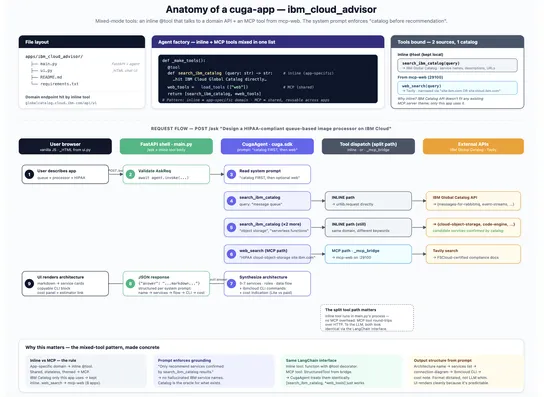
Build real agentic apps using CUGA: two dozen working examples on a lightweight harness

CUGA*, the Agent Harness for the Enterprise from IBM, streamlines agent building by handling planning, execution loop, tool calls, and state plumbing. Using it, you focus on defining tools and prompts while the rest is taken care of, leading to efficient agent development without needing to learn a .. read more  
Build real agentic apps using CUGA: two dozen working examples on a lightweight harness
Link
@kala shared a link, 1 week ago
FAUN.dev()

Introducing Claude Tag

Anthropic's Claude Tag beta gives Slack teams a shared agent they can tag in a channel, assign tasks to, and connect to approved tools. Teams gain three practical benefits: - Claude can keep channel context, so teammates avoid re-explaining project history. - Admins can scope memory and tool access .. read more  

Introducing Claude Tag
Link
@kala shared a link, 1 week ago
FAUN.dev()

OpenClaw’s Skill Marketplace and the Emerging AI Supply Chain Threat

Unit 42 researchers found five malicious ClawHub skills that attackers had designed to pass the marketplace's post-incident automated checks... read more  

OpenClaw’s Skill Marketplace and the Emerging AI Supply Chain Threat
Link
@kala shared a link, 1 week ago
FAUN.dev()

7,000 Langflow servers are under attack. LangGraph and LangChain have the same holes

Three popular AI agent frameworks had major vulnerabilities, from SQL injection to path traversal, allowing attackers to gain full remote code execution and access sensitive data. Exploits were publicly disclosed, and patches have been released for each framework... read more  

Link
@devopslinks shared a link, 1 week ago
FAUN.dev()

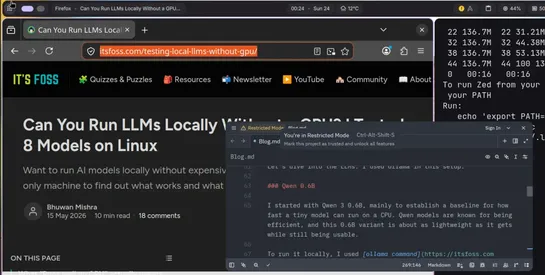
I Finally Tried Niri, The New Way Of Tiling Linux Users Are Going Crazy About

Niri lets you keep tiled windows in a scrollable strip, so you can add, move, and focus windows without rebuilding your layout. With Dank Linux, you get that workflow as a complete desktop, with polished defaults and the pieces you expect already wired up... read more  

I Finally Tried Niri, The New Way Of Tiling Linux Users Are Going Crazy About
Link
@devopslinks shared a link, 1 week ago
FAUN.dev()

Why your microVM sandbox solves a particular problem very well, but not the agent security problem.

Use MicroVMs to contain host-escape risk from coding agents. You still need capability controls: grant the agent access to specific files, scoped credentials, approved services, and permitted mutations after you place repos and credentials inside the VM... read more  

Link
@devopslinks shared a link, 1 week ago
FAUN.dev()

IaC Isn't Dying. AI Makes it More Important

Teams that use AI to generate infrastructure code need IaC as the system of record that platform teams govern. Engineers can produce changes faster, so platform teams must absorb more work through review, policy, testing, integration, and rollout... read more  

IaC Isn't Dying. AI Makes it More Important
Link
@devopslinks shared a link, 1 week ago
FAUN.dev()

Nginx as a Reverse Proxy

How Nginx works as a reverse proxy, from its worker architecture to rate limiting, HTTP/2, security headers, and tuning workers to match the server... read more  

Nginx as a Reverse Proxy
Link
@devopslinks shared a link, 1 week ago
FAUN.dev()

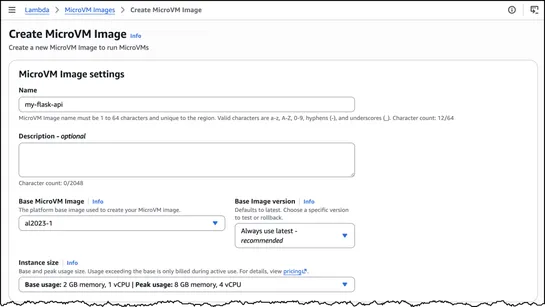
Run isolated sandboxes with full lifecycle control: AWS Lambda introduces MicroVMs

AWS gave developers a Lambda option for running user- or AI-generated code inside stateful Firecracker microVMs. The key use case: AI coding agents can execute untrusted snippets, install dependencies, keep a workspace warm, and destroy the environment after the task ends. Firecracker gives each tas.. read more  

Run isolated sandboxes with full lifecycle control: AWS Lambda introduces MicroVMs
Link
@devopslinks shared a link, 1 week ago
FAUN.dev()

In praise of memcached

Choose memcached as the default cache because it keeps the cache boundary clear. It offers no persistence, so your app must rebuild cached values from the source of truth after a restart or eviction. It also pushes failure handling into client code, so engineers must decide how the app behaves durin.. read more  

AIStor is an enterprise-grade, high-performance object storage platform built for modern data workloads such as AI, machine learning, analytics, and large-scale data lakes. It is designed to handle massive datasets with predictable performance, operational simplicity, and hyperscale efficiency, while remaining fully compatible with the Amazon S3 API. AIStor is offered under a commercial license as a subscription-based product.

At its core, AIStor is a software-defined, distributed object store that runs on commodity hardware or in containerized environments like Kubernetes. Rather than being limited to traditional file or block interfaces, it exposes object storage semantics that scale from petabytes to exabytes within a single namespace, enabling consistent, flat addressing of vast datasets. It is engineered to sustain very high throughput and concurrency, with examples of multi-TiB/s read performance on optimized clusters.

AIStor is optimized specifically for AI and data-intensive workloads, where throughput, low latency, and horizontal scalability are critical. It integrates broadly with modern AI and analytics tools, including frameworks such as TensorFlow, PyTorch, Spark, and Iceberg-style table engines, making it suitable as the foundational storage layer for pipelines that demand both performance and consistency.

Security and enterprise readiness are central to AIStor’s design. It includes capabilities like encryption, replication, erasure coding, identity and access controls, immutability, lifecycle management, and operational observability, which are important for mission-critical deployments that must meet compliance and data protection requirements.

AIStor is positioned as a platform that unifies diverse data workloads — from unstructured storage for application data to structured table storage for analytics, as well as AI training and inference datasets — within a consistent object-native architecture. It supports multi-tenant environments and can be deployed across on-premises, cloud, and hybrid infrastructure.