Join us

ContentUpdates and recent posts about Vertex AI..
Link
@varbear shared a link, 5 months, 3 weeks ago
FAUN.dev()

Programming Languages in the Age of AI Agents

GitHub Copilot and friends tend to shine in languages with rich static types - think Rust or Scala. Why? The compiler does the heavy lifting. It flags mistakes fast, keeps structure tight, and gives the AI sharper signals to riff on. But drop that agent into a sprawling legacy repo, and cracks show... read more  

Programming Languages in the Age of AI Agents
Link
@varbear shared a link, 5 months, 3 weeks ago
FAUN.dev()

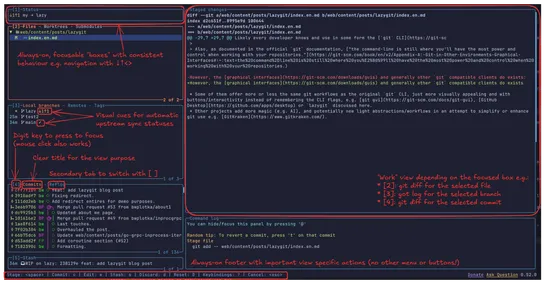
The (lazy) Git UI You Didn't Know You Need

Lazygit is a snappy terminal Git UI that’s picking up steam - and for good reason. It streamlines common tasks like staging, rebasing, and patching without dragging you through clunky menus. The interface sticks close to native Git commands but adds just enough structure to reduce context switches a.. read more  

The (lazy) Git UI You Didn't Know You Need
Link
@varbear shared a link, 5 months, 3 weeks ago
FAUN.dev()

Your URL Is Your State

Modern frontend apps love to complicate state. But they keep forgetting the URL - shareable, dependency-free, and built for the job. This piece breaks down how a well-structured URL can capture UI state, track history, and make bookmarking effortless. NolocalStorage. No cookies. No bloated global st.. read more  

Link
@varbear shared a link, 5 months, 3 weeks ago
FAUN.dev()

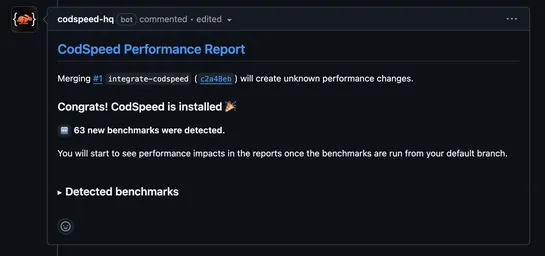
How to Benchmark Python Code?

pytest-benchmarknow plugs straight intoCodSpeedfor automatic performance runs in CI - flamegraphs, metrics, and history included. Just toss a decorator on your test and it turns into a benchmark. Want to measure a slice of code more precisely? Use fixtures to zoom in... read more  

How to Benchmark Python Code?
Link
@varbear shared a link, 5 months, 3 weeks ago
FAUN.dev()

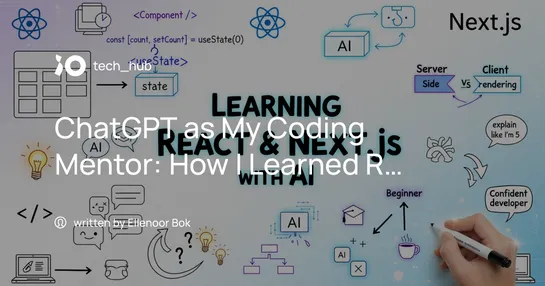
ChatGPT as My Coding Mentor: How I Learned React and Next.js as a Junior Developer

A junior dev leveled up their React and Next.js chops just by writing better prompts. Big wins came from getting specific - like stating their skill level, asking for analogies, and stacking questions to unpack how Next.js splits client and server. Trend to watch:Prompting is a core dev skill for an.. read more  

ChatGPT as My Coding Mentor: How I Learned React and Next.js as a Junior Developer
Link
@kaptain shared a link, 5 months, 3 weeks ago
FAUN.dev()

How Kubernetes Became the New Linux

AWS just handed overKarpenterandKubernetes Resource Orchestrator (Kro)to Kubernetes SIGs. Big move. It's less about AWS-first, more about playing nice across the ecosystem. Kroauto-spins CRDs and microcontrollers for resource orchestration.Karpenterhandles just-in-time node provisioning - leaner, fa.. read more  

How Kubernetes Became the New Linux
Link
@kaptain shared a link, 5 months, 3 weeks ago
FAUN.dev()

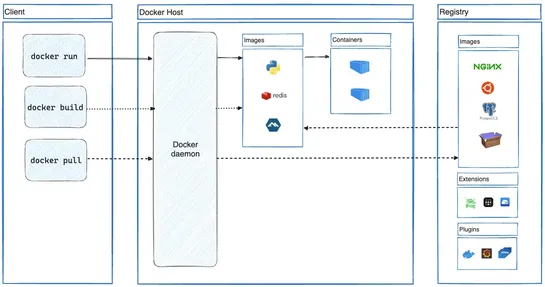
Docker Workbook - Your Guide to Containerization

This guide cuts through modern Docker workflows. It coversBuildKitfor faster, smarter builds. Shows howmulti-stage Dockerfilesmake images slimmer. Breaks down howENTRYPOINTandCMDactually work. Walks through usingsupervisordto wrangle multi-process containers. Then zooms out toDocker Compose, where l.. read more  

Docker Workbook - Your Guide to Containerization
Link
@kaptain shared a link, 5 months, 3 weeks ago
FAUN.dev()

How I Cut Kubernetes Debugging Time by 80% With One Bash Script

The reality of Kubernetes troubleshooting: 80% of the time is spent locating the issue, while only 20% is used for the fix. Managing eight Kubernetes clusters highlighted this pattern. A tool was developed to provide a complete cluster health report in under a minute, streamlining the process and sa.. read more  

Link
@kaptain shared a link, 5 months, 3 weeks ago
FAUN.dev()

The guide to kubectl I never had.

Glasskube dropped a thorough guide tokubectl- the commands, the flags (--dry-run, etc.), how to chain stuff together, and how to keep your config sane. Bonus: a solid roundup ofkubectl plugins. Think observability (like K9s), policy checks, audit trails, and Glasskube’s take on declarative package m.. read more  

The guide to kubectl I never had.
Link
@kaptain shared a link, 5 months, 3 weeks ago
FAUN.dev()

Top 5 hard-earned lessons from the experts on managing Kubernetes

Running Kubernetes in production isn’t just clicking “Create Cluster.” It means locking down RBAC, tightening up network policy, tracking autoscaling metrics, and making sure your images don’t ship with surprises. Managed clusters help get you started. But real workloads need more: hardened configs,.. read more  

Top 5 hard-earned lessons from the experts on managing Kubernetes
Vertex AI is Google Cloud’s end-to-end machine learning and generative AI platform, designed to help teams build, deploy, and operate AI systems reliably at scale. It unifies data preparation, model training, evaluation, deployment, and monitoring into a single managed environment, reducing operational complexity while supporting advanced AI workloads.

Vertex AI supports both custom models and foundation models, including Google’s Gemini model family. It enables organizations to fine-tune models, run large-scale inference, orchestrate agentic workflows, and integrate AI into production systems with strong security, governance, and observability controls.

The platform includes tools for AutoML, custom training with TensorFlow and PyTorch, managed pipelines, feature stores, vector search, and online and batch prediction. For generative AI use cases, Vertex AI provides APIs for text, image, code, multimodal generation, embeddings, and agent-based systems, including support for Model Context Protocol (MCP) integrations.

Built for enterprise environments, Vertex AI integrates deeply with Google Cloud services such as BigQuery, Cloud Storage, IAM, and VPC, enabling secure data access and compliance. It is widely used across industries like finance, healthcare, retail, and science for applications ranging from recommendation systems and forecasting to autonomous research agents and AI-powered products.