Join us

ContentUpdates and recent posts about Vertex AI..
Link
@kaptain shared a link, 3 months ago
FAUN.dev()

New Conversion from cgroup v1 CPU Shares to v2 CPU Weight

A new quadratic formula now mapscgroup v1 CPU sharestocgroup v2 CPU weight. Why? Because the old linear approach messed with CPU fairness; especially at low share values. This fix nails prioritization where it counts. It lands at theOCI runtime layer, live inrunc v1.3.2andcrun v1.23, so containers f.. read more  

Link
@kala shared a link, 3 months ago
FAUN.dev()

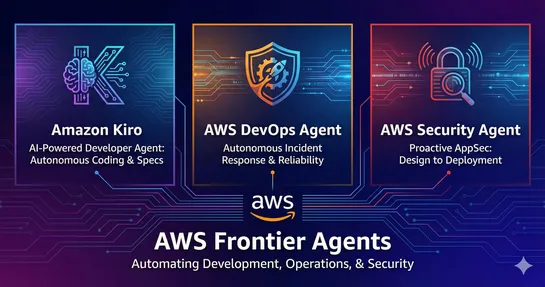
AWS Frontier Agents: Kiro, DevOps Agent, and Security Agent

“Frontier Agents” drop straight into incident workflows. They kick off investigations on their own, whether triggered by alarms or a human hand, pulling together logs, metrics, and deployment context fast. Findings show up where they’re needed: Slack threads, tickets, operator dashboards. No shell c.. read more  

AWS Frontier Agents: Kiro, DevOps Agent, and Security Agent
Link
@kala shared a link, 3 months ago
FAUN.dev()

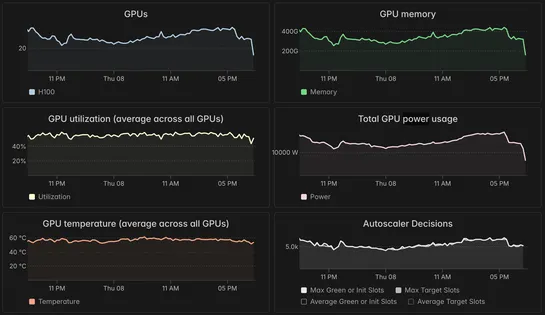
Keeping 20,000 GPUs healthy

Modal unpacked how it keeps a 20,000+ GPU fleet sane across AWS, GCP, Azure, and OCI. Think autoscaling, yes, but with some serious moves behind the curtain. They're running instance benchmarking, enforcing machine image consistency, running boot-time checks, and tracking GPU health both passively a.. read more  

Keeping 20,000 GPUs healthy
Link
@kala shared a link, 3 months ago
FAUN.dev()

Is that allowed? Authentication and authorization in Model Context Protocol

TheModel Context Protocol (MCP) 2025-11-25spec tightens up remote agent auth. It leans intoOAuth 2.1 Authorization Code grants, PKCE required, step-up auth backed. No token passthrough allowed. What’s new: experimental extensions forclient credentialsandclient ID metadata. These smooth out agent reg.. read more  

Is that allowed? Authentication and authorization in Model Context Protocol
Link
@kala shared a link, 3 months ago
FAUN.dev()

Securing Agents in Production (Agentic Runtime, #1)

Palantir's AIP Agentic Runtime isn't just another agent platform, it's a control plane with teeth. Think tight policy enforcement, ephemeral autoscaling with Kubernetes (Rubix), and memory stitched in from the jump viaOntology. Tool usage? Traced and locked down with provenance-based security. Every.. read more  

Securing Agents in Production (Agentic Runtime, #1)
Link
@devopslinks shared a link, 3 months ago
FAUN.dev()

Nanoservices: Why Serverless Got Architecture Right

A fresh take onAWS Lambdaand serverless: thinknanoservices- tiny, isolated functions instead of chunky microservices. No shared state or shared runtime but clean separation, lean logic, and fewer ways to screw up scaling. Where microservices can spiral into spaghetti, nanoservices stay crisp. Each f.. read more  

Nanoservices: Why Serverless Got Architecture Right
Link
@devopslinks shared a link, 3 months ago
FAUN.dev()

Moltbot Personal Assistant Goes Viral, And So Do Your Secrets

Moltbot, the self-hosted AI agent with native hooks for Slack, Telegram, and WhatsApp, exploded from 50-ish to over 3,000 GitHub forks a day after going viral on Jan 24, 2026. It's built around a file-backed workspace and automates everything from code deploys to cloud orchestration. Cool? Definitel.. read more  

Moltbot Personal Assistant Goes Viral, And So Do Your Secrets
Link
@devopslinks shared a link, 3 months ago
FAUN.dev()

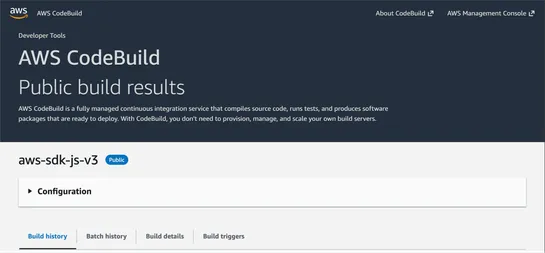
CodeBreach: Supply Chain Vuln & AWS CodeBuild Misconfig

Wiz Research dropped details onCodeBreach, a serious flaw that cracked open AWS SDK GitHub repos, yes, including the popular JavaScript one. The root problem? Leakyregex filtersin CodeBuild pipelines. They missed anchors, so attackers slipped in rogue pull requests, dodged build rules, and stole hig.. read more  

CodeBreach: Supply Chain Vuln & AWS CodeBuild Misconfig
Link
@devopslinks shared a link, 3 months ago
FAUN.dev()

Supply-chain risk of agentic AI - infecting infrastructures via skill worms

AI assistants with shell, network, or filesystem "skills" don't just help, they expose. These hooks can run commands before any human checks the model’s output. That means a bigger attack surface. More room for lateral movement. Easier persistence. In setups where tools like Claude Code run often, i.. read more  

Link
@devopslinks shared a link, 3 months ago
FAUN.dev()

I Cannot SSH Into My Server Anymore (And That’s Fine)

A dev ditched their $100/month VPS for a clean, automated CoreOS setup. No SSH. No clicking around. JustIgnition,Podman Quadlets, andTerraformdoing the heavy lifting. It boots from YAML, spins up containers with systemd, and keeps itself fresh withPodman auto-updates, zero-touch, straight from the r.. read more  

I Cannot SSH Into My Server Anymore (And That’s Fine)
Vertex AI is Google Cloud’s end-to-end machine learning and generative AI platform, designed to help teams build, deploy, and operate AI systems reliably at scale. It unifies data preparation, model training, evaluation, deployment, and monitoring into a single managed environment, reducing operational complexity while supporting advanced AI workloads.

Vertex AI supports both custom models and foundation models, including Google’s Gemini model family. It enables organizations to fine-tune models, run large-scale inference, orchestrate agentic workflows, and integrate AI into production systems with strong security, governance, and observability controls.

The platform includes tools for AutoML, custom training with TensorFlow and PyTorch, managed pipelines, feature stores, vector search, and online and batch prediction. For generative AI use cases, Vertex AI provides APIs for text, image, code, multimodal generation, embeddings, and agent-based systems, including support for Model Context Protocol (MCP) integrations.

Built for enterprise environments, Vertex AI integrates deeply with Google Cloud services such as BigQuery, Cloud Storage, IAM, and VPC, enabling secure data access and compliance. It is widely used across industries like finance, healthcare, retail, and science for applications ranging from recommendation systems and forecasting to autonomous research agents and AI-powered products.