Join us

ContentUpdates and recent posts about Snapper..
Link
@kaptain shared a link, 2 months ago
FAUN.dev()

It's Not Kubernetes. It Never Was

The complexity in managing Kubernetes clusters is a reflection of the organizational decisions and lack of processes within the teams operating them. The move towards multi-cloud environments without sufficient planning or resources has exacerbated these issues. Platform engineering solutions offer .. read more  

It's Not Kubernetes. It Never Was
Link
@kaptain shared a link, 2 months ago
FAUN.dev()

How Does Kubernetes Self-Healing Work? Understand Self-Healing By Breaking a Real Cluster

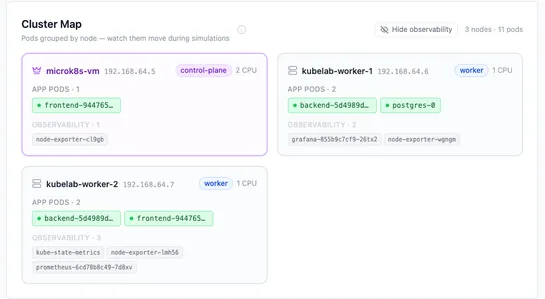
KubeLab boots a three-nodeKubernetescluster and runs seven failure simulations. It deploysNode.js,Postgres,Prometheus, andGrafana. Then it deletes pods, forcesOOMKill, throttles CPU, drains nodes, and scales aStatefulSetto zero. Each scenario surfaces fixes:readiness probes,PodDisruptionBudget, anti.. read more  

How Does Kubernetes Self-Healing Work? Understand Self-Healing By Breaking a Real Cluster
Link
@kala shared a link, 2 months ago
FAUN.dev()

Reasoning models struggle to control their chains of thought, and that’s good

OpenAI's paper unveilsCoT-Control: an open-source suite of 13,000+ tasks fromGPQA, MMLU-Pro, HLE, BFCLthat measuresCoTcontrollability. Evaluations on 13 models show compliance at 0.1%-15.4%. Compliance is tiny. Controllability improves with model size. It drops as reasoning chains lengthen and after.. read more  

Reasoning models struggle to control their chains of thought, and that’s good
Link
@kala shared a link, 2 months ago
FAUN.dev()

The L in "LLM" Stands for Lying

The author arguesLLMschurn out fast, generic answers by remixing low-quality source material. They seed brittle, repetitive code viavibe-coding. The remedy: requiresource attributionand auditable inference to separate originals from forgeries and to reshape model training and deployment. Requiringso.. read more  

The L in "LLM" Stands for Lying
Link
@kala shared a link, 2 months ago
FAUN.dev()

AI as tradecraft: How threat actors operationalize AI

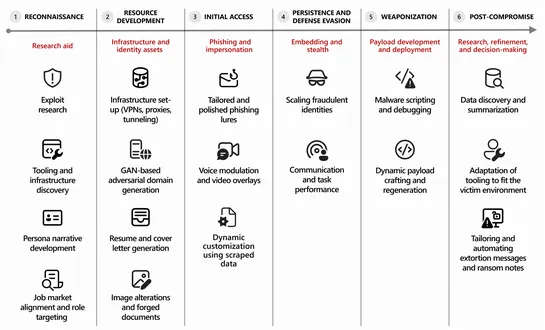
Microsoft observes threat actors operationalizeAIandLLMsacross the cyberattack lifecycle. They accelerate reconnaissance, phishing, malware development, and post‑compromise triage. Actors abusejailbreakingtechniques andGANs. They craft personas, generate look‑alike domains, embed runtime‑adaptive pa.. read more  

AI as tradecraft: How threat actors operationalize AI
Link
@kala shared a link, 2 months ago
FAUN.dev()

LLMs are getting better at unmasking people online

Researchers at ETH Zurich show LLMs can stitch anonymous bios to public web data and reidentify users across platforms. Fine-tuned models and agent chains parse unstructured text and automate deanonymization in minutes at penny-level inference costs... read more  

LLMs are getting better at unmasking people online
Link
@kala shared a link, 2 months ago
FAUN.dev()

The reason big tech is giving away AI agent frameworks

A catalog of majoragent frameworks: LangGraph, CrewAI, Google ADK, AWS Strands, Microsoft Agent Framework, OpenAI Agents SDK, Mastra, Pydantic AI, Agno. Hyperscalers co-design free SDKs (e.g.,Strands,ADK). They tie those SDKs to metered runtimes -Bedrock,Vertex AI. Revenue shifts to inference and de.. read more  

Link
@devopslinks shared a link, 2 months ago
FAUN.dev()

AWS Cost Optimization Best Practices: A Maturity-Based Guide [2026]

The guide maps a five-stagematurity model— fromVisibilitytoFinOps Culture. It prescribes staged actions before commitment purchases. It recommends turning onCost ExplorerandAWS Budgets, enforcingtag policies, runningCompute Optimizer, testingGraviton, and usingCloudBurn/Amazon Qfor pre-deploy estima.. read more  

Link
@devopslinks shared a link, 2 months ago
FAUN.dev()

Amazon is back up after outage affecting tens of thousands of shoppers

Amazon faced an outage, affecting tens of thousands of shoppers globally on Thursday afternoon. Downdetector reported a surge in complaints, peaking at 20,000 by 3:49 p.m. ET. The outage involved checkout and pricing errors caused by a software code deployment... read more  

Link
@devopslinks shared a link, 2 months ago
FAUN.dev()

How I Dropped Our Production Database and Now Pay 10% More for AWS

Planned migration shifts the static site fromGitHub PagestoAWS S3. DNS moves toAWS.Djangostages on a subdomain before the main domain swaps. ATerraformauto-approve ran with no remote state. It destroyed productionRDS,VPC,ECS, and automated snapshots.AWSfound a hidden snapshot and recovered the DB in.. read more  

How I Dropped Our Production Database and Now Pay 10% More for AWS
Snapper is a command-line tool developed by SUSE for managing filesystem snapshots. It allows users to create, delete, compare, and restore snapshots of their system or data. A snapshot is a read-only point-in-time copy of a filesystem, useful for recovering from system changes or errors. Snapper integrates deeply with the SUSE ecosystem and works primarily with Btrfs, though it also supports LVM with thin provisioning. It can automatically take snapshots before and after software updates or system modifications, helping users track what changed and roll back if necessary. By using pre and post snapshots, Snapper provides a simple way to undo changes or restore files without requiring full system backups. It also supports automatic cleanup routines to manage disk space efficiently. In practice, Snapper serves as both a safety net and a diagnostic tool, making it easier to maintain system stability and recover quickly from mistakes or failed updates.