Join us

ContentUpdates and recent posts about Sigstore..
Link
@devopslinks shared a link, 6 months ago
FAUN.dev()

You already have a git server

A plain-oldgit repo on an SSH-accessible servercan double as a lean deployment rig. Drop in somegit hooks- like apost-receive- and every push can kick off static site builds or publish code on the spot. No extra tools. Just Git doing Git things. Turns basic Git infra into a no-frills CI/CD pipeline... read more  

News FAUN.dev() Team
@kala shared an update, 6 months ago
FAUN.dev()

AWS Unveils Project Rainier: Massive AI Cluster with Trainium2 Chips

Amazon Web Services

AWS has launched Project Rainier, a massive AI compute cluster with nearly half a million Trainium2 chips, in collaboration with Anthropic to advance AI infrastructure and model development.

AWS Unveils Project Rainier: Massive AI Cluster with Trainium2 Chips
News FAUN.dev() Team
@devopslinks shared an update, 6 months ago
FAUN.dev()

Amazon Apologizes for Major AWS Outage in US-EAST-1 Region

Amazon Web Services Amazon EC2 Amazon ELB

Amazon apologized for a major AWS outage in the Northern Virginia region, caused by a race condition in the DynamoDB DNS management system, affecting services like DynamoDB, Network Load Balancer, and EC2.

Amazon Apologizes for Major AWS Outage in US-EAST-1 Region
News FAUN.dev() Team
@varbear shared an update, 6 months ago
FAUN.dev()

AI Takes Over GitHub: TypeScript Tops the Charts as 36 Million New Developers Join the Platform

Docker TypeScript vLLM GitHub Copilot Python

In 2025, GitHub saw a surge in growth with AI advancements, as TypeScript overtook Python and JavaScript in popularity, fueled by the release of GitHub Copilot Free and a global developer expansion.

AI Takes Over GitHub: TypeScript Tops the Charts as 36 Million New Developers Join the Revolution
News FAUN.dev() Team
@kaptain shared an update, 6 months ago
FAUN.dev()

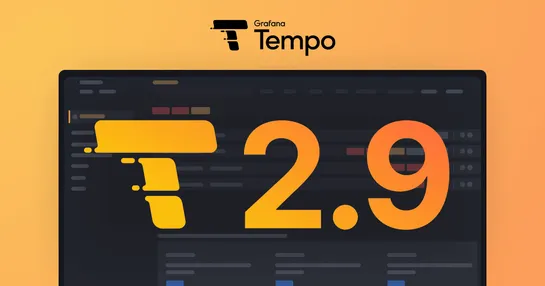
Grafana Tempo 2.9 Supercharges Distributed Tracing with LLM Integration

Grafana Tempo

Grafana Tempo 2.9 debuts with MCP server support and TraceQL metrics sampling, enhancing data analysis and query efficiency.

Grafana Tempo 2.9 Supercharges Distributed Tracing with LLM Integration
News FAUN.dev() Team
@kala shared an update, 6 months ago
FAUN.dev()

LangChain Secures $125M and Launches LangChain & LangGraph 1.0

LangChain

LangChain raised $125 million to enhance its agent engineering platform, introducing LangChain and LangGraph 1.0 with new tools like the Insights Agent and a no-code agent builder, aiming to transform LLM applications into reliable agents.

LangChain Secures $125M and Launches LangChain & LangGraph 1.0
News FAUN.dev() Team
@devopslinks shared an update, 6 months ago
FAUN.dev()

SUSE Linux Enterprise 16 Launches with AI for Smarter Operations

Ansible SUSE Snapper

SUSE releases Linux Enterprise Server 16, integrating AI to boost efficiency and cut costs, with features like secure AI integration and a 16-year support lifecycle.

SUSE Linux Enterprise 16 Launches with AI for Smarter Operations
News FAUN.dev() Team
@devopslinks shared an update, 6 months ago
FAUN.dev()

Ubuntu 25.10 Takes a Bold Leap — Targets Modern CPUs with New amd64v3 Architecture

Ubuntu

Ubuntu 25.10 introduces support for amd64v3 architecture variants, enhancing performance by targeting specific silicon variants, with full support expected in the 26.04 LTS release.

Ubuntu 25.10 Takes a Bold Leap — Targets Modern CPUs with New amd64v3 Architecture
News FAUN.dev() Team
@devopslinks shared an update, 6 months ago
FAUN.dev()

Google Introduces Quantum-Safe KEMs in Cloud KMS for Future Security

Cloud KMS

Google introduces quantum-safe KEMs in Cloud KMS to counter future quantum computing threats, urging organizations to transition to post-quantum cryptography.

Google Introduces Quantum-Safe KEMs in Cloud KMS for Future Security
News FAUN.dev() Team
@kala shared an update, 6 months ago
FAUN.dev()

Red Hat Joins Forces with NVIDIA to Bring CUDA Everywhere

NVIDIA CUDA Toolkit

Red Hat and NVIDIA partner to distribute the NVIDIA CUDA Toolkit across Red Hat platforms, aiming to simplify AI adoption and enhance developer experience.

Red Hat Joins Forces with NVIDIA to Bring CUDA Everywhere
Sigstore is an open source initiative designed to make software artifact signing and verification simple, automatic, and widely accessible. Its primary goal is to improve software supply chain security by enabling developers and organizations to cryptographically prove the origin and integrity of the software they build and distribute.

At its core, sigstore removes many of the traditional barriers associated with code signing. Instead of managing long-lived private keys manually, sigstore supports keyless signing, where identities are issued dynamically using OpenID Connect (OIDC) providers such as GitHub Actions, Google, or Microsoft. This dramatically lowers operational complexity and reduces the risk of key compromise.

The sigstore ecosystem is composed of several key components:

- Cosign: A tool for signing, verifying, and storing signatures for container images and other artifacts. Signatures are stored alongside artifacts in OCI registries, rather than embedded in them.

- Fulcio: A certificate authority that issues short-lived X.509 certificates based on OIDC identities, enabling keyless signing.

- Rekor: A transparency log that records signing events in an append-only, tamper-evident ledger. This provides public auditability and detection of suspicious or malicious signing activity.

Together, these components allow anyone to verify who built an artifact, when it was built, and whether it has been tampered with, using publicly verifiable cryptographic proofs. This aligns closely with modern supply chain security practices such as SLSA (Supply-chain Levels for Software Artifacts).

sigstore is widely adopted in the cloud-native ecosystem and integrates with tools like Kubernetes, container registries, CI/CD pipelines, and package managers. It is commonly used to sign container images, Helm charts, binaries, and SBOMs, and is increasingly becoming a baseline security requirement for production software delivery.

The project is governed by the OpenSSF (Open Source Security Foundation) and supported by major industry players.