Join us

ContentUpdates and recent posts about Sigstore..
Link
@varbear shared a link, 5 months, 2 weeks ago
FAUN.dev()

The Green Tea Garbage Collector

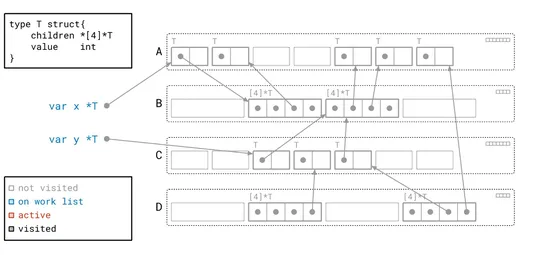
Go 1.25 drops an experimental GC calledGreen Tea. It flips the script on object traversal - scanning memory pages instead of hopping from object to object. The payoff? Up to40% less GC CPU overheadon real workloads. Bonus: it taps intoAVX-512on newer x86 chips forvectorized scanning. Turns out strea.. read more  
The Green Tea Garbage Collector
Link
@varbear shared a link, 5 months, 2 weeks ago
FAUN.dev()

The state of the Rust dependency ecosystem

A deep dive into 200,650 Rust crates shows a brewing maintenance problem:45% are inactive, andover half of new crates never see a second update- a wild jump from just 1.4% in 2015. Zoom in on the top 1,000 crates, and it gets messier.249 dependencies have been abandoned, and158 are stuck on older ma.. read more  

Link
@varbear shared a link, 5 months, 2 weeks ago
FAUN.dev()

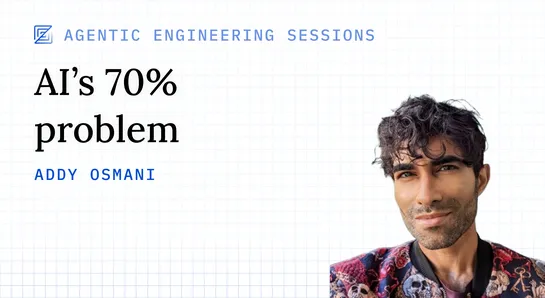
AI's 70% Problem

Google’s Addy Osmani dropped a stat: AI now writesover 30% of the codeat Google. Impressive. But the hard part - the last 30% - still needs a human brain. That’s where the bugs live:security, edge cases, production wiring. No shortcut. And while AI adoption keeps climbing in greenfield work,trust is.. read more  

AI's 70% Problem
Link
@kaptain shared a link, 5 months, 2 weeks ago
FAUN.dev()

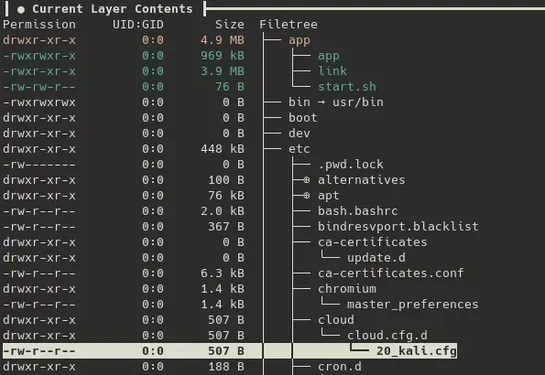
LinkPro: eBPF rootkit analysis

A new stealth rootkit calledLinkProjust surfaced, taking aim at AWS-hosted Linux boxes. It blends two customeBPF programsfor deep concealment and remote activation via magic packets. The path in?CVE-2024-23897—an RCE on a public Jenkins server. From there, attackers slipped into Amazon EKS clusters,.. read more  

LinkPro: eBPF rootkit analysis
Link
@kaptain shared a link, 5 months, 2 weeks ago
FAUN.dev()

Manage Secrets of your Kubernetes Platform at Scale with GitOps

Learn how to manage secrets with the External Secrets Operator and plug it into Argo CD to power your Internal Developer Platform without manual management, enabling self-service secrets management and secure connections between workload clusters and the control plane. With a chain of trust between .. read more  

Link
@kaptain shared a link, 5 months, 2 weeks ago
FAUN.dev()

Kubernetes with Buildkite: faster, simpler, and ready for scale

Buildkite just added a major revamp of its Kubernetes Agent Stack. Highlights:REST-based config,leaner K8s objects, andhardened security defaults. It handlestens of thousands of concurrent jobswithout breaking a sweat. Shared environment vars cut down pod config noise. Error messages come with full .. read more  

Kubernetes with Buildkite: faster, simpler, and ready for scale
Link
@kaptain shared a link, 5 months, 2 weeks ago
FAUN.dev()

How Airbnb Runs Distributed Databases on Kubernetes at Scale

Airbnb runs distributed databases across multiple Kubernetes clusters - each tied to its own AWS Availability Zone. That setup isolates failures down to individual pods and keeps the whole system highly available. They built a custom Kubernetes operator and leaned on EBS volumes with PVCs to smooth .. read more  

How Airbnb Runs Distributed Databases on Kubernetes at Scale
Link
@kaptain shared a link, 5 months, 2 weeks ago
FAUN.dev()

Zero-Trust Kubernetes: Enforcing Security & Multi-Tenancy with Custom Admission Webhooks

Tools likeOPA Gatekeeper,Kyverno, and custom webhooks slam the brakes on sketchy workloadsbeforethey ever spin up. These controllers aren’t just gatekeepers - they’re enforcers. They check pod configs, block unverified images, and apply live, scoped policies like tenant-awarenetwork isolationandreso.. read more  

Link
@kaptain shared a link, 5 months, 2 weeks ago
FAUN.dev()

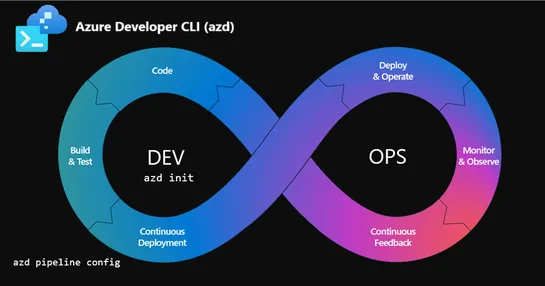
Azure Developer CLI: Azure Container Apps Dev-to-Prod Deployment with Layered Infrastructure

Azure Developer CLI v1.20.0 leveled up Container Apps. Build and push are now split from deploy, so you can finally "build once, deploy everywhere" and mean it. It adds layered infrastructure support, lets you share anAzure Container Registryacross environments, and handles resource dependency seque.. read more  

Azure Developer CLI: Azure Container Apps Dev-to-Prod Deployment with Layered Infrastructure
Link
@kala shared a link, 5 months, 2 weeks ago
FAUN.dev()

You Should Write An Agent

Building LLM agents - essentially looping stateless models through tools - looks simple. Until it isn't. Peel back the layers, and you hit real architectural puzzles:context engineering, agent loops, sub-agent choreography, execution constraints... read more  

You Should Write An Agent
Sigstore is an open source initiative designed to make software artifact signing and verification simple, automatic, and widely accessible. Its primary goal is to improve software supply chain security by enabling developers and organizations to cryptographically prove the origin and integrity of the software they build and distribute.

At its core, sigstore removes many of the traditional barriers associated with code signing. Instead of managing long-lived private keys manually, sigstore supports keyless signing, where identities are issued dynamically using OpenID Connect (OIDC) providers such as GitHub Actions, Google, or Microsoft. This dramatically lowers operational complexity and reduces the risk of key compromise.

The sigstore ecosystem is composed of several key components:

- Cosign: A tool for signing, verifying, and storing signatures for container images and other artifacts. Signatures are stored alongside artifacts in OCI registries, rather than embedded in them.

- Fulcio: A certificate authority that issues short-lived X.509 certificates based on OIDC identities, enabling keyless signing.

- Rekor: A transparency log that records signing events in an append-only, tamper-evident ledger. This provides public auditability and detection of suspicious or malicious signing activity.

Together, these components allow anyone to verify who built an artifact, when it was built, and whether it has been tampered with, using publicly verifiable cryptographic proofs. This aligns closely with modern supply chain security practices such as SLSA (Supply-chain Levels for Software Artifacts).

sigstore is widely adopted in the cloud-native ecosystem and integrates with tools like Kubernetes, container registries, CI/CD pipelines, and package managers. It is commonly used to sign container images, Helm charts, binaries, and SBOMs, and is increasingly becoming a baseline security requirement for production software delivery.

The project is governed by the OpenSSF (Open Source Security Foundation) and supported by major industry players.