Join us

ContentUpdates and recent posts about Sigstore..
Link
@devopslinks shared a link, 5 months, 1 week ago
FAUN.dev()

Visibility at Scale: How Detects Sensitive Data Exposure

Segment gutted its old permissions table—bloated, slow, tangled in logic - and replaced it with a lean, service-based setup. The new stack runs onPostgres,Redis, and a sharply tunedGo API, cutting query times from 1400ms to under 100ms. Clean, fast, and centralized... read more  

Visibility at Scale: How Detects Sensitive Data Exposure
Link
@devopslinks shared a link, 5 months, 1 week ago
FAUN.dev()

Terraform vs. Pulumi vs. Crossplane: Choosing the right IaC Tool for your platform

Terraform, Pulumi, and Crossplane take very different routes to Infrastructure as Code.Terraformsticks to a declarative HCL model with a massive provider ecosystem.Pulumiflips the script—developers write infrastructure in real languages, so logic is testable and dynamic.Crossplane? It runs inside Ku.. read more  

Terraform vs. Pulumi vs. Crossplane: Choosing the right IaC Tool for your platform
Link
@devopslinks shared a link, 5 months, 1 week ago
FAUN.dev()

Creating VMs in separate ZFS filesystems

A dev split KVM/QEMU VMs out of a shared ZFS directory and into their own ZFS filesystems. Why? Snapshot rollbacks. Finer-grained storage control. Clean. The new setup rides a fresh ZFS pool tuned with a 64KBrecordsizefor QCOW2 images. That lines up virtual disk performance with the real IO under th.. read more  

Link
@devopslinks shared a link, 5 months, 1 week ago
FAUN.dev()

How Google, Amazon, and CrowdStrike broke millions of systems

AWS. Google Cloud. Azure. CrowdStrike. All hit hard by dumb bugs with big blast radii - race conditions, nulls, misfired configs. Small cracks. Massive fallout. AWS's DNS automation knocked out its DynamoDB endpoint, dragging 113 services down with it. Google Cloud’s global APIs fell over from a str.. read more  

How Google, Amazon, and CrowdStrike broke millions of systems
Link
@devopslinks shared a link, 5 months, 1 week ago
FAUN.dev()

Notes on switching to Helix from vim

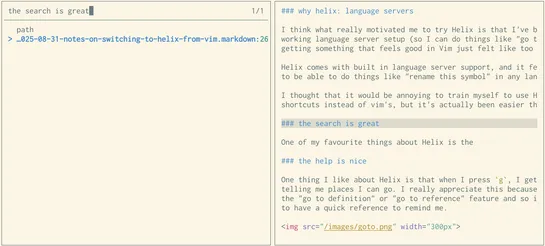
Helix keeps things lean - and that's the point. It ships withLSP support, multi-cursor editing, and smart search baked in. No dotfile gymnastics required. That alone has peeled some loyalists off Vim and Neovim. Still rough around the edges. No persistent undo. No auto-reload. Markdown support's a b.. read more  

Notes on switching to Helix from vim
Story
@laura_garcia shared a post, 5 months, 1 week ago
Software Developer, RELIANOID

EU's Cybersecurity standards for IoT devices

🔒 The EU enforces strict cybersecurity standards for IoT devices: securing networks, protecting privacy, and preventing fraud. At RELIANOID, we share this open-source commitment to resilience — helping organizations build safer, more reliable digital ecosystems. #CyberSecurity#IoT#OpenSource#Digital..

Blog IoT Security RELIANOID
Link
@anjali shared a link, 5 months, 1 week ago
Customer Marketing Manager, Last9

Top 9 Web Application Performance Monitoring Tools for 2025

Explore 2025’s top APM tools — from open-source stacks to enterprise platforms — and see how each helps you monitor smarter.

web_apm
News FAUN.dev() Team
@kaptain shared an update, 5 months, 2 weeks ago
FAUN.dev()

CNCF Launches Certified Kubernetes AI Conformance Program at KubeCon

Kubernetes

The Cloud Native Computing Foundation launched the Certified Kubernetes AI Conformance Program to set standards for AI workloads on Kubernetes, ensuring reliability and consistency.

CNCF Launches Certified Kubernetes AI Conformance Program at KubeCon
News FAUN.dev() Team
@kala shared an update, 5 months, 2 weeks ago
FAUN.dev()

GPT-5.1 Launches With 'Instant' and 'Thinking' Models - Here's What's New

ChatGPT

OpenAI announces GPT-5.1, enhancing ChatGPT and OpenAI APIs with improved intelligence and conversational abilities, offering two models for better reasoning and personalization, initially for paid users.

GPT-5.1 Launches With 'Instant' and 'Thinking' Models - Here's What's New
News FAUN.dev() Team
@devopslinks shared an update, 5 months, 2 weeks ago
FAUN.dev()

Debian 13.2 Is Out: New Updates, Strong Security, and Years of Support Ahead

Debian

Debian 13.2 Trixie, released on November 25th, 2025, offers significant updates, new software packages, and supports multiple architectures, emphasizing versatility for desktops and servers.

Debian 13 Trixie
Sigstore is an open source initiative designed to make software artifact signing and verification simple, automatic, and widely accessible. Its primary goal is to improve software supply chain security by enabling developers and organizations to cryptographically prove the origin and integrity of the software they build and distribute.

At its core, sigstore removes many of the traditional barriers associated with code signing. Instead of managing long-lived private keys manually, sigstore supports keyless signing, where identities are issued dynamically using OpenID Connect (OIDC) providers such as GitHub Actions, Google, or Microsoft. This dramatically lowers operational complexity and reduces the risk of key compromise.

The sigstore ecosystem is composed of several key components:

- Cosign: A tool for signing, verifying, and storing signatures for container images and other artifacts. Signatures are stored alongside artifacts in OCI registries, rather than embedded in them.

- Fulcio: A certificate authority that issues short-lived X.509 certificates based on OIDC identities, enabling keyless signing.

- Rekor: A transparency log that records signing events in an append-only, tamper-evident ledger. This provides public auditability and detection of suspicious or malicious signing activity.

Together, these components allow anyone to verify who built an artifact, when it was built, and whether it has been tampered with, using publicly verifiable cryptographic proofs. This aligns closely with modern supply chain security practices such as SLSA (Supply-chain Levels for Software Artifacts).

sigstore is widely adopted in the cloud-native ecosystem and integrates with tools like Kubernetes, container registries, CI/CD pipelines, and package managers. It is commonly used to sign container images, Helm charts, binaries, and SBOMs, and is increasingly becoming a baseline security requirement for production software delivery.

The project is governed by the OpenSSF (Open Source Security Foundation) and supported by major industry players.