Join us

ContentUpdates and recent posts about Sigstore..
Link
@kala shared a link, 3 months, 1 week ago
FAUN.dev()

Where good ideas come from (for coding agents)

A new way to build agents treats prompting ascontext navigation, steering the LLM through ideas like a pilot, not tossing it prompts and hoping for magic. It maps neatly onto Steven Johnson’s seven patterns of innovation. For coding agents to actually pull their weight, users need to bring more than.. read more  

Link
@kala shared a link, 3 months, 1 week ago
FAUN.dev()

Agentic AI, MCP, and spec-driven development: Top blog posts of 2025

AI speeds up dev - but it’s a double-edged keyboard. It sneaks in subtle bugs and brittle logic that break under pressure. To keep things sane, teams are fighting back withguardrail patterns,AI-aware linters, andtest suites hardened for hallucinated code... read more  

Link
@devopslinks shared a link, 3 months, 1 week ago
FAUN.dev()

Weaponizing the AWS CLI for Persistence

Researchers pulled off a slick persistence trick usingAWS CLI aliases. They chained dynamic alias renaming with command execution to swipe credentials, without breaking expected CLI behavior. No red flags. Perfect fit forautomated environmentslike CI/CD pipelines. Backdoors, no AWS CLI tampering req.. read more  

Weaponizing the AWS CLI for Persistence
Link
@devopslinks shared a link, 3 months, 1 week ago
FAUN.dev()

Cloud Workload Threats - Runtime Attacks in 2026

Cloud-native breaches keep slipping through the cracks, not because no one’s watching, but because they’re watching the wrong things. Static checks and posture tools can’t catch what happens in motion. That’s where most attacks live now: at runtime. Think app-layer exploits, poisoned dependencies, s.. read more  

Link
@devopslinks shared a link, 3 months, 1 week ago
FAUN.dev()

21 Lessons From 14 Years at Google

A seasoned Google engineer drops 21 sharp principles for scaling engineering beyond just writing code. Think:clarity beats cleverness,users over egos,alignment over being “right.”The core message? Build systems humans can work with - especially under stress. Favorites: kill pointless work, treat pro.. read more  

21 Lessons From 14 Years at Google
Link
@devopslinks shared a link, 3 months, 1 week ago
FAUN.dev()

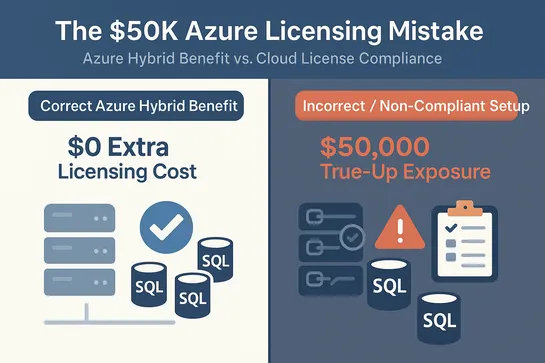
Azure Hybrid Benefit Audit Guide: Avoid the $50K Licensing Mistake (2025)

Azure just tightened the screws on Hybrid Benefit. Use it without the rightSoftware Assurance, botch yourlicense-to-core mapping, or skipdecommissioning proof, and you’re staring down $50K+ in penalties. To help dodge that landmine, Microsoft dropped a new guide. It covers pre-migration checks, audi.. read more  

Azure Hybrid Benefit Audit Guide: Avoid the $50K Licensing Mistake (2025)
Link
@devopslinks shared a link, 3 months, 1 week ago
FAUN.dev()

Terraform governing with OPA

When managing infrastructure with Terraform, enforcing tagging standards, instance type restrictions, preventing public exposure, enforcing regions, and other best practices are essential with Open Policy Agent (OPA). OPA evaluates Terraform plans before apply to ensure compliance with organization'.. read more  

Story FAUN.dev() Team
@eon01 shared a post, 3 months, 1 week ago
Founder, FAUN.dev

2025's most influential projects according to GitHub

GitHub

Universe 2025 highlighted a shift toward mature, developer-first open source projects that favor usability, sustainability, and real-world adoption over hype. From backend platforms and release tooling to browsers, graphics engines, and security baselines, the standout projects all share one trait: they are being actively used, maintained, and pushed forward by communities that know exactly what problems they are solving.

Open Source at Full Throttle: The Projects Setting the Pace in 2025
News FAUN.dev() Team Trending
@devopslinks shared an update, 3 months, 1 week ago
FAUN.dev()

Linus Torvalds Draws a Line on AI in the Linux Kernel but Embraces It in Personal Projects

Google Antigravity

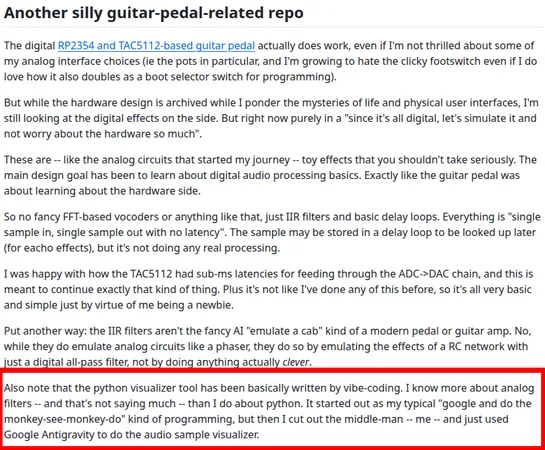
Linus Torvalds argues that Linux kernel guidelines should treat AI like any other development tool, not as a special case, saying documentation cannot solve bad submissions. At the same time, he openly acknowledges using an AI coding tool in a personal project, signaling pragmatic acceptance of AI-assisted development outside core kernel policy.

Linus Torvalds vibe coding a side project
News FAUN.dev() Team
@kala shared an update, 3 months, 1 week ago
FAUN.dev()

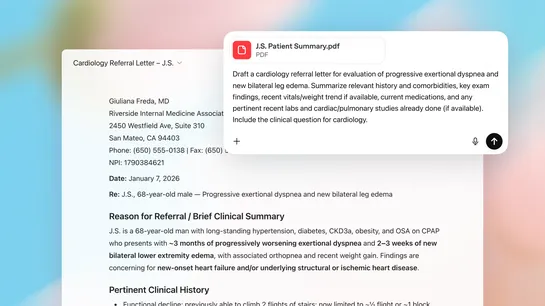
OpenAI Goes All-In on Healthcare: ChatGPT Health for Consumers, and a Suite for Hospitals

#ChatGPT  #HIPAA  #Healthc...  #AI  #OpenAI 
ChatGPT GPT-5.2

OpenAI introduces ChatGPT for Healthcare, offering HIPAA-compliant AI tools to enhance healthcare delivery. The suite includes ChatGPT Health, designed to integrate health information with AI for improved user navigation.

OpenAI Goes All-In on Healthcare: ChatGPT Health for Consumers, and a Suite for Hospitals
Sigstore is an open source initiative designed to make software artifact signing and verification simple, automatic, and widely accessible. Its primary goal is to improve software supply chain security by enabling developers and organizations to cryptographically prove the origin and integrity of the software they build and distribute.

At its core, sigstore removes many of the traditional barriers associated with code signing. Instead of managing long-lived private keys manually, sigstore supports keyless signing, where identities are issued dynamically using OpenID Connect (OIDC) providers such as GitHub Actions, Google, or Microsoft. This dramatically lowers operational complexity and reduces the risk of key compromise.

The sigstore ecosystem is composed of several key components:

- Cosign: A tool for signing, verifying, and storing signatures for container images and other artifacts. Signatures are stored alongside artifacts in OCI registries, rather than embedded in them.

- Fulcio: A certificate authority that issues short-lived X.509 certificates based on OIDC identities, enabling keyless signing.

- Rekor: A transparency log that records signing events in an append-only, tamper-evident ledger. This provides public auditability and detection of suspicious or malicious signing activity.

Together, these components allow anyone to verify who built an artifact, when it was built, and whether it has been tampered with, using publicly verifiable cryptographic proofs. This aligns closely with modern supply chain security practices such as SLSA (Supply-chain Levels for Software Artifacts).

sigstore is widely adopted in the cloud-native ecosystem and integrates with tools like Kubernetes, container registries, CI/CD pipelines, and package managers. It is commonly used to sign container images, Helm charts, binaries, and SBOMs, and is increasingly becoming a baseline security requirement for production software delivery.

The project is governed by the OpenSSF (Open Source Security Foundation) and supported by major industry players.