Join us

ContentUpdates and recent posts about Sigstore..
Link
@varbear shared a link, 3 months ago
FAUN.dev()

An Honest Review of Go

Go gets big props for its built-in concurrency model withgoroutinesandchannels, which make lightweight, scalable parallelism easy and ergonomic. The author criticizes Go's type system for lacking things likeenums, closed type sets, and tuples, making certain patterns awkward compared with Rust's ric.. read more  
Link
@varbear shared a link, 3 months ago
FAUN.dev()

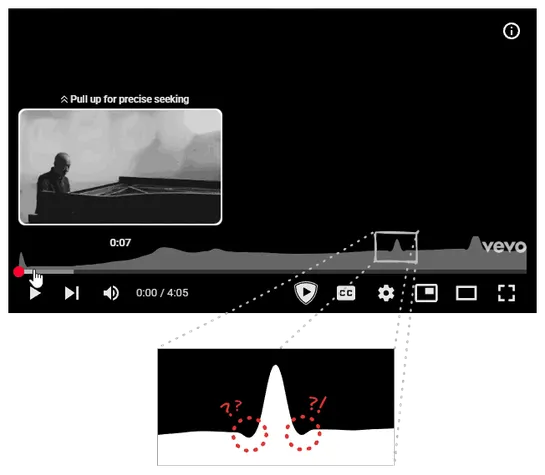
Reversing YouTube's "Most Replayed" Graph

An engineer cracked open YouTube’s “most replayed” heatmap. Turns out it runs onsampled view frequency arrays, client-sidenormalization, andSVG renderingstitched together withCubic Bézier splinesfor that smooth, snappy curve. Behind the scenes, playback gets logged with adifference array + prefix su.. read more  

Reversing YouTube's "Most Replayed" Graph
Link
@varbear shared a link, 3 months ago
FAUN.dev()

How Github monopoly is destroying the open source ecosystem

Out of 238 student open source contributions over seven years, 237 landed onGitHub- even though they were told to look elsewhere. One short-lived GitHub IP block brought everything to a standstill. No commits. No reviews. Just silence. Turns out, a single platform holds the keys to a whole ecosystem.. read more  

How Github monopoly is destroying the open source ecosystem
Link
@varbear shared a link, 3 months ago
FAUN.dev()

A better way to limit Claude Code (and other coding agents!) access to Secrets

A new workflow dropsClaude Codeinto aBubblewrap-based sandbox, cutting Anthropic's client-side code out of the trust loop. Compared to spinning up Docker or juggling user accounts, Bubblewrap locks things down tighter - with less setup and cleaner OS-level walls around files, network access, and sec.. read more  

Story
@laura_garcia shared a post, 3 months ago
Software Developer, RELIANOID

🚨 Join RELIANOID at the Dallas Cybersecurity Conference 2026! 🚨

📍 Dallas, Texas | 🗓 January 22, 2026 Securing the Future starts here. We’re excited to be part of FutureCon Dallas, a high-impact event bringing together CISOs, C-suite leaders, and senior security professionals to tackle today’s most pressing cyber threats. 🔹 Why attend? Gain actionable insights in..

dallas_cybersecurity_conference_2026_relianoid
Link
@kaptain shared a link, 3 months ago
FAUN.dev()

v1.35: Restricting executables invoked by kubeconfigs via exec plugin allowList added to kuberc

Kubernetes v1.35 lands with acredential plugin allowlist, now in beta, no feature gate needed. It lets you lock down whichexecplugins your kubeconfigs can run. Tighter leash, lower risk. Especially when the credential pipeline gets sketchy... read more  

Link
@kaptain shared a link, 3 months ago
FAUN.dev()

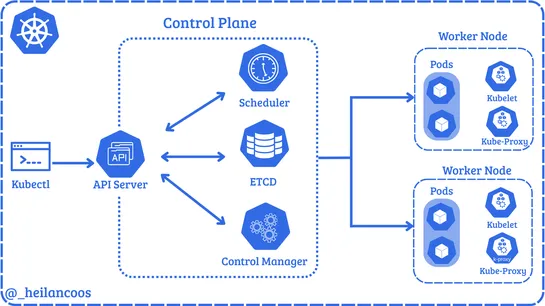
A Brief Deep-Dive into Attacking and Defending Kubernetes

A sharp teardown of Kubernetes’ attack surface maps out where things go sideways: pods, the control plane, RBAC, admission controllers, and etcd. Misconfigurations like anonymous API access, wildcard roles, and hostPath mounts aren't just sloppy- they're attack vectors. Fixes? ThinkFalco,RBAC lockdo.. read more  

A Brief Deep-Dive into Attacking and Defending Kubernetes
Link
@kaptain shared a link, 3 months ago
FAUN.dev()

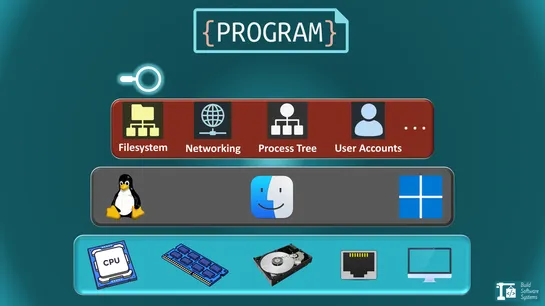
From Bare Metal to Containers: A Developer's Guide to Execution Environments

A sharp look at how execution environments evolved - from bare metal to VMs, containers, sandboxes, and language-level runtimes. The focus: isolation. Hardware, kernel, processes, runtimes - each adds a boundary. Modern stacks mix and match layers to dial in the right amount. VMs, containers, venvs... read more  

From Bare Metal to Containers: A Developer's Guide to Execution Environments
Link
@kaptain shared a link, 3 months ago
FAUN.dev()

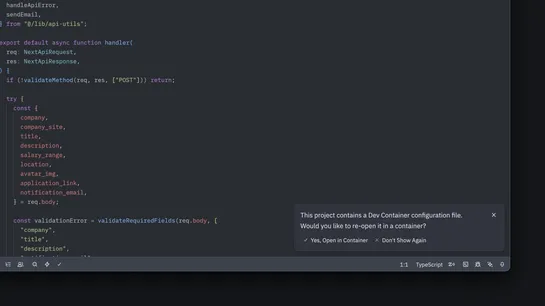
Run Your Project in a Dev Container, in Zed

Zed v0.218 addsDev Containersupport with Docker. Projects can now spin up in clean, spec-compliant environments built from.devcontainer.json. It hooks into theDevelopment Containers CLI, with a Zed remote server running backend ops and piping through standard IO. Fast and clean. The bigger picture?L.. read more  

Run Your Project in a Dev Container, in Zed
Link
@kala shared a link, 3 months ago
FAUN.dev()

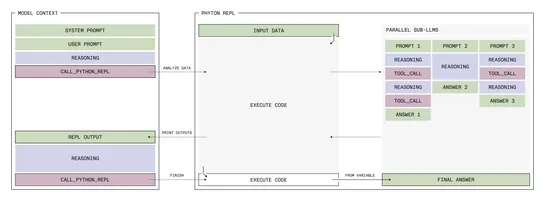
Recursive Language Models: the paradigm of 2026

Prime Intellect dropped a fresh take on long-range LLM workflows with itsRecursive Language Model (RLM)scaffold. It pulls off two smart moves: folds context to free up tokens and spins off sub-LLMs to handle chunkier tasks. Think persistent Python REPL meets lightweight agent swarm... read more  

Recursive Language Models: the paradigm of 2026
Sigstore is an open source initiative designed to make software artifact signing and verification simple, automatic, and widely accessible. Its primary goal is to improve software supply chain security by enabling developers and organizations to cryptographically prove the origin and integrity of the software they build and distribute.

At its core, sigstore removes many of the traditional barriers associated with code signing. Instead of managing long-lived private keys manually, sigstore supports keyless signing, where identities are issued dynamically using OpenID Connect (OIDC) providers such as GitHub Actions, Google, or Microsoft. This dramatically lowers operational complexity and reduces the risk of key compromise.

The sigstore ecosystem is composed of several key components:

- Cosign: A tool for signing, verifying, and storing signatures for container images and other artifacts. Signatures are stored alongside artifacts in OCI registries, rather than embedded in them.

- Fulcio: A certificate authority that issues short-lived X.509 certificates based on OIDC identities, enabling keyless signing.

- Rekor: A transparency log that records signing events in an append-only, tamper-evident ledger. This provides public auditability and detection of suspicious or malicious signing activity.

Together, these components allow anyone to verify who built an artifact, when it was built, and whether it has been tampered with, using publicly verifiable cryptographic proofs. This aligns closely with modern supply chain security practices such as SLSA (Supply-chain Levels for Software Artifacts).

sigstore is widely adopted in the cloud-native ecosystem and integrates with tools like Kubernetes, container registries, CI/CD pipelines, and package managers. It is commonly used to sign container images, Helm charts, binaries, and SBOMs, and is increasingly becoming a baseline security requirement for production software delivery.

The project is governed by the OpenSSF (Open Source Security Foundation) and supported by major industry players.