Join us

ContentUpdates and recent posts about Sigstore..
Story
@laura_garcia shared a post, 2 months, 2 weeks ago
Software Developer, RELIANOID

🚗🔐 Automotive Cybersecurity: Connected Cars and a Vulnerable Supply Chain

We originally published this article back in November, but it remains highly relevant today. Sharing it again in case you missed it 👇 Connected cars are no longer just mechanical machines — they are computers on wheels, embedded in complex digital ecosystems. As shown in the “Supply Chain in the aut..
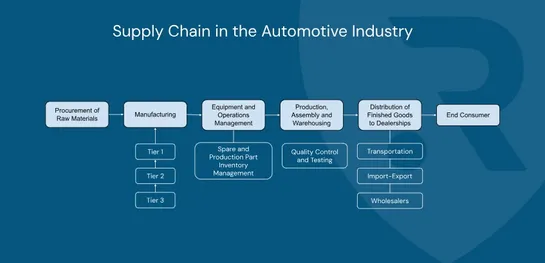
Supply-Chain-in-the-Automotive-Industry_RELIANOID
Story
@laura_garcia shared a post, 2 months, 2 weeks ago
Software Developer, RELIANOID

New Article: Emerging Cyber Threats Impacting Today’s Financial Ecosystem

Financial institutions continue to face rising cyber risks—not just from direct attacks, but from the vast networks of third-party suppliers that support their operations. Recent industry analyses reveal critical insights: Many essential vendors are far more important than organisations realise. ..

Story
@nelly96 shared a post, 2 months, 3 weeks ago
Marketing specialist, Winston AI

How Accurate Are AI Detectors? (What the Data Actually Shows in 2026)

Do you also wonder, “Are AI detectors accurate?” and think the answer is a simple yes or no? The problem lies in the expectation. AI detectors don’t work like switches. They assign a probability of the text being AI-generated. The job of an AI detector is to estimate the likelihood, not to give verdicts. 

how-accurate-are-AI-detectors
 Activity
@nelly96 added a new tool Winston AI , 2 months, 3 weeks ago.
Story
@laura_garcia shared a post, 2 months, 3 weeks ago
Software Developer, RELIANOID

🌍 In case you missed it

the $26 billion losses caused by global tech outages in 2025 highlight a hard truth — our digital infrastructure is more fragile than we’d like to believe. In this article, I dive into the real impact of these failures, the key lessons for businesses, and how RELIANOID actively contributes to preven..

Story
@laura_garcia shared a post, 2 months, 3 weeks ago
Software Developer, RELIANOID

RELIANOID aligned with ISO/IEC 15408 (Common Criteria) principles

At RELIANOID, security is not just a feature — it’s a design principle. Our load balancing platform and organizational controls are aligned with ISO/IEC 15408 (Common Criteria), the internationally recognized framework for evaluating IT security in government and critical infrastructure environments..

ISOIEC 15408 common criteria COMPLIANCE RELIANOID
Story
@laura_garcia shared a post, 2 months, 3 weeks ago
Software Developer, RELIANOID

Chicago Cybersecurity Conference 2026

Chicago, USA | Jan 29, 2026 A must-attend event for CISOs and security leaders tackling today’s cyber threats. Expert insights, executive panels, up to 10 CPEs — and meetRELIANOIDsupporting secure and resilient application delivery. #Cybersecurity #CISO #FutureCon #ChicagoEvents #InfoSec #RELIANO..

chicago_cybersecurity_conference_2026_relianoid
Link
@varbear shared a link, 2 months, 3 weeks ago
FAUN.dev()

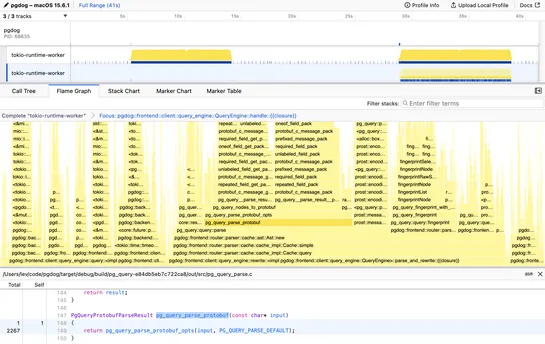
Replacing Protobuf with Rust to go 5 times faster

PgDog ditched Protobuf for raw C-to-Rust integration inpg_query.rs. The new setup usesbindgenand recursive FFI wrappers - no serialization, no handoffs. The payoff? Query parsing is 5× faster. Deparsing hit 10×. Evenpgbenchsaw a 25% bump across major ops... read more  

Replacing Protobuf with Rust to go 5 times faster
Link
@varbear shared a link, 2 months, 3 weeks ago
FAUN.dev()

A Social Filesystem

The AT Protocol flips social apps inside out. Instead of locking posts and profiles inside platform silos, it treats them as files -JSON-based records, stored in your own decentralized, app-neutral repo. Everything you do - posts, follows, likes - gets logged as a signed, timestampedrecordin your pe.. read more  

A Social Filesystem
Link
@varbear shared a link, 2 months, 3 weeks ago
FAUN.dev()

ASCII characters are not pixels: a deep dive into ASCII rendering

A fresh take on programmatic ASCII rendering brings inhigh-dimensional shape vectors,supersampling, andcontrast tricksto keep edges crisp and animations clean. Under the hood:k-d tree nearest-neighbor lookups,vector quantization, andGPU-powered samplinghelp push sharp ASCII frames without tanking pe.. read more  

ASCII characters are not pixels: a deep dive into ASCII rendering
Sigstore is an open source initiative designed to make software artifact signing and verification simple, automatic, and widely accessible. Its primary goal is to improve software supply chain security by enabling developers and organizations to cryptographically prove the origin and integrity of the software they build and distribute.

At its core, sigstore removes many of the traditional barriers associated with code signing. Instead of managing long-lived private keys manually, sigstore supports keyless signing, where identities are issued dynamically using OpenID Connect (OIDC) providers such as GitHub Actions, Google, or Microsoft. This dramatically lowers operational complexity and reduces the risk of key compromise.

The sigstore ecosystem is composed of several key components:

- Cosign: A tool for signing, verifying, and storing signatures for container images and other artifacts. Signatures are stored alongside artifacts in OCI registries, rather than embedded in them.

- Fulcio: A certificate authority that issues short-lived X.509 certificates based on OIDC identities, enabling keyless signing.

- Rekor: A transparency log that records signing events in an append-only, tamper-evident ledger. This provides public auditability and detection of suspicious or malicious signing activity.

Together, these components allow anyone to verify who built an artifact, when it was built, and whether it has been tampered with, using publicly verifiable cryptographic proofs. This aligns closely with modern supply chain security practices such as SLSA (Supply-chain Levels for Software Artifacts).

sigstore is widely adopted in the cloud-native ecosystem and integrates with tools like Kubernetes, container registries, CI/CD pipelines, and package managers. It is commonly used to sign container images, Helm charts, binaries, and SBOMs, and is increasingly becoming a baseline security requirement for production software delivery.

The project is governed by the OpenSSF (Open Source Security Foundation) and supported by major industry players.