Join us

ContentUpdates and recent posts about Sigstore..
Link
@kaptain shared a link, 6 months, 1 week ago
FAUN.dev()

Replaying massive data in a non-production environment using Pekko Streams and Kubernetes Pekko Cluster

DoubleVerify built a traffic replay tool that actually scales. It runs onPekko StreamsandPekko Cluster, pumping real production-like traffic into non-prod setups. Throttlenails the RPS with precision for functional tests.Distributed datasyncs stressful loads across cluster nodes without breaking a s.. read more  

Replaying massive data in a non-production environment using Pekko Streams and Kubernetes Pekko Cluster
Link
@kaptain shared a link, 6 months, 1 week ago
FAUN.dev()

Spotlight on Policy Working Group

The Kubernetes Policy Working Group got busy turning good intentions into real specs. They rolled out thePolicy Reports API, dropped best-practice docs worth reading, and helped steerValidatingAdmissionPolicyandMutatingAdmissionPolicytoward GA. Their work pulled inSIG Auth,SIG Security, and anyone e.. read more  

Link
@kaptain shared a link, 6 months, 1 week ago
FAUN.dev()

Exposing Kubernetes Services Without Cloud LoadBalancers: A Practical Guide

Bare-metal Kubernetes just got a cloud-style glow-up. By wiring upMetalLBin layer2 mode with theNGINX ingress controller, the setup exposesLoadBalancer-typeservices—no cloud provider in sight. MetalLB dishes out static, LAN-routable IPs. NGINX funnels external traffic to internalClusterIPservices th.. read more  

Exposing Kubernetes Services Without Cloud LoadBalancers: A Practical Guide
Link
@kaptain shared a link, 6 months, 1 week ago
FAUN.dev()

7 Common Kubernetes Pitfalls (and How I Learned to Avoid Them)

Seven ways folks trip over Kubernetes - each more avoidable than the last. Top offenses: skippingresource requests/limits, forgettinghealth probes, trustingephemeral logsthat vanish when you need them. Reusing configs across dev and prod? Still a bad idea. Pushing off observability until it’s on fir.. read more  

Link
@kala shared a link, 6 months, 1 week ago
FAUN.dev()

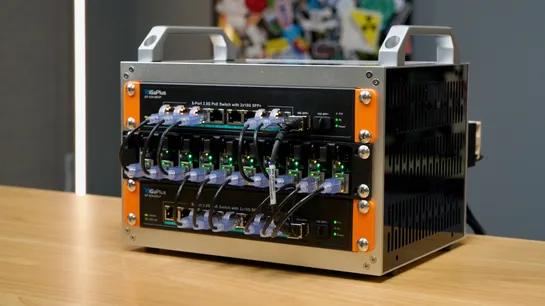
I regret building this $3000 Pi AI cluster

A 10-node Raspberry Pi 5 cluster built with16GB CM5 Lite modulestopped out at325 Gflops- then got lapped by an $8K x86 Framework PC cluster running4x faster. On the bright side? The Pi setup edged out in energy efficiency when pushed to thermal limits. It came with160 GB total RAM, but that didn’t h.. read more  

I regret building this $3000 Pi AI cluster
Link
@kala shared a link, 6 months, 1 week ago
FAUN.dev()

Why open source may not survive the rise of generative AI

Generative AI is snapping the attribution chain thatcopyleft licenseslike theGNU GPLrely on. Without clear provenance, license terms get lost. Compliance? Forget it. The give-and-take that powersFOSSstops giving - or taking... read more  

Why open source may not survive the rise of generative AI
Link
@kala shared a link, 6 months, 1 week ago
FAUN.dev()

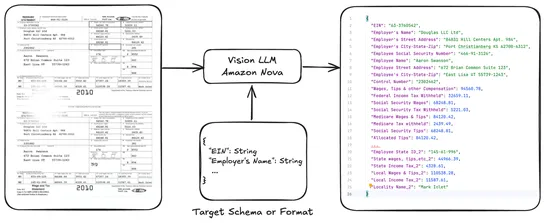
Optimizing document AI and structured outputs by fine-tuning Amazon Nova Models and on-demand inference

Amazon rolled out fine-tuning and distillation forVision LLMslike Nova Lite viaBedrockandSageMaker. Translation: better doc parsing—think messy tax forms, receipts, invoices. Developers get two tuning paths:PEFTor full fine-tune. Then choose how to ship:on-demand inference (ODI)orProvisioned Through.. read more  

Optimizing document AI and structured outputs by fine-tuning Amazon Nova Models and on-demand inference
Link
@kala shared a link, 6 months, 1 week ago
FAUN.dev()

Post-Training Generative Recommenders with Advantage-Weighted Supervised Finetuning

Generative recommender systems need more than just observed user behavior to make accurate recommendations. Introducing A-SFT algorithm improves alignment between pre-trained models and reward models for more effective post-training... read more  

Link
@kala shared a link, 6 months, 1 week ago
FAUN.dev()

What Significance Testing is, Why it matters, Various Types and Interpreting the p-Value

Significance testing determines if observed differences are meaningful by calculating the likelihood of results happening by chance. The p-value indicates this likelihood, with values below 0.05 suggesting statistical significance. Different tests, such as t-tests, ANOVA, and chi-square, help analyz.. read more  

Link
@devopslinks shared a link, 6 months, 1 week ago
FAUN.dev()

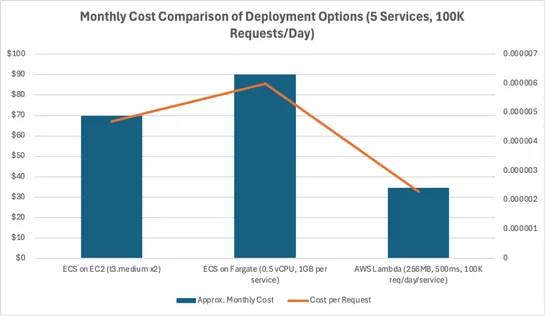
A FinOps Guide to Comparing Containers and Serverless Functions for Compute

AWS dropped a new cost-performance playbook pittingAmazon ECSagainstAWS Lambda. It's not just a tech choice - it’s a workload strategy. Go containers when you’ve got steady traffic, high CPU or memory needs, or sticky app state. Go serverless for spiky, event-driven bursts that don’t need a long lea.. read more  

A FinOps Guide to Comparing Containers and Serverless Functions for Compute
Sigstore is an open source initiative designed to make software artifact signing and verification simple, automatic, and widely accessible. Its primary goal is to improve software supply chain security by enabling developers and organizations to cryptographically prove the origin and integrity of the software they build and distribute.

At its core, sigstore removes many of the traditional barriers associated with code signing. Instead of managing long-lived private keys manually, sigstore supports keyless signing, where identities are issued dynamically using OpenID Connect (OIDC) providers such as GitHub Actions, Google, or Microsoft. This dramatically lowers operational complexity and reduces the risk of key compromise.

The sigstore ecosystem is composed of several key components:

- Cosign: A tool for signing, verifying, and storing signatures for container images and other artifacts. Signatures are stored alongside artifacts in OCI registries, rather than embedded in them.

- Fulcio: A certificate authority that issues short-lived X.509 certificates based on OIDC identities, enabling keyless signing.

- Rekor: A transparency log that records signing events in an append-only, tamper-evident ledger. This provides public auditability and detection of suspicious or malicious signing activity.

Together, these components allow anyone to verify who built an artifact, when it was built, and whether it has been tampered with, using publicly verifiable cryptographic proofs. This aligns closely with modern supply chain security practices such as SLSA (Supply-chain Levels for Software Artifacts).

sigstore is widely adopted in the cloud-native ecosystem and integrates with tools like Kubernetes, container registries, CI/CD pipelines, and package managers. It is commonly used to sign container images, Helm charts, binaries, and SBOMs, and is increasingly becoming a baseline security requirement for production software delivery.

The project is governed by the OpenSSF (Open Source Security Foundation) and supported by major industry players.