Join us

ContentUpdates and recent posts about Rust..
Story
@squadcast shared a post, 1 year, 4 months ago

What is Site Reliability Engineering and How it Transforms IT Operations?

The blog explores Site Reliability Engineering (SRE), a discipline that combines software engineering and IT operations to build scalable, reliable, and efficient systems. Originating at Google, SRE has become a critical practice for modern IT operations, ensuring systems remain robust and performant even under high demand. The blog delves into the core principles of SRE, such as embracing risk, setting Service Level Objectives (SLOs), automation, monitoring, and incident management. It highlights the role of SREs in designing reliable systems, optimizing performance, and fostering collaboration between development and operations teams. The blog also outlines the benefits of implementing SRE practices, including increased reliability, cost savings, and faster incident resolution. Finally, it provides actionable steps for organizations to adopt SRE, emphasizing the importance of automation, monitoring, and a blameless culture.

Link
@anjali shared a link, 1 year, 4 months ago
Customer Marketing Manager, Last9

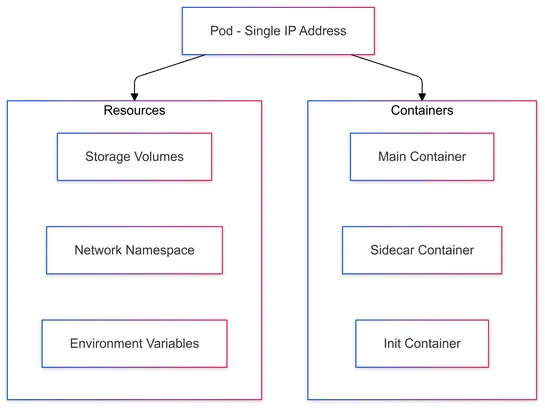
Kubernetes Pods vs Nodes: What Sets Them Apart

Explore the key differences between Kubernetes Pods and Nodes to better understand their roles in container orchestration.

pod
Link
@anjali shared a link, 1 year, 4 months ago
Customer Marketing Manager, Last9

Pod Exec in K8s: Advanced Exec Scenarios and Best Practices

Learn advanced kubectl exec techniques in Kubernetes, covering best practices for troubleshooting, security, and resource management.

kubectl-exec_-Commands--Examples--and-Best-Practices
Link
@anjali shared a link, 1 year, 4 months ago
Customer Marketing Manager, Last9

OpenMetrics vs OpenTelemetry: A Detailed Comparison

Discover the key differences between OpenMetrics and OpenTelemetry, from scope and use cases to adoption and flexibility, to make an informed choice.

otel
Link
@anjali shared a link, 1 year, 4 months ago
Customer Marketing Manager, Last9

5 Common Incident Severity Levels You Should Know

Learn about the 5 common incident severity levels and how they impact your response to system issues, ensuring faster resolutions.

incident
Link
@anjali shared a link, 1 year, 4 months ago
Customer Marketing Manager, Last9

What Are Syslog Levels and Why Should You Care?

Syslog levels help categorize log messages by severity, making it easier to monitor, troubleshoot, and prioritize system events.

logging
Link
@anjali shared a link, 1 year, 4 months ago
Customer Marketing Manager, Last9

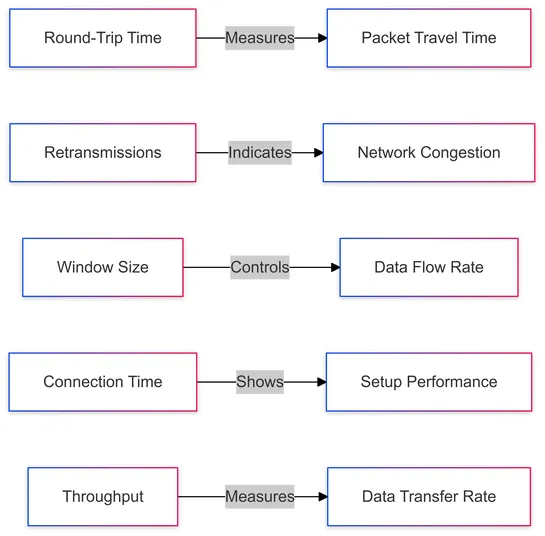
TCP Monitoring Made Simple: Keep Your Network in Check

Learn how TCP monitoring keeps your network fast, reliable, and free from issues like latency, packet loss, and connection hiccups.

tcp
Link
@anjali shared a link, 1 year, 4 months ago
Customer Marketing Manager, Last9

IoT Monitoring: Why It Matters and How to Do It Right?

Learn about IoT monitoring, its benefits, best practices, and use cases to optimize your systems and improve operational efficiency.

iot
Link
@anjali shared a link, 1 year, 4 months ago
Customer Marketing Manager, Last9

Error Logs: What They Are, Why They Matter, and How to Use Them

Error logs are vital for troubleshooting, improving performance, and ensuring security. Learn how to use them effectively for system health.

error
Story
@viktoriiagolovtseva shared a post, 1 year, 4 months ago

Organize Complex Projects with an Epic Template in Jira

In this article, we’ll explore what an epic is, why using an epic template can help organize complex projects, and how tools like Smart Templates for Jira can further improve your workflows by enabling reusable templates for entire epics.

Rust is a systems programming language originally developed at Mozilla and now stewarded by the Rust Foundation. It is designed to enable developers to build fast, reliable, and secure software by preventing entire classes of bugs at compile time. Rust achieves this through its ownership model, which enforces strict rules around memory access, lifetimes, and mutability, eliminating common issues such as null pointer dereferences, use-after-free errors, and data races.

Unlike traditional systems languages such as C and C++, Rust provides strong safety guarantees while maintaining low-level control and predictable performance. Its zero-cost abstractions allow developers to write expressive, high-level code that compiles down to efficient machine instructions. Rust’s type system and concurrency model make it especially well suited for multithreaded and security-critical software.

Rust is widely used across domains including operating systems, browsers, networking infrastructure, cryptography, blockchain, and embedded systems. It has also gained strong adoption in large-scale production environments due to its excellent tooling, package ecosystem (Cargo and crates.io), and emphasis on long-term maintainability. Today, Rust is recognized as a leading language for building safe, high-performance infrastructure software.