Join us

ContentUpdates and recent posts about Rancher..
Link
@varbear shared a link, 1 month ago
FAUN.dev()

Using Rust and Postgres for everything: patterns learned over the years

Rust and PostgreSQL are considered the best tools in the software world due to their performance and reliability. Rewriting a backend service from Go to Rust led to significant improvements in processing speed and memory usage. Using sqlx for database operations and leveraging PostgreSQL features li.. read more  

Link
@varbear shared a link, 1 month ago
FAUN.dev()

I built a programming language using Claude Code

Cutlet usesClaude Code. The LLM emits every line. Source, build steps, and examples live on GitHub. It runs on macOS and Linux and ships aREPL. It supports arrays, strings, double numbers, a vectorizingmeta-operator, zip/filter indexing, prototypal inheritance, and a mark-and-sweepGC. Development ra.. read more  

Link
@varbear shared a link, 1 month ago
FAUN.dev()

Why value streams and capability maps are your new governance control plane

The piece flips enterprise AI fromgenerativetoagentic. Agents getstructured autonomyto perceive, plan, and execute across systems. It turnsvalue streammaps into a control plane withautonomy zones,halt-on-exceptiongates, cryptographicflight recorders, andpolicy-as-code. Result: less hallucination and.. read more  

Why value streams and capability maps are your new governance control plane
Link
@varbear shared a link, 1 month ago
FAUN.dev()

Cracking the Python Monorepo

Outlines a Python monorepo setup that pairsuvworkspaces withDaggerandBuildKitcaching. Builds container stages programmatically. Keeps things cache-friendly and predictable. Parsespyproject.tomland extracts the workspace graph. Copies required local packages into intermediate stages. Installs them in.. read more  

Link
@kaptain shared a link, 1 month ago
FAUN.dev()

Running Agents on Kubernetes with Agent Sandbox

Agent Sandbox unveils the Sandbox CRD to map long-lived, singleton AI agents onto Kubernetes. It adds stable identity and lifecycle primitives. It supports runtimes like gVisor and Kata Containers. It enables zero-scale resume. It includes SandboxWarmPool with SandboxClaim and SandboxTemplate to kil.. read more  

Link
@kaptain shared a link, 1 month ago
FAUN.dev()

Securing Production Debugging in Kubernetes

The post prescribes an on-demand SSH gateway pod. It usesshort-lived, identity-bound credentialsandKubernetes RBACto grant scoped, auditable debug sessions. It recommends anaccess brokerthat binds Roles to groups, issues ephemeral certs and OpenSSH user certificates, rotates CAs, enforces command-le.. read more  

Link
@kaptain shared a link, 1 month ago
FAUN.dev()

The Invisible Rewrite: Modernizing the Image Promoter

SIG Release rewrote theimage promotercore. It cut 20% of the code. It added apipeline engine,cosignsigning, andSLSAattestations. Signing now sits separate fromsignature replication. Registry reads run in parallel - plan time dropped ~20m → ~2m. Per-request timeouts, retries, and HTTP connection reus.. read more  

Link
@kaptain shared a link, 1 month ago
FAUN.dev()

Kubernetes v1.36 - Sneak Peek

Kubernetes v1.36 (Apr 22, 2026) enablesHPAScaleToZeroby default. That lets theHPAuseminReplicas: 0and read only controller-owned pod metrics. The release swaps long-lived image-pull secrets forephemeral KSA tokens. It deprecatesIPVS, retiresIngress NGINX, and aligns withcontainerd 2.x. The release f.. read more  

Link
@kala shared a link, 1 month ago
FAUN.dev()

OpenAI to acquire Astral

OpenAI will acquire Astral, pending regulatory close. It will fold Astral's open-source Python tools —uv,Ruff, andty— intoCodex. Teams will integrate the tools.Codexwill plan changes, modify codebases, run linters and formatters, and verify results acrossPythonworkflows. System shift:This injects pr.. read more  

OpenAI to acquire Astral
Link
@kala shared a link, 1 month ago
FAUN.dev()

Scaling Karpathy's Autoresearch: What Happens When the Agent Gets a GPU Cluster

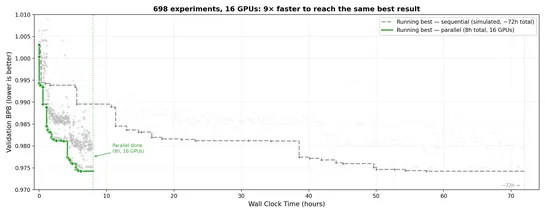
A team pointedClaude Codeatautoresearchand spun up 16 Kubernetes GPUs. The setup ran ~910 experiments in 8 hours.val_bpbdropped from 1.003 to 0.974 (2.87%). Throughput climbed ~9×. Parallel factorial waves revealedAR=96as the best width. The pipeline usedH100for cheap screening andH200for validation.. read more  

Scaling Karpathy's Autoresearch: What Happens When the Agent Gets a GPU Cluster
Rancher is a Kubernetes management platform originally created by Rancher Labs and now maintained by SUSE. It is designed to simplify the deployment, operation, and security of Kubernetes clusters at scale, whether they run on public cloud, private cloud, on-premises data centers, or at the edge.

At its core, Rancher provides a centralized control plane that allows teams to create, import, and manage multiple Kubernetes clusters from a single UI and API. It supports a wide range of Kubernetes distributions, including upstream Kubernetes, RKE / RKE2, K3s, and managed cloud services like EKS, GKE, and AKS.

Rancher focuses heavily on enterprise needs such as multi-cluster management, role-based access control (RBAC), authentication integration (LDAP, Active Directory, OIDC), policy enforcement, and cluster lifecycle management. It enables platform teams to enforce consistent configurations and security policies while allowing application teams to self-serve Kubernetes resources safely.

The platform also integrates tightly with the broader cloud-native ecosystem. Rancher provides built-in support for Helm, monitoring (Prometheus, Grafana), logging, and GitOps workflows, and works well alongside tools like Argo CD, Fleet, and Longhorn for storage.

Rancher is often used as the foundation for platform engineering initiatives, helping organizations standardize Kubernetes operations, reduce operational complexity, and safely scale containerized workloads across environments.