Join us

ContentUpdates and recent posts about Pulumi..
Link
@kaptain shared a link, 5 months, 1 week ago
FAUN.dev()

How to build highly available Kubernetes applications with Amazon EKS Auto Mode

Amazon EKS Auto Mode now runs the cluster for you—handling control plane updates, add-on management, and node rotation. It sticks to Kubernetes best practices so your apps stay up through node drains, pod failures, AZ outages, and rolling upgrades. It also respectsPod Disruption Budgets,Readiness Ga.. read more  
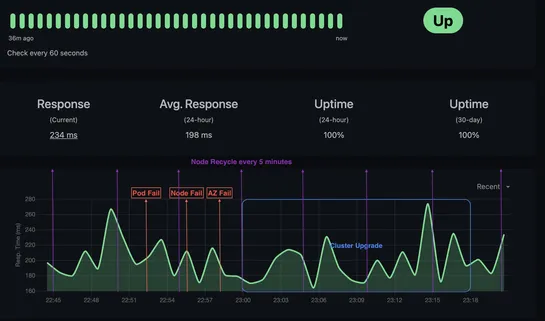
How to build highly available Kubernetes applications with Amazon EKS Auto Mode
Link
@kaptain shared a link, 5 months, 1 week ago
FAUN.dev()

Building a Kubernetes Platform — Think Big, Think in Planes

Thinking in planes, as introduced by the Platform Engineering reference model, helps teams describe their platform in a simple, shared language, turning a collection of tools into a platform. It forces you to think horizontally, connecting teams and technologies instead of adding more layers, creati.. read more  

Link
@kaptain shared a link, 5 months, 1 week ago
FAUN.dev()

Helm 4 Overview

Helm 4 ditches the old plugin model for a sharper, plugin-first architecture powered by WebAssembly. That means isolation/control, and deeper customization - if you're ready to adapt! Post-renderers are now plugins. That breaks compatibility with earlier exec-based setups, so expect some rewiring. .. read more  

Link
@kaptain shared a link, 5 months, 1 week ago
FAUN.dev()

Unlocking next-generation AI performance with Dynamic Resource Allocation on Amazon EKS and Amazon EC2 P6e-GB200

Amazon just droppedEC2 P6e-GB200 UltraServers, packingNVIDIA GB200 Grace Blackwellchips. Built for running trillion-parameter AI models onAmazon EKSwithout losing sleep over scaling. Under the hood:NVLink 5.0,IMEX, andEFAv4stitch up to 72 Blackwell GPUs into one memory-coherent cluster per UltraServ.. read more  

Unlocking next-generation AI performance with Dynamic Resource Allocation on Amazon EKS and Amazon EC2 P6e-GB200
Link
@kaptain shared a link, 5 months, 1 week ago
FAUN.dev()

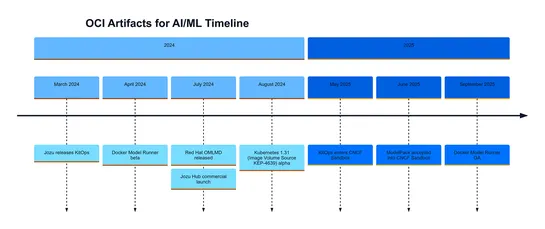
The State of OCI Artifacts for AI/ML

OCI artifacts quietly leveled up. Over the last 18 months, they’ve gone from a niche hack to production muscle for AI/ML workloads on Kubernetes. The signs? Clear enough:KitOpsandModelPacklanded in the CNCF Sandbox. Kubernetes 1.31 got native support forImage Volume Source. Docker pushedModel Runner.. read more  

The State of OCI Artifacts for AI/ML
Link
@kala shared a link, 5 months, 1 week ago
FAUN.dev()

Build AI Agents Worth Keeping: The Canvas Framework

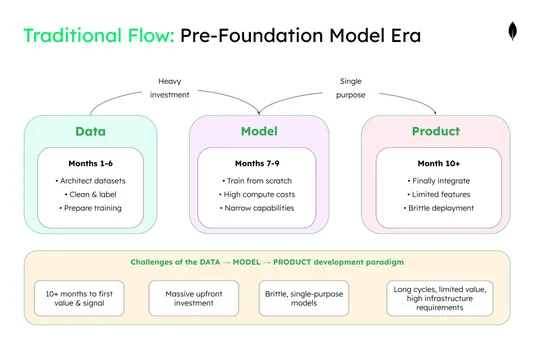
MIT and McKinsey found a gap the size of the Grand Canyon: 80% of companies claim they’re using generative AI, but fewer than 1 in 10 use cases actually ship. Blame it on scattered data, fuzzy goals, and governance that's still MIA. A new stack is stepping in:product → agent → data → model. It flips.. read more  

Build AI Agents Worth Keeping: The Canvas Framework
Link
@kala shared a link, 5 months, 1 week ago
FAUN.dev()

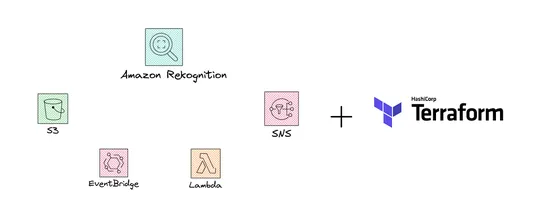
Detect inappropriate images in S3 with AWS Rekognition + Terraform

A serverless AWS pipeline runs image moderation on autopilot - withS3,Lambda,Rekognition,SNS, andEventBridgeall wired up throughTerraform. When a photo gets flagged, it’s tagged, maybe quarantined, and triggers an email alert. Daily scan? Handled... read more  

Detect inappropriate images in S3 with AWS Rekognition + Terraform
Link
@kala shared a link, 5 months, 1 week ago
FAUN.dev()

Grokipedia

Grokipedia just dropped - a Wikipedia remix built from LLM output, pitched as an escape from "woke" bias. The pitch? Bold. The execution? Rough. Entries run long. Facts bend. Citations wander. And the tone? Cold, context-free, and unmistakably machine-made. The usual LLM suspects are here: hallucina.. read more  

Link
@kala shared a link, 5 months, 1 week ago
FAUN.dev()

New trend: Programming by kicking off parallel AI agents

Senior engineers are starting to spin upparallel AI coding agents- think Claude Code, Cursor, and the like - to run tasks side by side. One agent sketches boilerplate. Another tackles tests. A third refactors old junk. All at once. Is it "multitasking on steroids"? Not just this as it messes with ho.. read more  

Link
@kala shared a link, 5 months, 1 week ago
FAUN.dev()

Why GPUs accelerate AI learning: The power of parallel math

Modern AI eats GPUs for breakfast - training, inference, all of it. Matrix ops? Parallel everything. Models like LLaMA don’t blink without a gang of H100s working overtime... read more  

Why GPUs accelerate AI learning: The power of parallel math
Pulumi is an open-source infrastructure-as-code platform that allows you to define, deploy, and manage cloud resources using familiar general-purpose programming languages like Python, JavaScript, Go, and TypeScript.

Pulumi represents a major shift in the Infrastructure-as-Code (IaC) landscape by moving away from proprietary domain-specific languages (DSLs) and static configuration files like YAML or JSON. Instead, it leverages the power of standard programming languages, allowing engineers to use loops, functions, classes, and existing package managers to define their cloud environments. This means you can apply software engineering best practices—such as unit testing, modularity, and CI/CD integration—directly to your infrastructure setups on providers like AWS, Azure, Google Cloud, and Kubernetes.

The platform works by utilizing a "State" mechanism similar to Terraform, where it tracks the current deployment against your desired code. When you run a Pulumi program, it builds a resource graph to determine the most efficient way to provision or update your services. Because it uses real code, it provides superior IDE support, including auto-completion and type-checking, which significantly reduces the syntax errors and "trial-and-error" deployments common with text-based configuration tools.

Furthermore, Pulumi excels in hybrid and multi-cloud environments by providing a unified workflow for both infrastructure and application delivery. It bridges the gap between developers and platform engineers, as both can now speak the same language—literally.