Join us

ContentUpdates and recent posts about Pulumi..
Link
@devopslinks shared a link, 5 months, 2 weeks ago
FAUN.dev()

Advancing Our Chef Infrastructure: Safety Without Disruption

Slack pulled back the curtain onSlack AI, its LLM-powered assistant built with a fortress mindset. Every customer gets their ownisolated environment. Any data passed tovendor LLMs? It'sephemeral. Gone before it can stick. No fine-tuning. No exporting data outside Slack. And there’s a wholemiddle-lay.. read more  
Link
@devopslinks shared a link, 5 months, 2 weeks ago
FAUN.dev()

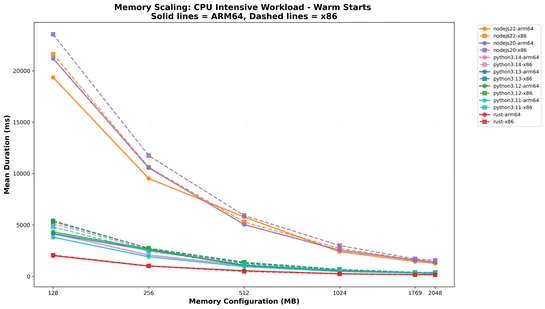
Comparing AWS Lambda Arm64 vs x86_64 Performance Across Multiple Runtimes in Late 2025

A new open-source benchmark looked at 183,000 AWS Lambda invocations, andarm64 beats x86_64across the board in both cost and speed. Rust on arm64 with SHA-256 tuned in assembly? It clocks in 4–5× faster than x86 in CPU-heavy tasks. Cold starts are snappy too—5–8× quicker than Node.js and Python... read more  

Comparing AWS Lambda Arm64 vs x86_64 Performance Across Multiple Runtimes in Late 2025
Link
@devopslinks shared a link, 5 months, 2 weeks ago
FAUN.dev()

You’ll never see attrition referenced in an RCA

Lorin Hochstein argues that while high-profile engineer attrition is often speculated to contribute to major outages, it is universally absent from public Root Cause Analyses (RCAs). This exclusion occurs because public RCAs aim to reassure customers by focusing on technical fixes, whereas attrition.. read more  

Link
@devopslinks shared a link, 5 months, 2 weeks ago
FAUN.dev()

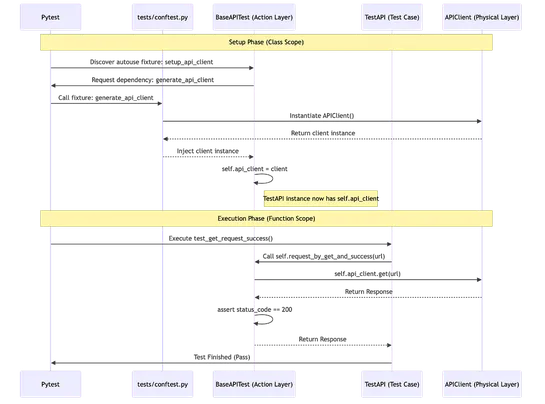
Declarative Action Architecture

The Declarative Action Architecture (DAA) is a scalable E2E testing pattern that separates concerns across three distinct layers. TheTest Layeris 100% declarative, statingwhatis being tested without any procedural logic, making tests read like documentation. The coreAction Layerimplements the execut.. read more  

Declarative Action Architecture
Link
@devopslinks shared a link, 5 months, 2 weeks ago
FAUN.dev()

Failure is inevitable: Learning from a large outage, and building for reliability in depth at

Datadog ditched its “never fail” mindset after a March 2023 meltdown knocked out half its Kubernetes nodes and took major user features down with them. The fix? A full-stack rethink built aroundgraceful degradation. The team addeddisk-based persistence at intake,live-data prioritization,QoS-aware re.. read more  

Failure is inevitable: Learning from a large outage, and building for reliability in depth at
Link
@devopslinks shared a link, 5 months, 2 weeks ago
FAUN.dev()

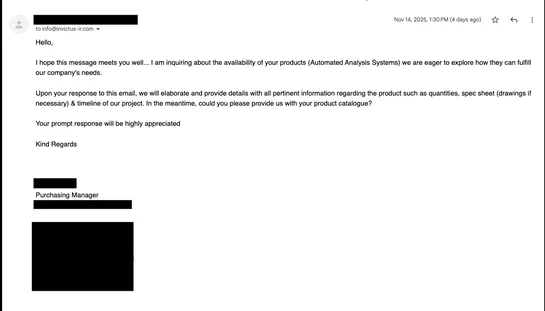
The story of how we almost got hacked

Team Invictus caught a BEC attempt using WeTransfer to slip in a fake Microsoft 365 login page powered byEvilProxy. Classic Adversary-in-the-Middle move, but dressed up with a slick delivery package. Digging deeper, the team mapped the attacker’s setup and found something bigger: a credential grab c.. read more  

The story of how we almost got hacked
News FAUN.dev() Team
@kaptain shared an update, 5 months, 2 weeks ago
FAUN.dev()

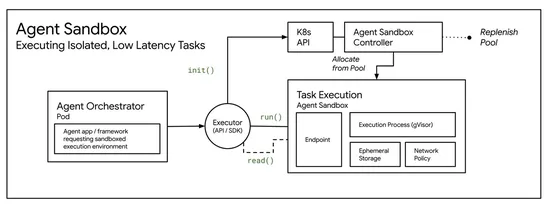
Agent Sandbox Brings Kernel-Level Guardrails to AI Agents on Kubernetes

gVisor Kata Containers Google Kubernetes Engine (GKE) Kubernetes

Agent Sandbox, a new Kubernetes primitive, was introduced at KubeCon NA 2025 to enhance AI agent management on Kubernetes and Google Kubernetes Engine.

Agent Sandbox Brings Kernel-Level Guardrails to AI Agents on Kubernetes
News FAUN.dev() Team
@devopslinks shared an update, 5 months, 2 weeks ago
FAUN.dev()

AWS Unveils Graviton5: A 192-Core Leap in Cloud Performance and Efficiency

Amazon Web Services Amazon EC2

AWS introduces Graviton5-based EC2 M9g instances, boosting performance by 25% and enhancing scalability while reducing costs.

AWS Unveils Graviton5: A 192-Core Leap in Cloud Performance and Efficiency
News FAUN.dev() Team
@varbear shared an update, 5 months, 2 weeks ago
FAUN.dev()

Tor Goes Rust: Introducing Arti, a New Foundation for the Future of Tor

#Rust  #Securit...  #Tor  #Arti  #cryptog... 
Arti Rust Tor

The development of "Arti," a Rust-based Tor implementation funded by Zcash, aims to enhance security and efficiency by addressing the limitations of the current C-based Tor.

Tor Goes Rust: Introducing Arti, a New Foundation for the Future of Tor
 Activity
@varbear added a new tool Arti , 5 months, 2 weeks ago.
Pulumi is an open-source infrastructure-as-code platform that allows you to define, deploy, and manage cloud resources using familiar general-purpose programming languages like Python, JavaScript, Go, and TypeScript.

Pulumi represents a major shift in the Infrastructure-as-Code (IaC) landscape by moving away from proprietary domain-specific languages (DSLs) and static configuration files like YAML or JSON. Instead, it leverages the power of standard programming languages, allowing engineers to use loops, functions, classes, and existing package managers to define their cloud environments. This means you can apply software engineering best practices—such as unit testing, modularity, and CI/CD integration—directly to your infrastructure setups on providers like AWS, Azure, Google Cloud, and Kubernetes.

The platform works by utilizing a "State" mechanism similar to Terraform, where it tracks the current deployment against your desired code. When you run a Pulumi program, it builds a resource graph to determine the most efficient way to provision or update your services. Because it uses real code, it provides superior IDE support, including auto-completion and type-checking, which significantly reduces the syntax errors and "trial-and-error" deployments common with text-based configuration tools.

Furthermore, Pulumi excels in hybrid and multi-cloud environments by providing a unified workflow for both infrastructure and application delivery. It bridges the gap between developers and platform engineers, as both can now speak the same language—literally.