Join us

ContentUpdates and recent posts about Pulumi..
Link
@devopslinks shared a link, 3 months, 3 weeks ago
FAUN.dev()

CodeBreach: Supply Chain Vuln & AWS CodeBuild Misconfig

Wiz Research dropped details onCodeBreach, a serious flaw that cracked open AWS SDK GitHub repos, yes, including the popular JavaScript one. The root problem? Leakyregex filtersin CodeBuild pipelines. They missed anchors, so attackers slipped in rogue pull requests, dodged build rules, and stole hig.. read more  
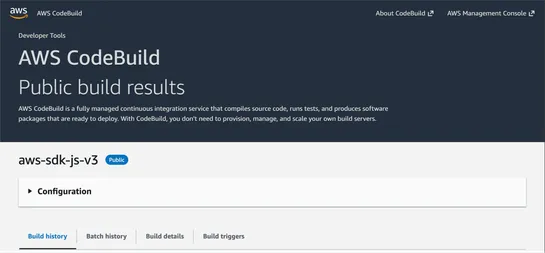
CodeBreach: Supply Chain Vuln & AWS CodeBuild Misconfig
Link
@devopslinks shared a link, 3 months, 3 weeks ago
FAUN.dev()

I Cannot SSH Into My Server Anymore (And That’s Fine)

A dev ditched their $100/month VPS for a clean, automated CoreOS setup. No SSH. No clicking around. JustIgnition,Podman Quadlets, andTerraformdoing the heavy lifting. It boots from YAML, spins up containers with systemd, and keeps itself fresh withPodman auto-updates, zero-touch, straight from the r.. read more  

I Cannot SSH Into My Server Anymore (And That’s Fine)
Link
@devopslinks shared a link, 3 months, 3 weeks ago
FAUN.dev()

Nanoservices: Why Serverless Got Architecture Right

A fresh take onAWS Lambdaand serverless: thinknanoservices- tiny, isolated functions instead of chunky microservices. No shared state or shared runtime but clean separation, lean logic, and fewer ways to screw up scaling. Where microservices can spiral into spaghetti, nanoservices stay crisp. Each f.. read more  

Nanoservices: Why Serverless Got Architecture Right
Link
@devopslinks shared a link, 3 months, 3 weeks ago
FAUN.dev()

Supply-chain risk of agentic AI - infecting infrastructures via skill worms

AI assistants with shell, network, or filesystem "skills" don't just help, they expose. These hooks can run commands before any human checks the model’s output. That means a bigger attack surface. More room for lateral movement. Easier persistence. In setups where tools like Claude Code run often, i.. read more  

 Activity
News FAUN.dev() Team
@kala shared an update, 3 months, 3 weeks ago
FAUN.dev()

OpenClaw - Former Moltbot, Former Clawdbot - Went Viral Overnight. Then Security Reality Hit.

OpenClaw

OpenClaw, an open-source AI assistant platform, has been launched, evolving from Clawdbot and Moltbot. It features new plugins, enhanced security, and support for new models, while addressing a major security vulnerability. The platform emphasizes community involvement and invites contributions for its development.

OpenClaw - Former Moltbot, Former Clawdbot - Went Viral Overnight. Then Security Reality Hit.
 Activity
@kala added a new tool OpenClaw , 3 months, 3 weeks ago.
News FAUN.dev() Team
@kaptain shared an update, 3 months, 3 weeks ago
FAUN.dev()

Cluster API v1.12 Released: In-Place Updates and Chained Upgrades

Kubernetes

Cluster API v1.12 introduces in-place updates and chained upgrades to enhance Kubernetes cluster management. In-place updates modify existing machines without deletion, while chained upgrades streamline multi-version upgrades. The release also includes improvements to immutable rollouts and various bug fixes.

Cluster API v1.12 Released: In-Place Updates and Chained Upgrades
Story
@laura_garcia shared a post, 3 months, 3 weeks ago
Software Developer, RELIANOID

Shield Your Core 🛡️

Cybersec Asia is coming to Bangkok on February 4–5, 2026 — the key APAC event for cybersecurity, cloud, and data protection. 🌏 Bringing together global and regional leaders to tackle evolving threats and unlock new opportunities across CLMVT & APAC. 🤝 Meet RELIANOID and discover how we deliver secur..

cybersec asia 2026 RELIANOID
Story Keploy Team Trending
@sancharini shared a post, 3 months, 3 weeks ago

Verification vs Validation Explained for Beginners in QA

Learn the difference between verification vs validation in QA. This beginner-friendly guide explains how both ensure software is built correctly and meets user expectations.

Verification vs Validation
Pulumi is an open-source infrastructure-as-code platform that allows you to define, deploy, and manage cloud resources using familiar general-purpose programming languages like Python, JavaScript, Go, and TypeScript.

Pulumi represents a major shift in the Infrastructure-as-Code (IaC) landscape by moving away from proprietary domain-specific languages (DSLs) and static configuration files like YAML or JSON. Instead, it leverages the power of standard programming languages, allowing engineers to use loops, functions, classes, and existing package managers to define their cloud environments. This means you can apply software engineering best practices—such as unit testing, modularity, and CI/CD integration—directly to your infrastructure setups on providers like AWS, Azure, Google Cloud, and Kubernetes.

The platform works by utilizing a "State" mechanism similar to Terraform, where it tracks the current deployment against your desired code. When you run a Pulumi program, it builds a resource graph to determine the most efficient way to provision or update your services. Because it uses real code, it provides superior IDE support, including auto-completion and type-checking, which significantly reduces the syntax errors and "trial-and-error" deployments common with text-based configuration tools.

Furthermore, Pulumi excels in hybrid and multi-cloud environments by providing a unified workflow for both infrastructure and application delivery. It bridges the gap between developers and platform engineers, as both can now speak the same language—literally.