Join us

ContentUpdates and recent posts about Pelagia..
Story
@laura_garcia shared a post, 5 months, 4 weeks ago
Software Developer, RELIANOID

Huge thanks to Design Tech Solutions for publishing an article about RELIANOID! 📰 🤩

They explore how the RELIANOID Load Balancer enhances maritime cybersecurity, helping secure connected vessels, ports, and critical infrastructure. Read the full article here: https://www.relianoid.com/about-us/relianoid-related-articles/ #MaritimeCybersecurity#CyberSecurity#ConnectedShipping#LoadBa..

design tech solutions Article
Link
@anjali shared a link, 5 months, 4 weeks ago
Customer Marketing Manager, Last9

7 Observability Solutions for Full-Fidelity Telemetry

A quick guide to how seven leading observability tools support full-fidelity telemetry and the architectural choices behind them.

full_fieldiity_telemetry
Link
@varbear shared a link, 5 months, 4 weeks ago
FAUN.dev()

We are replacing OOP with something worse

Object-oriented programming didn’t die - it evolved. Now it lives in the guts of infrastructure. Services talk through strict interfaces, crossing process and network lines like pros. Classes and objects? They're nowOpenAPI schemas,Docker containers, andKubernetes clusters- same old encapsulation ga.. read more  

Link
@varbear shared a link, 5 months, 4 weeks ago
FAUN.dev()

Why is Zig so Cool?

Zig bringscross-compilationandC interoperabilityto the forefront - no extra setup, no toolchain fuss. It builds across architectures, links with C code like it was born to, and skips headers entirely. Its real flex?Compile-time execution, sharperror handling, and azero-fat runtime. All wrapped in a .. read more  

Link
@varbear shared a link, 5 months, 4 weeks ago
FAUN.dev()

How the classic anime 'Ghost in the Shell' predicted the future of cybersecurity 30 years ago

“Ghost in the Shell” turned 30 this week. Still hits hard. Back in 1989, it dropped cyberpunk bombs that would take the real world decades to catch up with: government-grade AI hackers, behavior-based intrusion detection, malware tailored for humans, and remote code attribution that vanishes into th.. read more  

How the classic anime 'Ghost in the Shell' predicted the future of cybersecurity 30 years ago
Link
@varbear shared a link, 5 months, 4 weeks ago
FAUN.dev()

Programming Languages in the Age of AI Agents

GitHub Copilot and friends tend to shine in languages with rich static types - think Rust or Scala. Why? The compiler does the heavy lifting. It flags mistakes fast, keeps structure tight, and gives the AI sharper signals to riff on. But drop that agent into a sprawling legacy repo, and cracks show... read more  

Programming Languages in the Age of AI Agents
Link
@varbear shared a link, 5 months, 4 weeks ago
FAUN.dev()

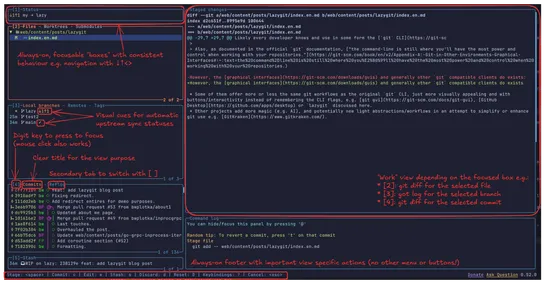
The (lazy) Git UI You Didn't Know You Need

Lazygit is a snappy terminal Git UI that’s picking up steam - and for good reason. It streamlines common tasks like staging, rebasing, and patching without dragging you through clunky menus. The interface sticks close to native Git commands but adds just enough structure to reduce context switches a.. read more  

The (lazy) Git UI You Didn't Know You Need
Link
@varbear shared a link, 5 months, 4 weeks ago
FAUN.dev()

Your URL Is Your State

Modern frontend apps love to complicate state. But they keep forgetting the URL - shareable, dependency-free, and built for the job. This piece breaks down how a well-structured URL can capture UI state, track history, and make bookmarking effortless. NolocalStorage. No cookies. No bloated global st.. read more  

Link
@varbear shared a link, 5 months, 4 weeks ago
FAUN.dev()

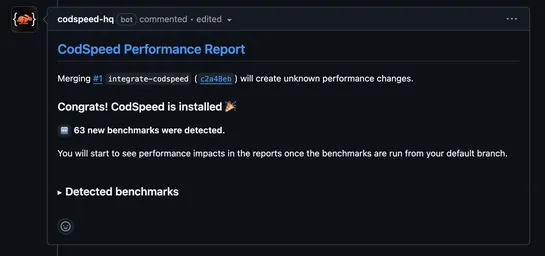
How to Benchmark Python Code?

pytest-benchmarknow plugs straight intoCodSpeedfor automatic performance runs in CI - flamegraphs, metrics, and history included. Just toss a decorator on your test and it turns into a benchmark. Want to measure a slice of code more precisely? Use fixtures to zoom in... read more  

How to Benchmark Python Code?
Link
@varbear shared a link, 5 months, 4 weeks ago
FAUN.dev()

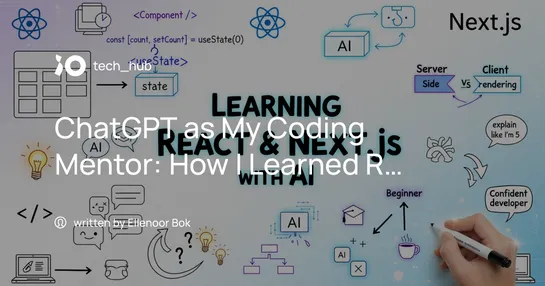
ChatGPT as My Coding Mentor: How I Learned React and Next.js as a Junior Developer

A junior dev leveled up their React and Next.js chops just by writing better prompts. Big wins came from getting specific - like stating their skill level, asking for analogies, and stacking questions to unpack how Next.js splits client and server. Trend to watch:Prompting is a core dev skill for an.. read more  

ChatGPT as My Coding Mentor: How I Learned React and Next.js as a Junior Developer
Pelagia is a Kubernetes controller that provides all-in-one management for Ceph clusters installed by Rook. It delivers two main features:

Aggregates all Rook Custom Resources (CRs) into a single CephDeployment resource, simplifying the management of Ceph clusters.
Provides automated lifecycle management (LCM) of Rook Ceph OSD nodes for bare-metal clusters. Automated LCM is managed by the special CephOsdRemoveTask resource.

It is designed to simplify the management of Ceph clusters in Kubernetes installed by Rook.

Being solid Rook users, we had dozens of Rook CRs to manage. Thus, one day we decided to create a single resource that would aggregate all Rook CRs and deliver a smoother LCM experience. This is how Pelagia was born.

It supports almost all Rook CRs API, including CephCluster, CephBlockPool, CephFilesystem, CephObjectStore, and others, aggregating them into a single specification. We continuously work on improving Pelagia's API, adding new features, and enhancing existing ones.

Pelagia collects Ceph cluster state and all Rook CRs statuses into single CephDeploymentHealth CR. This resource highlights of Ceph cluster and Rook APIs issues, if any.

Another important thing we implemented in Pelagia is the automated lifecycle management of Rook Ceph OSD nodes for bare-metal clusters. This feature is delivered by the CephOsdRemoveTask resource, which automates the process of removing OSD disks and nodes from the cluster. We are using this feature in our everyday day-2 operations routine.