Join us

ContentUpdates and recent posts about Pelagia..
Link
@devopslinks shared a link, 3 months, 2 weeks ago
FAUN.dev()

Year in Review: Lessons From 12 Projects Patreon Shipped in 2025

Patreon engineers made massive bets in 2025, shipping code across all areas of the system and enabling impactful features like Autopilot's growth tools suite. Expanding Autopilot's scope, reach, and effectiveness was a challenge, especially guaranteeing recipient redemption after email delivery in a.. read more  
Link
@devopslinks shared a link, 3 months, 2 weeks ago
FAUN.dev()

Making a micro Linux distro

A dev dives into building a barebones Linux distro for RISC-V using QEMU. Starts at the metal: compiles the kernel, wires up a no-frills init process, packs it all into an initramfs. Then levels up, drops inu-rootto swap out raw shell scripts for Go-powered userland tools. Adds network. Now it’s a f.. read more  

Making a micro Linux distro
News FAUN.dev() Team
@devopslinks shared an update, 3 months, 2 weeks ago
FAUN.dev()

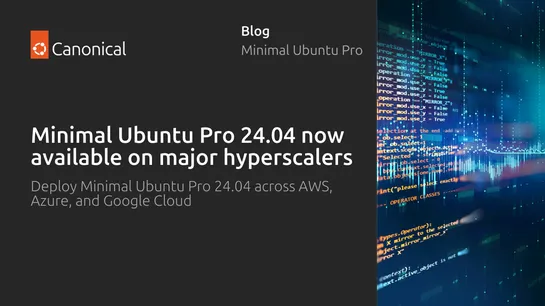
Canonical Introduces Minimal Ubuntu Pro: Smaller Images and Secure Cloud Workloads at Scale

Ubuntu GNU/Linux

Canonical has launched Minimal Ubuntu Pro, enhancing cloud security with lightweight images and robust features. Available on AWS, Azure, and Google Cloud, it offers minimized attack surfaces and long-term support.

Canonical Introduces Minimal Ubuntu Pro: Smaller Images and Secure Cloud Workloads at Scale
News FAUN.dev() Team
@varbear shared an update, 3 months, 2 weeks ago
FAUN.dev()

AI's Dependence on Python Deepens as Anthropic Funds Core Ecosystem Work

Python

Anthropic invests $1.5 million in the Python Software Foundation to boost Python ecosystem security. The funding targets improvements in CPython and PyPI, including new tools for package review and malware datasets. It also supports the PSF's core activities and community initiatives.

AI's Dependence on Python Deepens as Anthropic Funds Core Ecosystem Work
News FAUN.dev() Team
@kala shared an update, 3 months, 2 weeks ago
FAUN.dev()

Anthropic’s New "Economic Primitives" Reveal Who Uses Claude, for What, and How Well It Works

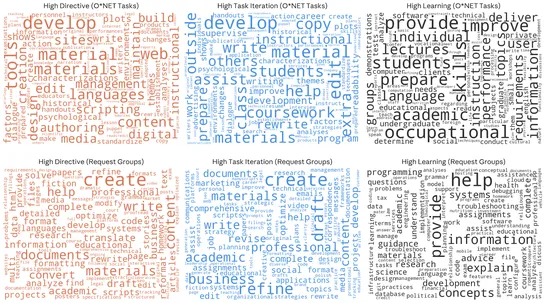
Anthropic's new Economic Index report introduces five "economic primitives" to measure *how* Claude is used: task complexity, user and AI skill level, use case (work, coursework, personal), autonomy, and task success - built from privacy-preserving classification of anonymized Claude.ai and first-party API transcripts from **November 2025**.

Anthropic’s New "Economic Primitives" Reveal Who Uses Claude, for What, and How Well It Works
News FAUN.dev() Team
@varbear shared an update, 3 months, 2 weeks ago
FAUN.dev()

Tailwind CSS Lays Off 75% of Its Engineering Team as AI Cuts Documentation Traffic by 40%

tailwindcss Vercel

Tailwind CSS laid off roughly **75% of its engineering team** after a **~40% drop in documentation traffic** and an estimated **~80% decline in revenue**, even as usage of the framework continues to grow. According to its creator, AI-driven access to documentation has broken the link between adoption and sustainability.

News FAUN.dev() Team
@devopslinks shared an update, 3 months, 2 weeks ago
FAUN.dev()

Pulumi Expands IaC Platform to Support Terraform, OpenTofu, and Native HCL

Terraform Pulumi

Pulumi added support for managing Terraform and OpenTofu state in Pulumi Cloud and introduced native HCL support in its infrastructure as code engine. These changes allow teams to use Terraform, OpenTofu, Pulumi languages, and HCL side by side, with shared state visibility, governance features, and AI-assisted operations available across tools.

Story
@laura_garcia shared a post, 3 months, 2 weeks ago
Software Developer, RELIANOID

🔐 RELIANOID Load Balancer – Security Contributions

At RELIANOID, we actively and selflessly contribute to improving global cybersecurity, staying true to our open-source spirit. 🤝 We maintain close collaborations with security platforms, forums, and threat-intelligence communities, sharing our expertise to help strengthen protection across the Inter..

abuseipdb contributor relianoid
Story
@laura_garcia shared a post, 3 months, 2 weeks ago
Software Developer, RELIANOID

📍 RELIANOID at Bett UK 2026

We’re excited to take part in Bett UK 2026, the world’s leading EdTech event, bringing together educators, innovators, and decision-makers shaping the future of education. 🗓 January 21–23, 2026 📍 London, United Kingdom Join us to discover how RELIANOID enables secure, scalable, and highly available ..

bett_uk_event_london_2026_relianoid
Story
@laura_garcia shared a post, 3 months, 2 weeks ago
Software Developer, RELIANOID

🚀 If you’re building AI systems, reliability is no longer optional

Many teams are rushing to adopt AI, but few are asking the most critical question: 👉 What happens when AI fails? Back in December, we published an article that remains more relevant than ever: AI is redefining Site Reliability Engineering (SRE). Why? Because AI inference workloads introduce new reli..

Pelagia is a Kubernetes controller that provides all-in-one management for Ceph clusters installed by Rook. It delivers two main features:

Aggregates all Rook Custom Resources (CRs) into a single CephDeployment resource, simplifying the management of Ceph clusters.
Provides automated lifecycle management (LCM) of Rook Ceph OSD nodes for bare-metal clusters. Automated LCM is managed by the special CephOsdRemoveTask resource.

It is designed to simplify the management of Ceph clusters in Kubernetes installed by Rook.

Being solid Rook users, we had dozens of Rook CRs to manage. Thus, one day we decided to create a single resource that would aggregate all Rook CRs and deliver a smoother LCM experience. This is how Pelagia was born.

It supports almost all Rook CRs API, including CephCluster, CephBlockPool, CephFilesystem, CephObjectStore, and others, aggregating them into a single specification. We continuously work on improving Pelagia's API, adding new features, and enhancing existing ones.

Pelagia collects Ceph cluster state and all Rook CRs statuses into single CephDeploymentHealth CR. This resource highlights of Ceph cluster and Rook APIs issues, if any.

Another important thing we implemented in Pelagia is the automated lifecycle management of Rook Ceph OSD nodes for bare-metal clusters. This feature is delivered by the CephOsdRemoveTask resource, which automates the process of removing OSD disks and nodes from the cluster. We are using this feature in our everyday day-2 operations routine.