Join us

ContentUpdates and recent posts about Pelagia..
News FAUN.dev() Team
@kala shared an update, 1 month, 2 weeks ago
FAUN.dev()

NanoClaw + Docker Sandboxes: Secure Agent Execution Without the Overhead

NanoClaw Claude Code Docker

NanoClaw integrates with Docker Sandboxes to enhance AI agent security through strong isolation and transparency. This collaboration focuses on enabling secure and autonomous operations for AI agents within enterprise environments.

Link
@varbear shared a link, 1 month, 2 weeks ago
FAUN.dev()

The real cost of random I/O

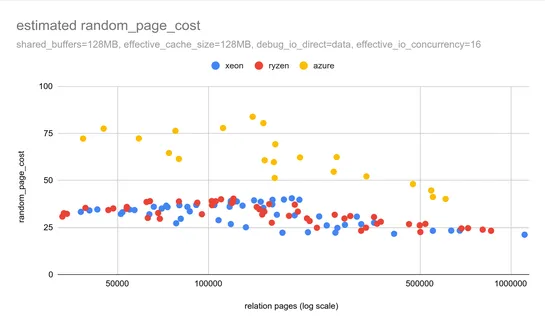
Therandom_page_costwas introduced ~25 years ago, and its default value has remained at 4.0 since then. Recent experiments suggest that the actual cost of reading a random page may be significantly higher than the default value, especially on SSDs. Lowering therandom_page_costmay not always be the be.. read more  

The real cost of random I/O
Link
@varbear shared a link, 1 month, 2 weeks ago
FAUN.dev()

Interview with Thomas Wouters - release Manager for Python

The interview traces Python's core evolution. It starts with addingaugmented assignment(+=) and thePEP 203debates. Arguments followed. Nested scopeslanded viafuture imports. Maintainers repackagedelementtree/xmlplususingpath. asynciorose and supplantedTwisted. Python moved toyearly releases... read more  

Link
@varbear shared a link, 1 month, 2 weeks ago
FAUN.dev()

How to steal npm publish tokens by opening GitHub issues

Attackers pushed a poisonedcline@2.3.0to npm using a stolen publish token. ItspostinstallinstalledOpenClawglobally. An AI triage bot let a malicious issue title trickClaudeinto running commands on a GitHub Actions runner. It wrote a poisonedactions/cacheentry. The nightly release restored the poison.. read more  

Link
@varbear shared a link, 1 month, 2 weeks ago
FAUN.dev()

Why is WebAssembly a second-class language on the web?

The post catalogs recentWebAssemblyextensions:shared memory,SIMD,exceptions,tail calls,64-bit memory,GC,bulk memory,multiple returns, andreference types. It arguesWebAssemblyremains a second-class web language. MessyJS glueand arcane loading keep it there. The post pushes theWebAssembly Component Mo.. read more  

Link
@varbear shared a link, 1 month, 2 weeks ago
FAUN.dev()

Things I miss about Spring Boot after switching to Go

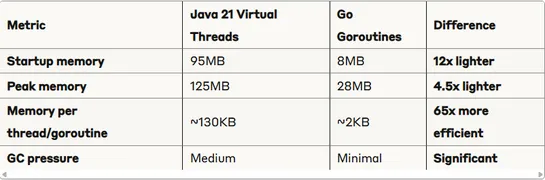
The author migrated fromJava/Spring BoottoGolang. Spring bundlesSecurity,Data,Actuator, and auto-wiring. Go prefers minimalist libraries and explicit wiring. It produces static binaries, instant startup, lower memory use, and nativegoroutineconcurrency. Spring needs JVM startup and GC tuning... read more  

Things I miss about Spring Boot after switching to Go
Link
@kaptain shared a link, 1 month, 2 weeks ago
FAUN.dev()

When Kubernetes Is the Wrong Default

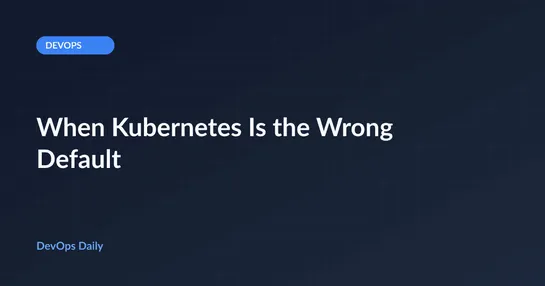
The guide mapsteam size,workload shape, andtime-to-valueto three tiers:managed platforms,VMs, andKubernetes. It calls outKubernetesbluntly: expect a 1–3 month delay to production. Expect ongoing consumption of 30–50% of one engineer. It only pays off for multi-region setups, complex networking, or t.. read more  

When Kubernetes Is the Wrong Default
Link
@kaptain shared a link, 1 month, 2 weeks ago
FAUN.dev()

Announcing the AI Gateway Working Group

Kubernetes launched theAI Gateway Working Group. It will add standards and declarative APIs to make networking play nice with AI workloads and extend theGateway API. Active proposals attack two gaps.Payload processinginspects and transforms full HTTP payloads using declarative configs, ordered pipel.. read more  

Link
@kaptain shared a link, 1 month, 2 weeks ago
FAUN.dev()

Why I stopped using NixOS and went back to Arch Linux

After a year onNixOS, the author reverted toArch Linux. They blamed frequent breakage, rebuild loops, and unpredictable regressions after updates. They flaggedNixOS's reproducible config,isolated builds, and multi-generation installs. These swell disk use, force wideglibcrebuilds, and make updates s.. read more  

Link
@kaptain shared a link, 1 month, 2 weeks ago
FAUN.dev()

Podman fixed every problem I had with Docker, and I switched in an afternoon

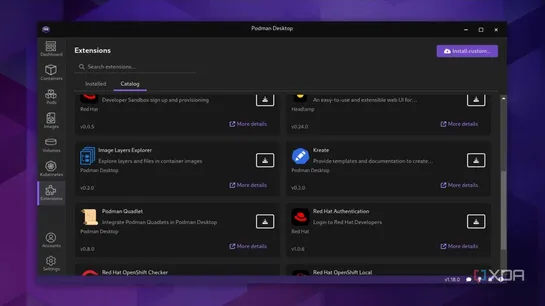
Author swappedDockerforPodman. The swap revealed CLI parity and minor networking and volume tweaks. Podmaneschews a centraldaemon. It runs containers as system processes and defaults torootlessviauser namespaces. That cuts privilege exposure and trims baseline overhead... read more  

Podman fixed every problem I had with Docker, and I switched in an afternoon
Pelagia is a Kubernetes controller that provides all-in-one management for Ceph clusters installed by Rook. It delivers two main features:

Aggregates all Rook Custom Resources (CRs) into a single CephDeployment resource, simplifying the management of Ceph clusters.
Provides automated lifecycle management (LCM) of Rook Ceph OSD nodes for bare-metal clusters. Automated LCM is managed by the special CephOsdRemoveTask resource.

It is designed to simplify the management of Ceph clusters in Kubernetes installed by Rook.

Being solid Rook users, we had dozens of Rook CRs to manage. Thus, one day we decided to create a single resource that would aggregate all Rook CRs and deliver a smoother LCM experience. This is how Pelagia was born.

It supports almost all Rook CRs API, including CephCluster, CephBlockPool, CephFilesystem, CephObjectStore, and others, aggregating them into a single specification. We continuously work on improving Pelagia's API, adding new features, and enhancing existing ones.

Pelagia collects Ceph cluster state and all Rook CRs statuses into single CephDeploymentHealth CR. This resource highlights of Ceph cluster and Rook APIs issues, if any.

Another important thing we implemented in Pelagia is the automated lifecycle management of Rook Ceph OSD nodes for bare-metal clusters. This feature is delivered by the CephOsdRemoveTask resource, which automates the process of removing OSD disks and nodes from the cluster. We are using this feature in our everyday day-2 operations routine.