Join us

ContentUpdates and recent posts about NanoClaw..
Link
@kaptain shared a link, 4 months, 2 weeks ago
FAUN.dev()

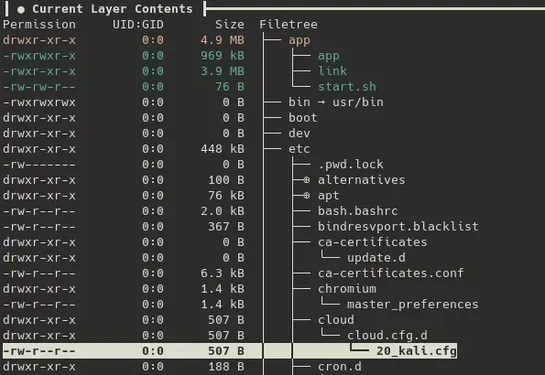
LinkPro: eBPF rootkit analysis

A new stealth rootkit calledLinkProjust surfaced, taking aim at AWS-hosted Linux boxes. It blends two customeBPF programsfor deep concealment and remote activation via magic packets. The path in?CVE-2024-23897—an RCE on a public Jenkins server. From there, attackers slipped into Amazon EKS clusters,.. read more  
LinkPro: eBPF rootkit analysis
Link
@kaptain shared a link, 4 months, 2 weeks ago
FAUN.dev()

Manage Secrets of your Kubernetes Platform at Scale with GitOps

Learn how to manage secrets with the External Secrets Operator and plug it into Argo CD to power your Internal Developer Platform without manual management, enabling self-service secrets management and secure connections between workload clusters and the control plane. With a chain of trust between .. read more  

Link
@kaptain shared a link, 4 months, 2 weeks ago
FAUN.dev()

Kubernetes with Buildkite: faster, simpler, and ready for scale

Buildkite just added a major revamp of its Kubernetes Agent Stack. Highlights:REST-based config,leaner K8s objects, andhardened security defaults. It handlestens of thousands of concurrent jobswithout breaking a sweat. Shared environment vars cut down pod config noise. Error messages come with full .. read more  

Kubernetes with Buildkite: faster, simpler, and ready for scale
Link
@kaptain shared a link, 4 months, 2 weeks ago
FAUN.dev()

How Airbnb Runs Distributed Databases on Kubernetes at Scale

Airbnb runs distributed databases across multiple Kubernetes clusters - each tied to its own AWS Availability Zone. That setup isolates failures down to individual pods and keeps the whole system highly available. They built a custom Kubernetes operator and leaned on EBS volumes with PVCs to smooth .. read more  

How Airbnb Runs Distributed Databases on Kubernetes at Scale
Link
@kaptain shared a link, 4 months, 2 weeks ago
FAUN.dev()

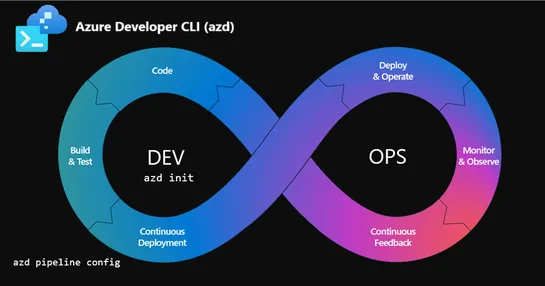
Azure Developer CLI: Azure Container Apps Dev-to-Prod Deployment with Layered Infrastructure

Azure Developer CLI v1.20.0 leveled up Container Apps. Build and push are now split from deploy, so you can finally "build once, deploy everywhere" and mean it. It adds layered infrastructure support, lets you share anAzure Container Registryacross environments, and handles resource dependency seque.. read more  

Azure Developer CLI: Azure Container Apps Dev-to-Prod Deployment with Layered Infrastructure
Link
@kaptain shared a link, 4 months, 2 weeks ago
FAUN.dev()

Zero-Trust Kubernetes: Enforcing Security & Multi-Tenancy with Custom Admission Webhooks

Tools likeOPA Gatekeeper,Kyverno, and custom webhooks slam the brakes on sketchy workloadsbeforethey ever spin up. These controllers aren’t just gatekeepers - they’re enforcers. They check pod configs, block unverified images, and apply live, scoped policies like tenant-awarenetwork isolationandreso.. read more  

Link
@kala shared a link, 4 months, 2 weeks ago
FAUN.dev()

You Should Write An Agent

Building LLM agents - essentially looping stateless models through tools - looks simple. Until it isn't. Peel back the layers, and you hit real architectural puzzles:context engineering, agent loops, sub-agent choreography, execution constraints... read more  

You Should Write An Agent
Link
@kala shared a link, 4 months, 2 weeks ago
FAUN.dev()

AI's Dial-Up Era

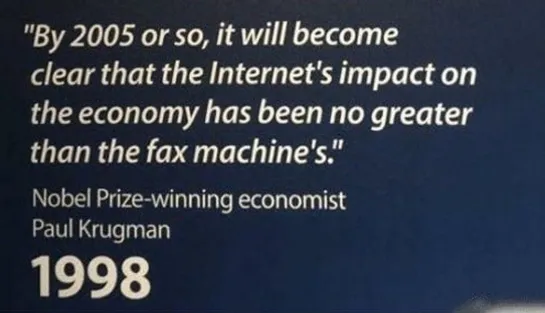
AI's reshaping jobs - but not evenly. Some industries will feel the squeeze faster than others. It all comes down to a race: productivity vs. demand. History's playbook? Think textiles, steel, autos. Automation boosted output. Jobs stuck around - as long as demand kept growing. Once markets topped o.. read more  

AI's Dial-Up Era
Link
@kala shared a link, 4 months, 2 weeks ago
FAUN.dev()

How I Use Every Claude Code Feature

Claude Code isn't just generating responses anymore - it's gearing up to run projects. The new direction turns it into a programmable, auditable agent runtime. Think custom hooks, restart logic, planning workflows, GitHub Actions, and subagent delegation tricks like the “Master-Clone” pattern. At th.. read more  

How I Use Every Claude Code Feature
Link
@kala shared a link, 4 months, 2 weeks ago
FAUN.dev()

AI Broke Interviews

AI has revolutionized technical interviews, blurring the line between genuine skill and cheating with perfect solutions and polished answers. In response, companies are shifting back to in-person interviews for real-time cognitive transparency, authenticity constraints, realistic collaboration signa.. read more  

NanoClaw is an open-source personal AI agent designed to run locally on your machine while remaining small enough to fully understand and audit. Built as a lightweight alternative to larger agent frameworks, the system runs as a single Node.js process with roughly 3,900 lines of code spread across about 15 source files.

The agent integrates with messaging platforms such as WhatsApp and Telegram, allowing users to interact with their AI assistant directly through familiar chat applications. Each conversation group operates independently and maintains its own memory and execution environment.

A core design principle of NanoClaw is security through isolation. Every agent session runs inside its own container using Docker or Apple Container, ensuring that the agent can only access files and resources that are explicitly mounted. This approach relies on operating system–level sandboxing rather than application-level permission checks.

The architecture is intentionally simple: a single orchestrator process manages message queues, schedules tasks, launches containerized agents, and stores state in SQLite. Additional functionality can be added through a modular skills system, allowing users to extend capabilities without increasing the complexity of the core codebase.

By combining a minimal architecture with container-based isolation and messaging integration, NanoClaw aims to provide a transparent, customizable personal AI agent that users can run and control entirely on their own infrastructure.