Join us

ContentUpdates and recent posts about NanoClaw..
Link
@devopslinks shared a link, 2 months, 3 weeks ago
FAUN.dev()

CloudBees CEO: Why Migration Is a Mirage Costing You Millions

A new CloudBees survey shows 57% of enterprises dropped over $1M on cloud migrations last year. Each effort blew past budget by an average of $315K. The kicker? Many teams still treatmodernization as migration- a shortcut that usually leads to drained budgets, burned-out devs, and delays in shipping.. read more  

Link
@devopslinks shared a link, 2 months, 3 weeks ago
FAUN.dev()

How GEICO lowered its $300M cloud spend and decoupled security from the network

GEICO's IT infrastructure transformation journey highlights the shift from legacy network-centric security model to a more modern, identity-first approach. By centralizing identity and secrets management using HashiCorp Vault, GEICO improved security, reliability, and compliance across their hybrid .. read more  

Course
@eon01 published a course, 2 months, 3 weeks ago
Founder, FAUN.dev

Painless Docker - 2nd Edition

Docker Compose Docker Grype Syft Docker Swarm Go Python

A Comprehensive Guide to Mastering Docker and its Ecosystem

Painless Docker - 2nd Edition
Story
@laura_garcia shared a post, 2 months, 3 weeks ago
Software Developer, RELIANOID

🚀 FinovateEurope 2026

📍 London, UK | 🗓️ 10–11 February 2026 Market-ready innovations. Executive-level networking. Inspiring insights. FinovateEurope brings together banking leaders, fintech innovators, investors, and technology providers to shape the future of financial services at a critical moment for the global fint..

finovate europe 2026 london relianoid
News FAUN.dev() Team
@kala shared an update, 2 months, 4 weeks ago
FAUN.dev()

This Is the First AI That Helped Build Itself - Meet GPT-5.3-Codex

GPT-5.3-Codex

GPT-5.3-Codex, an advanced model, enhances coding performance and reasoning, operating 25% faster than its predecessor. It excels in industry benchmarks, supports the software lifecycle, and can autonomously build complex applications. The model is available on multiple platforms with plans for API access.

This Is the First AI That Helped Build Itself - Meet GPT-5.3-Codex
 Activity
@kala added a new tool GPT-5.3-Codex , 2 months, 4 weeks ago.
Story
@laura_garcia shared a post, 3 months ago
Software Developer, RELIANOID

🔐 CISO Sydney 2026

📍 Sydney, Australia | 🗓 10–11 February 2026 CISO Sydney returns for its 5th edition, bringing together New South Wales’ most senior Information Security leaders to explore how cybersecurity can truly enable business growth. From AI-driven threats and shared risk responsibility to culture-first secur..

ciso sydney 2026 relianoid
 Activity
@nelly96 added a new tool GPTHuman , 3 months ago.
Story
@laura_garcia shared a post, 3 months ago
Software Developer, RELIANOID

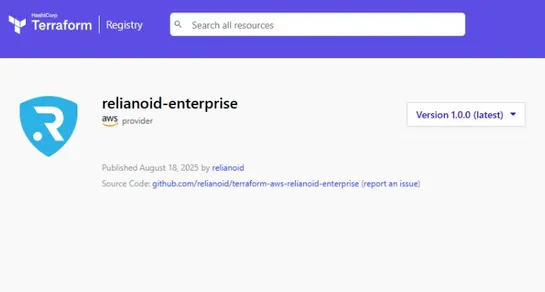
Want to deploy RELIANOID Load Balancer Enterprise Edition v8 on AWS using Terraform in a clean, automated way?

We’ve got you covered. In this step-by-step guide, you’ll learn how to: Use the official Terraform module from the Terraform Registry Automatically provision VPC, subnet, security groups, and EC2 Deploy the RELIANOID Enterprise Edition AMI Access the VM via SSH and Web GUI Easily destroy all resourc..

terraform_relianoid_enterprise_img2
NanoClaw is an open-source personal AI agent designed to run locally on your machine while remaining small enough to fully understand and audit. Built as a lightweight alternative to larger agent frameworks, the system runs as a single Node.js process with roughly 3,900 lines of code spread across about 15 source files.

The agent integrates with messaging platforms such as WhatsApp and Telegram, allowing users to interact with their AI assistant directly through familiar chat applications. Each conversation group operates independently and maintains its own memory and execution environment.

A core design principle of NanoClaw is security through isolation. Every agent session runs inside its own container using Docker or Apple Container, ensuring that the agent can only access files and resources that are explicitly mounted. This approach relies on operating system–level sandboxing rather than application-level permission checks.

The architecture is intentionally simple: a single orchestrator process manages message queues, schedules tasks, launches containerized agents, and stores state in SQLite. Additional functionality can be added through a modular skills system, allowing users to extend capabilities without increasing the complexity of the core codebase.

By combining a minimal architecture with container-based isolation and messaging integration, NanoClaw aims to provide a transparent, customizable personal AI agent that users can run and control entirely on their own infrastructure.